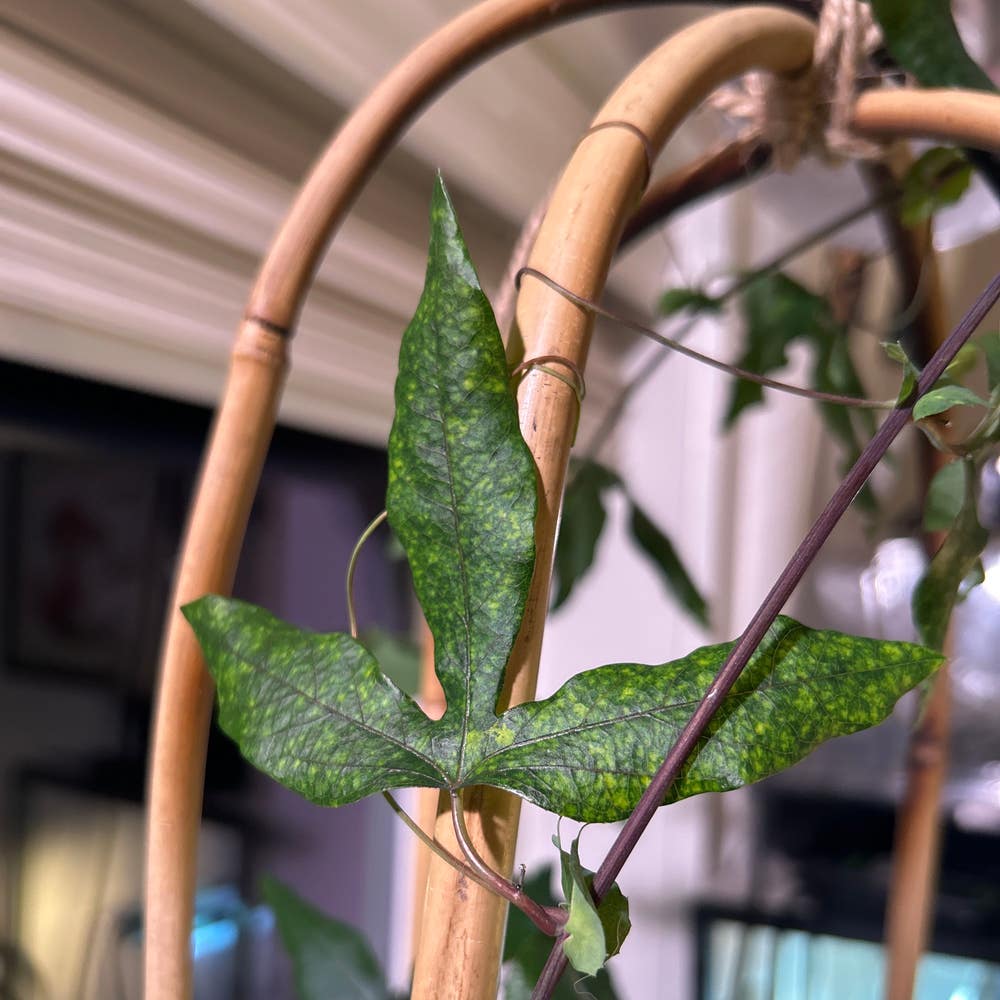
Black Spots on My Bluecrown Passionflower Leaves
Passiflora caerulea
By the Greg Editorial Team
Jun 18, 2024•3 min read
This article was created with the help of AI so we can cover more plants for you. May contain errors. See one? Report it here.
- Black spots escalate from specks to blotches, often with dark margins.
- Fungi and bacteria are the main causes, thriving in moist, poorly aired conditions.
- Prevent with smart watering and airflow management, targeting soil not leaves.
Spotting Trouble: Recognizing and Understanding Black Spots
🕵️♂️ Visual Clues: What Black Spots Look Like
Dark invaders on your Bluecrown Passionflower's leaves might start as tiny specks. These specks, often less than ⅛ inch in diameter, can quickly escalate into larger, more menacing blotches. They're not just there for their goth aesthetic; they signal trouble.
Not All Spots Are Created Equal
Differentiating black spots from other leaf issues is like telling apart cats from dogs – they're just not the same. Black spots often have dark margins or concentric rings, a tell-tale sign of an unwelcome guest. In contrast, natural variegation or scars can be uniform and part of the plant's charm. Keep your eyes peeled for spots with a yellow halo; they're not accessorizing, they're crying for help.

The Usual Suspects: Causes of Black Spots
🍄 Fungal Foes
Fungi are the main perpetrators behind the black spots on Bluecrown Passionflower leaves. They're not just there for decoration; they signal an underlying issue that needs addressing. Cercospora, Alternaria, and Botryosphaeria are some of the usual suspects. These fungi are opportunistic, exploiting conditions like high humidity and poor air circulation to launch their attack on the foliage.
🦠 Bacterial Bullies
Bacterial infections are another cause for concern. Unlike their fungal counterparts, bacterial spots can feel slimy to the touch and may be surrounded by a yellow halo. Pseudomonas leaf spot is a known bacterial adversary of the Bluecrown Passionflower, thriving in the same damp, stagnant conditions that fungi love. If your plant's leaves have started to look like a crime scene, it's time to investigate these bacterial bullies.

Nipping It in the Bud: Prevention Tactics
🌱 Cultivating the Right Environment
Creating the ideal environment for your Bluecrown Passionflower is crucial in preventing those unsightly black spots. It's about striking a balance between moisture and airflow. Too much humidity and you're practically rolling out the red carpet for fungal invaders. On the flip side, poor air circulation can turn your plant's habitat into a bacterial playground.
💧 Smart Watering and Care
Watering is not just about quantity but technique. Aim for the soil, avoiding the leaves to prevent fungal parties at the expense of your plant's health. Timing is also key; water in the early morning to allow leaves to dry out before the cooler, more humid evening sets in. This simple shift in routine can be a game-changer in keeping black spots off your plant's radar.
Remember, prevention is proactive, not just a reaction. Keep your Passionflower's environment stable and you'll be rewarded with a vibrant, spot-free display of greenery.

Plant Care 101
Choosing the Right Plants for Your Space
Watering Tips for Healthy Plants
Soil and Fertilizer Basics
Dealing with Common Pests and Diseases
Pruning and Trimming Techniques
Propagation Methods for New Plants
Creating a Plant Care Schedule
⚠️ Safety First
This content is for general information and may contain errors, omissions, or outdated details. It is not medical, veterinary advice, or an endorsement of therapeutic claims.
Always consult a qualified healthcare professional before using any plant as food, medicine, or supplement.
Never eat any plant (or feed one to pets) without confirming its identity with at least two trusted sources.
If you suspect poisoning, call Poison Control (800) 222-1222, the Pet Poison Helpline (800) 213-6680, or your local emergency service immediately.
Spotted an error? Please report it here.
Prevent black spots on your Bluecrown Passionflower by letting Greg customize 🌱 your plant's care routine for optimal moisture and airflow, ensuring a healthy, spot-free life.