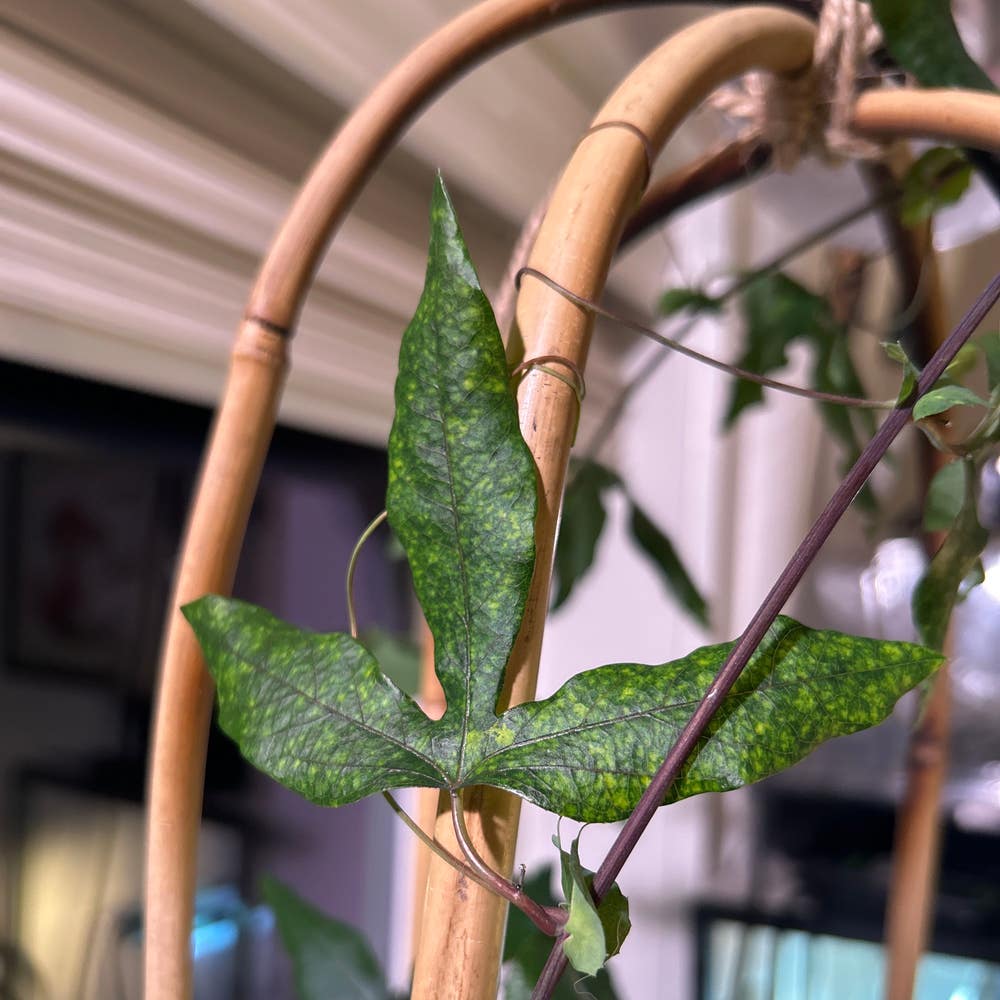
🌞 Is Direct Sunlight Good for My Bluecrown Passionflower?
Passiflora caerulea
By the Greg Editorial Team
Jun 18, 2024•4 min read
This article was created with the help of AI so we can cover more plants for you. May contain errors. See one? Report it here.
- 🌞 Direct sunlight is ideal for Bluecrown Passionflower, mimicking its natural habitat.
- Watch for crispy leaves as a sign of too much sun.
- Use sheer curtains, rotate plant to prevent sunburn and fading.
Sunlight Simplified: What Does Direct Really Mean?
🌞 Sun vs. Shade: The Bluecrown Passionflower's Perspective
Direct sunlight is the heavyweight champion of light, delivering a full-on blast to plants. For the Bluecrown Passionflower, this means a direct hit from the sun's rays, with no barriers in between. It's like standing in the open at noon on a sunny day.
Indirect sunlight, however, is the understudy. It's present but doesn't steal the show. This is the light that filters through sheer curtains or dapples beneath a tree canopy. It's akin to lounging in the shade with occasional sunbeams breaking through.
🌅 Direct Sunlight: A Plant's Day at the Beach
Imagine your Bluecrown Passionflower at the beach, soaking up the sun. Direct sunlight is its beach day without an umbrella. It's intense and can be relentless, especially during peak hours. This is the kind of light that casts sharp, defined shadows.
🌇 Indirect Sunlight: The Comfort of a Light Sweater
Indirect sunlight is more like wearing a light sweater on a cool day. It's there, it's comforting, but it's not overwhelming. This light is diffused; it might bounce off a wall or filter through a canopy before it whispers onto the leaves of your passionflower.

Bluecrown Passionflower's Sunbathing Habits
🌞 Natural Habitat Clues: What the Wild Tells Us
Bluecrown Passionflower thrives in bright, direct light—a fact not lost on those familiar with its natural habitat. In the wild, this climber is no wallflower; it's front and center, soaking up rays with the best of them. Mimic this at home by placing it near a window, but not just any window—a spot where the sun isn't playing hard to get.
🕶️ To Bask or Not to Bask: The Plant's Sun Tolerance
It's a fine line between a tan and a sunburn, and your Bluecrown Passionflower knows it. Sun tolerance is high with this one, but it's not invincible. It can handle some direct exposure, but think of it like a beachgoer who forgot their sunscreen—too much and it's lobster city. Keep an eye out for the telltale signs of distress, and you'll be golden.
☀️ Signs Your Passionflower is Getting Too Much Sun
Crispy leaves? Faded colors? Your plant's screaming for a break from the sun's relentless attention. It's like getting texts from someone who just can't take a hint—overwhelming and a bit damaging. If you notice your Passionflower looking more fried than a beachside snack, it's time to intervene. Relocate it to a shadier spot or draw a sheer curtain to soften the blow. Your plant will thank you by not looking like it just walked through a desert.

The Window Compass: Navigating Sunlight at Home
⬆️ The Direction Dilemma: Which Windows Work Best?
Orientation is everything when it comes to your Bluecrown Passionflower's sunbathing routine. In the Northern Hemisphere, south-facing windows are the VIP lounges of sunlight, offering a full day's worth of rays. If you're down under in the Southern Hemisphere, flip it—north-facing windows are where it's at. East-facing windows? They're the gentle morning wake-up call. West-facing windows, on the other hand, deliver the intense afternoon sun, like a midday summer sun without the SPF.
🌍 Hemisphere Hints: Adjusting for Your Latitude
Your geographical latitude isn't just for map nerds; it's crucial for your plant's health. In the north, south-facing windows are your plant's best friend, dishing out the most consistent light buffet. Head south of the equator, and it's the north-facing windows that steal the spotlight. But remember, with great sunlight comes great responsibility—too much of a good thing can lead to a crispy Passionflower. Use those curtains wisely to create a sunscreen effect, and keep an eye on the seasonal shifts; they can turn a sun haven into a shady retreat.

Protecting Your Passionflower from Sunburn
🌞 Gradual Tans: Acclimating Your Plant to Sunlight
Acclimating your Bluecrown Passionflower to sunlight is like updating its firmware—it needs to be done carefully and over time. Start by placing your plant in a shady area, then gradually expose it to more light. This might take a few weeks, but patience is a virtue that keeps leaf burn at bay.
🏖 Sheer Genius: Using Curtains to Diffuse Harsh Rays
Think of sheer curtains as your plant's personal sunscreen. They allow light in while protecting your passionflower from the harshness of direct sunlight. It's a simple fix that can prevent the need for an aloe vera plaster on scorched leaves.
🚀 Relocation, Relocation: When to Move Your Plant
When your passionflower's leaves look more fried than a beachgoer without SPF, it's time to move it. Rotate the plant regularly to avoid a lopsided tan and consider shifting it away from south or west-facing windows during the peak sun hours. If you spot signs of distress—like leaves that crisp up faster than bacon in a pan—relocate your plant to a less intense spot pronto.
⚠️ Safety First
This content is for general information and may contain errors, omissions, or outdated details. It is not medical, veterinary advice, or an endorsement of therapeutic claims.
Always consult a qualified healthcare professional before using any plant as food, medicine, or supplement.
Never eat any plant (or feed one to pets) without confirming its identity with at least two trusted sources.
If you suspect poisoning, call Poison Control (800) 222-1222, the Pet Poison Helpline (800) 213-6680, or your local emergency service immediately.
Spotted an error? Please report it here.
Ensure your Bluecrown Passionflower flourishes in just the right amount of sunshine 🌞 with Greg's custom reminders to adjust exposure based on your specific location and window orientation.