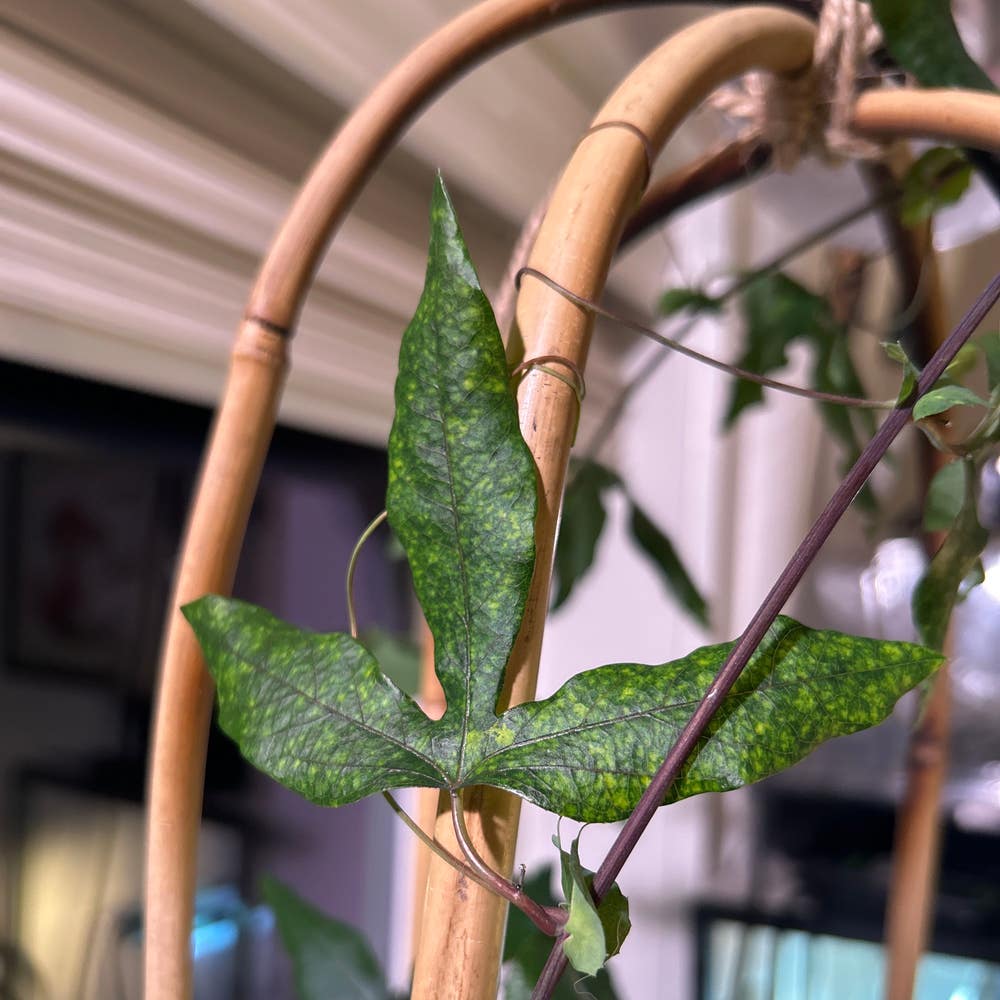
Why Does My Bluecrown Passionflower Have Yellow Leaves? 🍂
Passiflora caerulea
By the Greg Editorial Team
Jun 18, 2024•3 min read
This article was created with the help of AI so we can cover more plants for you. May contain errors. See one? Report it here.
- Yellow leaves signal distress, like improper watering, nutrition, or pests.
- 🌞🌡️ Sunlight and temperature are key—aim for 4-6 hours of sun and 18-24ºC.
- Regular care and vigilance prevent issues and ensure early detection of problems.
When Yellow Means "Whoa!"
🚨 Spotting the Signs of Trouble
Yellow leaves on your Bluecrown Passionflower can be the plant's version of a white flag. Abnormal yellowing is cause for concern, especially if it's the new growth turning a sickly shade. This could be a distress signal, not just a leaf's retirement party. Keep an eye out for leaves that lose their lustre too quickly or uniformly; it's a sign that something's up.
🚰 It's Not Always Thirsty
When it comes to watering, think of it as a balancing act. Overwatering can lead to a soggy mess and root rot, while underwatering leaves your Passionflower parched and pleading for a drink. Check the soil before reaching for the watering can—if it's damp, hold off; if it's dry, it's time to quench its thirst.
🍽️ Feeding Frenzy
Your Bluecrown Passionflower might be hungry for nutrients. Yellowing older leaves could be crying out for nitrogen, while pale new growth might indicate an iron deficiency. A balanced fertilizer is your best bet, but don't go overboard. Overfeeding can harm as much as underfeeding, so stick to the recommended dose and always fertilize moist soil to prevent root burn.

The Light and Heat Dance
🌞 Sunlight Tango
Bluecrown Passionflowers need their sunbathing time just right. They crave a minimum of four to six hours of sunlight, especially in cooler climates. Too little, and they'll sulk; too much, and they'll sizzle. Aim for a spot that offers a mix of sun and shade, protecting them from the midday sun's harshness.
🌡️ Temperature Twirl
The ideal temperature for your Passionflower is a cozy range between 18-24ºC (64-75ºF). Avoid the extremes—no saunas or ice baths for these beauties. Keep them away from drafty spots and direct heat sources like radiators. Consistency is key; sudden changes in temperature can make your plant throw a fit.

Uninvited Guests: Pests
🐛 Catching the Culprits
Yellow leaves on your Bluecrown Passionflower can be a red flag for pest infestation. Mealybugs, resembling tiny cotton clusters, are notorious for sucking the life out of your plant. They hide in nooks and crannies, leaving a sticky residue called honeydew. Spider mites also wreak havoc, indicated by yellow or white speckles on the leaves. They love the undersides of leaves, making them a sneaky adversary. Aphids are another common pest, often found in clusters, draining your plant's vitality.
🚪 Show Them the Door
To combat these pests, start with a forceful water spray to dislodge them. This method is gentle on the plant but tough on bugs. For a more targeted approach, insecticidal soap is a safe bet. It's effective and less harmful to the environment than harsh chemicals. If you're into DIY solutions, a homemade herbal spray can be a natural deterrent. In severe cases, you may need to resort to horticultural oils or soaps. These smother the pests without contaminating your plant with toxins. Remember, regular inspections are crucial. The sooner you spot the pests, the easier it is to show them the exit.

Turning Over a New Leaf: Prevention and Care
📅 Consistent Care Schedule
Routine care is the backbone of plant health. For your Bluecrown Passionflower, a consistent schedule is non-negotiable. Watering should be regular, yet tailored to the plant's needs—too much love can drown it, too little can parch it.
🕵️♂️ Early Detection, Early Peace of Mind
Vigilance is your best defense against the yellow-leaf onslaught. Inspect your Passionflower often; early signs of distress call for immediate action. Adjust care practices as needed and document changes to track what works and what doesn't.
⚠️ Safety First
This content is for general information and may contain errors, omissions, or outdated details. It is not medical, veterinary advice, or an endorsement of therapeutic claims.
Always consult a qualified healthcare professional before using any plant as food, medicine, or supplement.
Never eat any plant (or feed one to pets) without confirming its identity with at least two trusted sources.
If you suspect poisoning, call Poison Control (800) 222-1222, the Pet Poison Helpline (800) 213-6680, or your local emergency service immediately.
Spotted an error? Please report it here.
Keep your Bluecrown Passionflower's leaves gleaming green 🍃 with Greg's tailored watering reminders and sun exposure tips, ensuring it thrives in your care.