Why Are My Bluecrown Passionflower Leaves Curling?
Passiflora caerulea
By the Greg Editorial Team
Jun 18, 2024•5 min read
This article was created with the help of AI so we can cover more plants for you. May contain errors. See one? Report it here.
- Leaf curling signals distress, often due to water issues or pests.
- Adjust watering and environment to prevent and fix curling leaves.
- Regular checks for pests and stress keep your Passionflower healthy.
Spotting the Curl: Identifying Leaf Curl Issues in Bluecrown Passionflower
🌿 Visual Symptoms and What They Mean
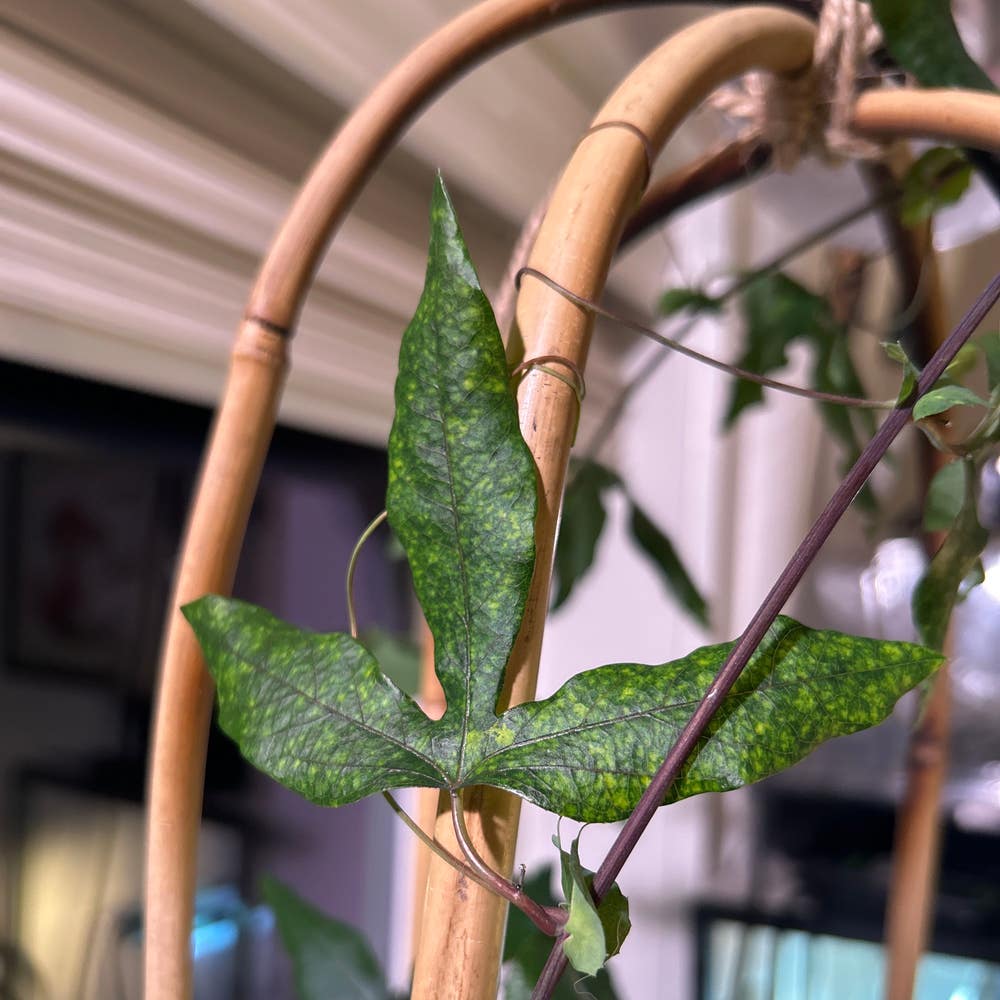
Leaf curling in Bluecrown Passionflowers is not just an aesthetic issue; it's a distress signal. Upward curls may indicate underwatering, while downward spirals could suggest overwatering or pest problems. Discoloration—yellowing or brown spots—often accompanies curling, hinting at underlying issues.
🕵️♂️ Getting Up Close: Simple Examination Techniques
To investigate the cause of leaf curling, get up close and personal with your plant. Check for fine webbing or speckled leaves, which betray the presence of spider mites. Aphids might be found in clusters under leaves, and a cottony residue suggests mealybugs. Don't overlook the soil; poor drainage can lead to root issues, manifesting as leaf problems.

Unraveling the Curl: Common Culprits Behind the Curvature
⛅️ When Nature Strikes: Environmental Stressors
Temperature is a fickle friend to the Bluecrown Passionflower. Too hot, and the leaves might crisp up like a piece of toast. Too cold, and they'll curl tighter than a rolled-up sleeping bag. Humidity swings are no joke either; these plants start curling up like they're hoarding every drop of moisture when the air gets too dry.
🐜 Unwanted Guests: Pests That Love Your Leaves
Aphids and spider mites are the Bonnie and Clyde of the pest world when it comes to your Passionflower. Aphids are like tiny vampires, sucking the life out of your plant and leaving a sticky mess. Spider mites are more ninja-like, spinning fine webs and causing the leaves to look like they've been dusted with pepper. If you're not vigilant, these pests will turn your Passionflower's leaves into their personal buffet.
🚰 Water Woes: Hydration and Soil Drainage
Watering is less of an art and more of a science. Too much water and your Passionflower's roots might as well be swimming. Too little, and the leaves will curl up as if they're trying to escape the pot. Drainage is also key; without it, you're basically giving your plant's roots a one-way ticket to rot city. Aim for soil that's like a good sponge—moist but not dripping.

Straightening Things Out: Fixing the Curl
🌿 Tweaking the Environment: Climate Control for Happy Leaves
Your Bluecrown Passionflower is a bit of a diva when it comes to its environment. If it's throwing a tantrum with curled leaves, it's time to play stage manager. Adjust the thermostat of your care routine to match the seasonal mood. In cooler weather, dial back on watering. Less evaporation means less thirst.
Sunlight is another part of the script. Too much and your plant's leaves curl up in defense; too little and they reach out desperately. Find that sweet spot where the light is bright but not scorching, and your Passionflower will reward you with drama-free growth.
🐜 Evicting Pests: Safe and Effective Treatments
When it comes to pests, think of them as uninvited guests crashing your plant's party. Stay on top of the guest list by scouting for aphids, spider mites, and their freeloading friends. If you spot them, it's time for eviction.
Natural remedies like neem oil or insecticidal soap can be your bouncers, showing these pests the door. Apply diligently, and repeat as necessary until your plant's leaves uncurl in relief. Remember, persistence is key in keeping these party crashers from coming back.
💧 Soil and Water Harmony: Best Practices
Now, let's talk about your Passionflower's drink preferences. It doesn't like its soil too wet or too dry—think of it as the plant's version of a perfect cocktail balance. Before watering, do the finger test: plunge into the soil. If it's damp, hold off on the water. If it's dry, it's time for a drink.
Soil quality is like the glass for our cocktail—it needs to be just right. Ensure your soil has good drainage to avoid waterlogged roots. If your plant's feet are constantly wet, it's not going to be happy. Mix in some perlite or coarse sand to give those roots the breathing room they crave.

Keeping the Leaves Lush: Prevention Tactics
🌿 Consistency is Key: Maintaining an Ideal Environment
Stability is the watchword when it comes to your Bluecrown Passionflower's environment. Like a finicky houseguest, this plant thrives under specific conditions. Temperature swings and humidity rollercoasters are no-nos. Aim for a steady climate that mimics its natural habitat. This means avoiding drafts, maintaining a consistent watering schedule, and ensuring the soil has good drainage.
👀 Vigilance and Care: Routine Checks and Balances
Regular plant check-ups are like a personal trainer for your Passionflower—keeping it in top form. Inspect leaves for early signs of distress, such as discoloration or pests. These routine checks are your chance to play detective and nip potential issues in the bud. Remember to clean your tools and pots to prevent spreading any plant pathogens. It's all about preemptive care; think of it as a healthcare plan for your plant.
⚠️ Safety First
This content is for general information and may contain errors, omissions, or outdated details. It is not medical, veterinary advice, or an endorsement of therapeutic claims.
Always consult a qualified healthcare professional before using any plant as food, medicine, or supplement.
Never eat any plant (or feed one to pets) without confirming its identity with at least two trusted sources.
If you suspect poisoning, call Poison Control (800) 222-1222, the Pet Poison Helpline (800) 213-6680, or your local emergency service immediately.
Spotted an error? Please report it here.
Prevent your Bluecrown Passionflower's leaves from curling by monitoring 🕵️♂️ its environment with Greg's custom care plan, ensuring your plant thrives in its ideal habitat.