Common Sweet William Problems
Dianthus caryophyllus
By the Greg Editorial Team
Jun 14, 2024•5 min read
This article was created with the help of AI so we can cover more plants for you. May contain errors. See one? Report it here.
- Regular watering schedule prevents wilting and yellowing in Sweet William.
- Bright, indirect sunlight and stable temperatures are crucial for health.
- Combat pests and diseases with proper care and integrated pest management.
Watering Issues and Solutions
💧 Inconsistent Watering
Wilting and yellowing leaves are distress flares from your Sweet William, signaling a need for a watering schedule. Establish a routine that aligns with the plant's needs, taking into account the season and indoor climate variations.
💦 Over-watering and Root Rot
Yellow leaves and a funky soil smell are your cue: you're over-loving with water. Let the soil dry a bit between waterings, and ensure your pot isn't holding water hostage. If the roots look more like a dark mush than firm and white, it's time for an intervention with better drainage and less enthusiasm at the watering can.
🏜️ Under-watering
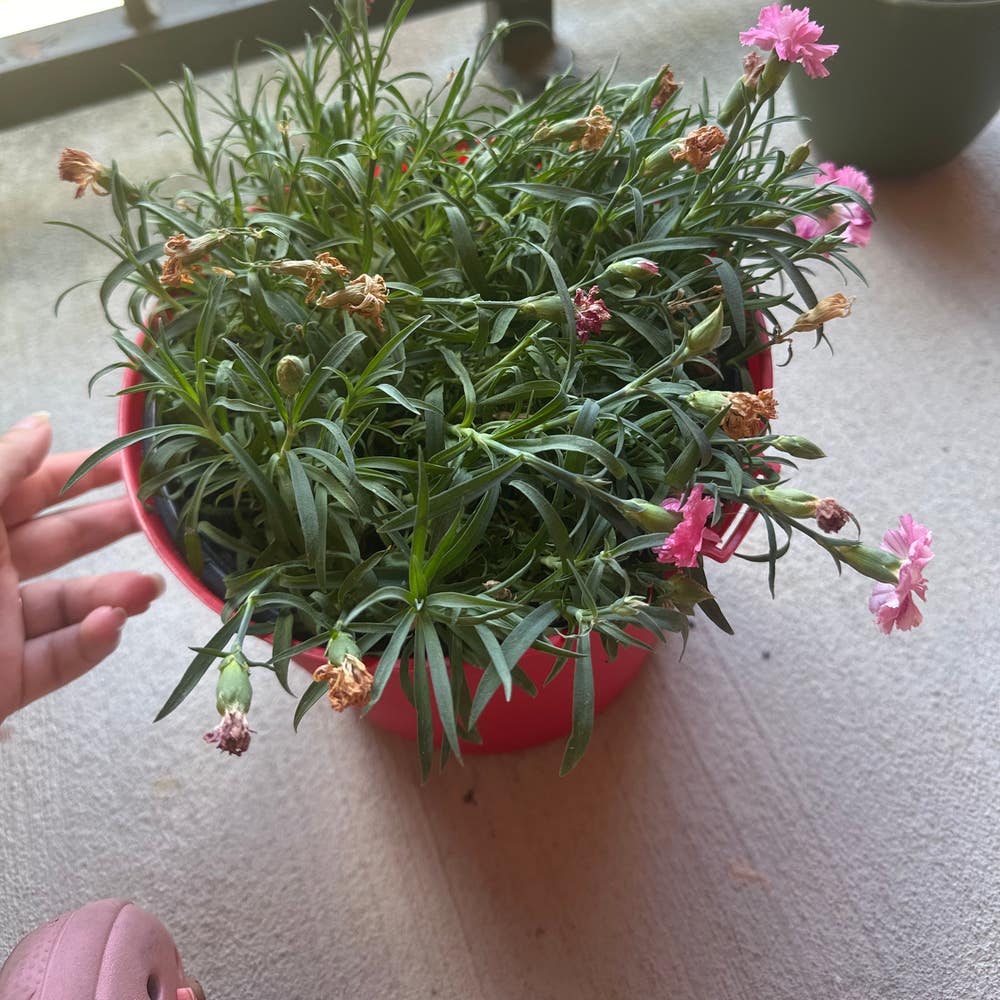
If your Sweet William's leaves are wilting with browning edges, it's parched. Increase watering frequency but don't turn your pot into a swamp. Remember, the goal is moist, not waterlogged—balance is the name of the game.

Light and Temperature Management
🌞 Irregular Light
Leggy growth and pale leaves are telltale signs your Sweet William isn't getting the light it craves. To combat this, consistent, bright, indirect sunlight is key. Rotate the plant periodically to ensure even exposure, preventing the one-sided, "I've been leaning into the sun" look.
🌡️ Inconsistent Temperature
Sweet William throwing a leafy fit? Stunted growth and leaf drop are its way of saying, "I'm not okay with these temperature roller coasters." Stable temperature ranges are non-negotiable. Think springtime vibes all year round to keep your plant from going into hibernation mode.
🌡️ Addressing Temperature Stress
If your plant is already showing signs of a temperature-induced meltdown, it's time for some TLC. Prune the drama (damaged foliage) and adjust your watering routine to suit the current climate. Remember, your plant's comfort zone is a climate-controlled bubble, not the Sahara or the Arctic.
💡 Lighting for Young Plants
For the youngsters (seedlings and cuttings), lighting is like a strict bedtime routine – necessary and non-negotiable. Supplemental lighting can be the difference between a plant with the posture of a slouching teen and one that stands tall and proud. Aim for a daily light integral (DLI) that promotes photosynthesis without turning your plant into a light addict.
🚨 Remedial Measures
Got a Sweet William that's looking a bit washed out? It might be screaming for a light adjustment. Position it to avoid the harsh midday sun, and if you're feeling fancy, throw in a twirl now and then for an even tan.
🌀 Addressing Leaf Curling
When leaves start to curl, it's not trying to be avant-garde; it's more likely a cry for help. Aim for that "just right" level of humidity – not so much that you're in a cloud, but enough to keep the leaves from writing a crinkly, brown "Dear John" letter.
🌞 Effects of Light Intensity and Temperature
Remember, your Sweet William isn't just being picky; it's all about survival. The right light intensity and temperature are like a good pair of jeans – they've got to fit just right. Too tight or too loose, and it's a fashion (and plant) disaster.
🌟 Common Two-Row Stonecrop Problems
Even though Sweet William isn't a Two-Row Stonecrop, they share a love for the spotlight – bright but not too direct. Keep it close to a sunny window and watch for temperature mood swings, especially during those tricky seasonal transitions.
Final Tips
In short, treat your Sweet William to a stable, comfortable environment with just the right amount of light and warmth. It's not asking for a five-star resort, just a little consistency. Keep it happy, and it'll return the favor with blooms that'll make your heart sing.

Pest and Disease Control
🐜 Pests: The Uninvited Guests
Aphids and spider mites are the party crashers of Sweet William's world. These pests suck the life out of your plants, leaving behind a mess of yellowing leaves and webbing. To send them packing, use a forceful spray of water or apply insecticidal soap. For a more aggressive approach, consider miticides, but always check with local extension services for the best advice.
🌞 Leaf Scorching: Sunburnt Foliage
Leaf scorching turns the edges of Sweet William leaves brown and crispy like overcooked bacon. This is a clear sign your plant is throwing shade at too much sun. Protect it by ensuring it receives bright, but indirect, sunlight. Think of it as applying sunscreen to your plant.
🍄 Mold/Fungus: The Unseen Enemy
White or grayish patches? That's the calling card of mold or fungus. Improve air circulation and consider a fungicidal treatment. Products like SB Plant Invigorator or Ecofective Bug & Mildew Control can be your allies in this fight. Remember, good hygiene is as crucial for plants as it is for humans—clean up fallen leaves and avoid wetting the foliage to keep the mold at bay.
🐞 Integrated Pest Management: The Bigger Picture
Don't just treat the symptoms; prevent the disease. Introduce beneficial insects like ladybugs to chow down on aphids. Keep your plants healthy with proper light, water, and nutrients to strengthen their natural defenses. And always, always inspect new plants before they enter your garden to avoid a Trojan horse situation.

⚠️ Safety First
This content is for general information and may contain errors, omissions, or outdated details. It is not medical, veterinary advice, or an endorsement of therapeutic claims.
Always consult a qualified healthcare professional before using any plant as food, medicine, or supplement.
Never eat any plant (or feed one to pets) without confirming its identity with at least two trusted sources.
If you suspect poisoning, call Poison Control (800) 222-1222, the Pet Poison Helpline (800) 213-6680, or your local emergency service immediately.
Spotted an error? Please report it here.
With Greg, you can perfectly tailor 🌱 your Sweet William's care, from watering schedules to sunlight exposure, ensuring your blooms are always vibrant and healthy.