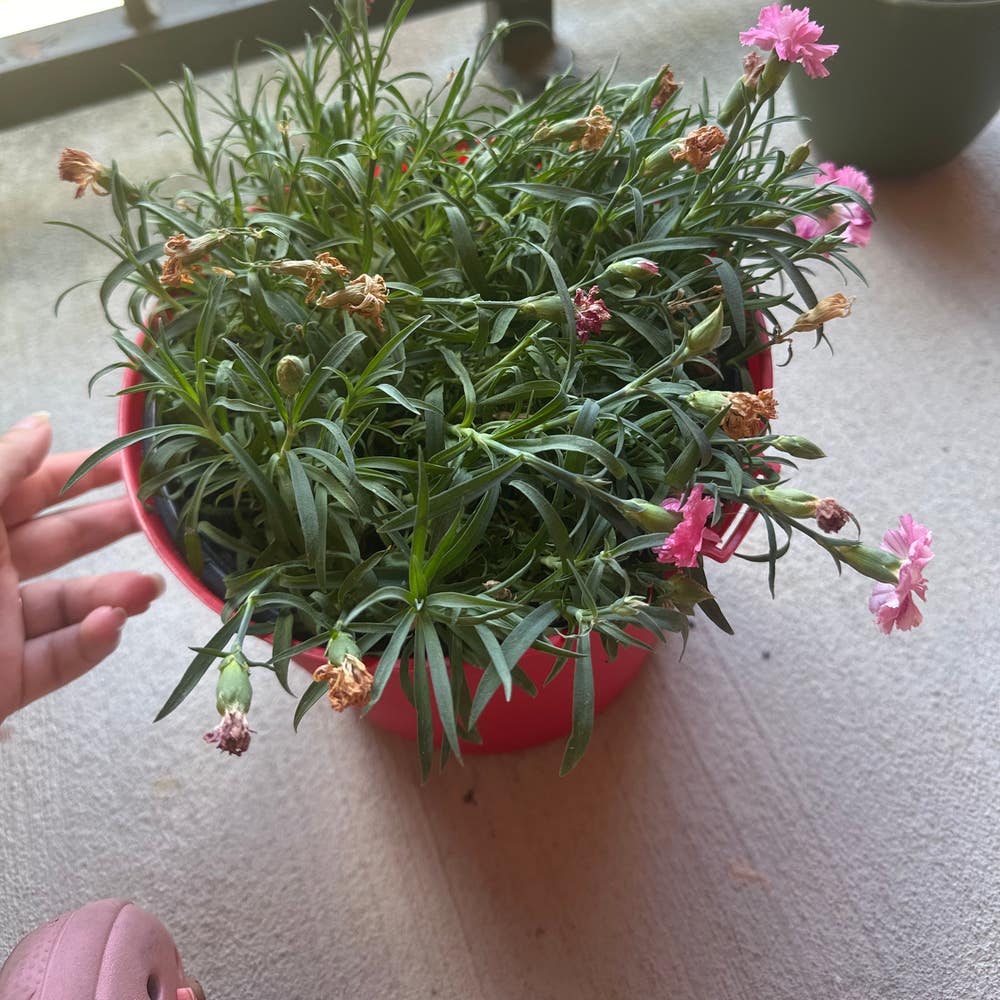
Why Are My Sweet William Leaves Dropping?
Dianthus caryophyllus
By the Greg Editorial Team
Jun 14, 2024•9 min read
This article was created with the help of AI so we can cover more plants for you. May contain errors. See one? Report it here.
- Adjust watering and environment to prevent leaf drop from stress.
- Nutrient deficiencies cause dropping; ensure balanced fertilization.
- Inspect for pests and diseases regularly to maintain leaf health.
Identifying the Cause of Leaf Dropping
When Sweet William leaves start to abandon ship, it's a red flag. Leaf dropping is more than a cosmetic issue; it's a cry for help, a signal that your plant is in distress. Let's play detective and pinpoint the culprits.
🚨 Signs and Symptoms
Yellowing leaves are like a distress flare. Look for patterns: Are they yellow all over or just at the edges? Are they spotted or uniformly discolored? Brown, crispy leaves often scream 'humidity crisis' or 'thirsty plant' – they're as subtle as a fire alarm.
🌡️ Environmental Factors
Temperature tantrums can cause leaves to drop like they're too hot to handle. If your Sweet William is shivering or sweating, it's time to rethink its spot in your garden. Direct sunlight can be a frenemy – too much, and your plant might go into meltdown.
💧 Watering Woes
Overwatering is like throwing a pool party without a pool – roots get soggy and sad. Underwatering? You might as well send your plant on a hike in the Sahara. Check the soil before watering; it should be dry an inch down. If it's damp, hold off on the H2O.
🐜 Pests and Pathogens
Pests like spider mites and aphids see your plant as an all-you-can-eat buffet. Diseases, such as fungal foes, are the party crashers nobody wants. Regular inspections and prompt treatments are your plant's personal security detail.
🍽️ Nutrient No-Nos
A nutrient deficiency can leave your plant looking more deflated than a popped balloon. Skimp on essentials like nitrogen and potassium, and you'll witness a leaf exodus. It's like expecting an athlete to perform without proper fuel.
🌱 The Root of the Problem
Sometimes the issue lies beneath the surface. Root health is paramount – if the roots are unhappy, the leaves are the first to know. Soil quality is like the foundation of a house – get it wrong, and everything else falls apart.
Remember, your Sweet William isn't trying to give you a hard time; it's having a hard time. Adjust your care, and those leaves will stick around like loyal fans at a sold-out show.

Watering-Related Leaf Drop
Sweet William's leaves may throw in the towel when watered too much or too little. Let's dive into adjusting watering practices to keep those leaves firmly attached.
💧 The Balancing Act of Watering
Check the top inch of soil before watering; if it's dry, it's time to hydrate. If it's damp, hold your horses. Room-temperature water is your plant's best friend, avoiding any unnecessary root shocks.
🚰 Drainage: The Escape Route for Excess Water
Make sure your pots have drainage holes. It's a simple but effective way to prevent root rot and the subsequent leaf drop. Think of it as a safety net for your plant's roots.
🍂 The Signs of Underwatering
Droopy leaves turning yellow or brown? That's your Sweet William crying out for a drink. Don't wait until it's too late; consistent watering is key.
💦 Overwatering: A Slippery Slope to Soggy Sadness
Overwatering invites root rot to the party, and nobody wants that. If the soil feels more like a swamp than a garden, it's time to ease up on the H2O.
🔄 Establishing a Watering Routine
Like a morning coffee ritual, establish a watering routine that's reliable. Use filtered or rainwater to prevent mineral build-up and keep those leaves spot-free.
🚨 The Telltale Signs of Overwatering
Yellowing leaves? Dropping like flies? You might be overdoing the watering. Remember, your Sweet William isn't a fish; it doesn't need to swim.
🏜️ The Underwatering Conundrum
Crispy leaves are a cry for help from a thirsty plant. Check the soil moisture regularly and water deeply but infrequently, allowing the soil to dry out a bit between sessions.
👂 Listening to Your Plant
Your Sweet William will tell you what it needs; you just have to pay attention. Aim for moist soil, not wet, and let it dry slightly between waterings. It's all about finding that sweet spot.

Environmental Stress and Leaf Drop
Sweet William plants are sensitive to their surroundings, and environmental stress can lead to leaf drop. Let's dive into how to keep your plant's leaves firmly attached.
🌡️ Temperature Management
Consistency is key. Sweet William prefers a stable climate, without the drama of sudden temperature changes. Aim for a comfortable range, avoiding the extremes that can cause leaves to fall faster than confetti at a New Year's party. If you're growing indoors, keep your plant away from drafty windows or heating vents.
💦 Humidity Control
Too much or too little humidity can turn your Sweet William's leaves into a droopy mess. Use a humidifier or a pebble tray to maintain a Goldilocks zone of moisture in the air—just right. If you're in a particularly dry area, a regular misting session can help, but don't overdo it; you're going for refreshed, not drenched.
💨 Air Circulation
Good air flow is like a breath of fresh air for your plant. It helps prevent the stale, stagnant conditions that can lead to leaf drop. Ensure your Sweet William isn't suffocating in a corner; give it room to breathe and flourish.
🌬️ Shielding from Extreme Weather
Outdoor plants need protection from the scorching sun and frosty chills. A windbreak can shield your Sweet William from harsh conditions, while a strategic shade cloth can prevent sunburn. Remember, plants can experience heat stress too, so keep them well-watered, especially during hot spells.
By managing these environmental factors, you can help your Sweet William stay leafy and lush. Remember, it's not about coddling your plant; it's about providing a stable, supportive environment where it can thrive without throwing a leaf-dropping tantrum.

Nutrient Deficiencies Leading to Leaf Drop
Sweet William plants dropping leaves can be a red flag for nutrient deficiencies. Let's dive into the signs and the fixes.
💧 Nitrogen (N)
- Yellowing of older leaves at the base.
- Overall light green foliage and reduced growth.
Boost nitrogen levels with a balanced fertilizer, but don't go overboard—over-fertilization can be just as harmful.
🌿 Phosphorus (P)
- Darker green leaves and stunted growth.
- Older leaves may appear purplish.
Add bone meal or a high-phosphorus fertilizer to kickstart recovery.
🍟 Potassium (K)
- Leaf edges turning brown or yellow.
- Weak stems and slow growth.
Potassium sulfate can help leaves regain their vigor.
🌾 Magnesium (Mg)
- Leaves turn pale yellow, sometimes with black flecks.
- New growth is affected.
Epsom salts can be a quick fix for magnesium woes.
🥚 Calcium (Ca)
- New leaves are misshapen or stunted.
- Blossom end rot in fruiting plants.
Crushed eggshells or gypsum can remedy calcium deficiencies.
🌱 Iron (Fe)
- Young leaves turn yellow while veins stay green.
- Overall pale appearance.
Chelated iron products can green up those leaves.
🌌 Manganese (Mn)
- Interveinal chlorosis, with green veins and yellow leaves.
- Brown spots and crinkled leaves.
Manganese sulfate is your go-to for these symptoms.
🥄 Copper (Cu)
- Stunted growth and limp leaves.
- Seedlings particularly affected.
Copper amendments can revive your Sweet William.
🛠 Zinc (Zn)
- Older leaves with yellowing between veins.
- Shortened stem length.
Zinc sulfate can correct these issues.
🌰 Boron (B)
- Brittle, thick leaves.
- Scorching and curling upwards.
Borax or boron fertilizers can alleviate boron scarcity.
🌿 Molybdenum (Mo)
- Yellowing of older leaves.
- Stunted growth and malformed leaves.
Apply a fertilizer with molybdenum to counter deficiencies.
Remember: Over-fertilization can cause as much damage as a deficiency. Start with a balanced, water-soluble fertilizer and adjust based on your plant's response. Too much love in the form of nutrients can lead to a toxic relationship for your Sweet William. Keep it balanced, keep it healthy.
Tackling Pests and Diseases That Cause Leaf Drop
Pests and diseases are like uninvited guests at a garden party—they can turn your Sweet William's leaves into confetti. Vigilance is your first line of defense.
🐞 Identifying the Culprits
Check for spider mites, aphids, and fungal diseases. These troublemakers can be stealthy, so inspect your plants regularly. Look for webbing, tiny bugs, or unusual spots on leaves.
🌿 Natural Defenses
Encourage beneficial insects that prey on pests. Ladybugs and lacewings are like the bouncers at the club of your garden, keeping the riff-raff in check.
🛡️ Treatment Tactics
When intervention is necessary, opt for eco-friendly solutions. Neem oil and insecticidal soaps can be effective without the environmental guilt trip. For fungal foes, consider fungicides that are kind to Mother Earth.
🚫 Preventative Measures
Prevention is better than cure. Ensure proper air circulation and avoid wetting the foliage to discourage fungal diseases. Remove any fallen leaves to prevent the spread of spores.
💣 When to Go Nuclear
If all else fails and your plant is looking more like a plucked chicken, it might be time for pesticides. But remember, that's the last resort—like calling in the SWAT team for a noise complaint.
✂️ Keep It Clean
Regularly prune your Sweet William to remove any leaves that look like they've seen better days. This helps prevent issues from spreading and gives your plant a clean bill of health.
Soil and Root Health to Prevent Leaf Drop
🌱 The Foundation: Soil Quality
Soil is your Sweet William's bedrock. A poor mix is like a lumpy mattress; it can lead to a restless, unhappy plant. Roots need the right balance of nutrients, air, and moisture. If your soil is more packed than a rush-hour subway, consider lightening it with perlite or peat moss. This isn't just fluff – it's essential for drainage and aeration.
🚱 The Silent Scream: Root Rot
When roots sit in water like a forgotten bath toy, they'll start to rot. It's a silent scream for help. Water deeply but as infrequently as a leap year, allowing the soil to dry out in between. This isn't neglect; it's tough love. If the soil feels more damp than a forgotten gym towel, hold off on the watering can.
🌿 The Mulch Must-Have
Mulch isn't just a pretty topping; it's like a security blanket for your plant's roots. It keeps moisture consistent and temperatures stable. Apply a layer as thick as a winter coat (but not directly against the stem – no one likes a wet neck).
🏠 The Right Pot
The pot is your plant's real estate, and location is everything. Ensure it's the right size – too big, and you risk waterlogging; too small, and growth is stifled. Think of it as a "just right" apartment with good drainage, not a penthouse or a broom closet.
💧 The Watering Wisdom
Your watering routine should be as regular as your morning coffee. Not too much, or you'll drown the roots; not too little, or you'll leave them parched. Aim for soil moisture that's like a well-wrung sponge – damp, but not dripping.
🌿 The Nutrient Nudge
Sweet William isn't picky, but it does need its vitamins. A balanced fertilizer is like a well-rounded diet for your plant. Over-fertilizing is like binge eating junk food – it can do more harm than good. Stick to the recommended dose, and your plant will thank you with robust health, not a cascade of falling leaves.
⚠️ Safety First
This content is for general information and may contain errors, omissions, or outdated details. It is not medical, veterinary advice, or an endorsement of therapeutic claims.
Always consult a qualified healthcare professional before using any plant as food, medicine, or supplement.
Never eat any plant (or feed one to pets) without confirming its identity with at least two trusted sources.
If you suspect poisoning, call Poison Control (800) 222-1222, the Pet Poison Helpline (800) 213-6680, or your local emergency service immediately.
Spotted an error? Please report it here.
Prevent your Sweet William's leaves from dropping by balancing 🌡 water, nutrients, and care with Greg's tailored guidance and timely reminders.