🌼 How to Fix Leaves Falling Over on Your Orange Mini Carnation
Dianthus caryophyllus
By the Greg Editorial Team
Oct 14, 2024•6 min read
This article was created with the help of AI so we can cover more plants for you. May contain errors. See one? Report it here.
- 💧 Overwatering causes yellow leaves and mushy stems, indicating root rot in Mini Carnations.
- 🌞 Bright, indirect sunlight and proper watering are essential for healthy growth.
- 🐛 Regularly inspect for pests like aphids to prevent leaf drop and damage.
Causes of Leaves Falling Over
💧 Overwatering and Its Effects
Overwatering is a common issue that can lead to serious problems for your Orange Mini Carnation. Symptoms include yellowing leaves and mushy stems, which are clear indicators that your plant is drowning.
Root rot is another consequence of excessive watering, causing leaves to droop and the plant to weaken. To prevent this, ensure your soil is a well-draining potting mix, ideally in terracotta pots or those with drainage holes.
🚰 Underwatering and Dehydration
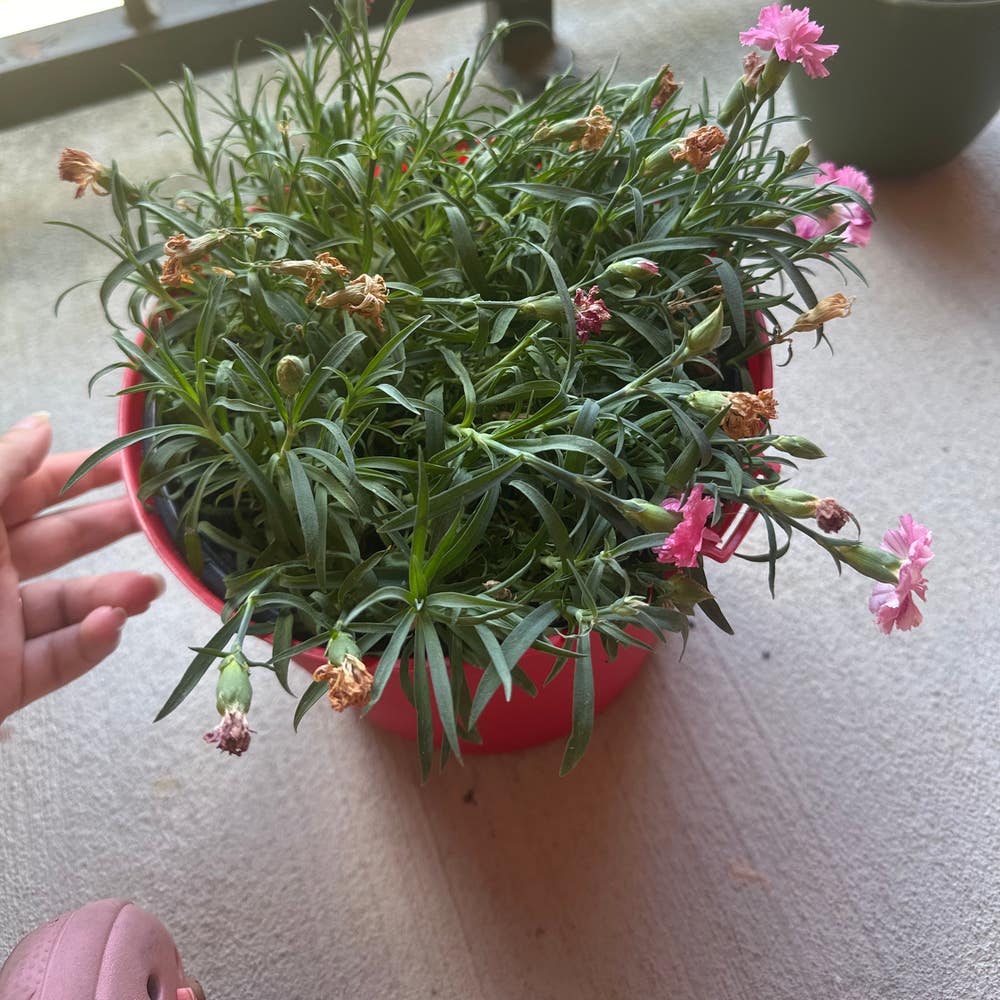
On the flip side, underwatering can also cause leaves to fall over. Look for crispy, dry leaves and wilting as signs that your plant needs a drink.
When the soil pulls away from the pot edges, it's a clear indication of dehydration. Maintaining consistent moisture levels is crucial for the health of your Mini Carnations.
🥦 Nutrient Deficiencies
Nitrogen Deficiency
A lack of nitrogen can manifest as pale green leaves and stunted growth. Nitrogen is vital for leaf health and overall vigor, so keep an eye on your plant's nutrient levels.
Potassium Deficiency
Potassium deficiency shows up as browning and curling leaf edges. This nutrient plays a key role in plant health and helps your carnations resist stress.
🐛 Pest Infestations
Common Pests
Aphids are notorious for infesting Mini Carnations, leaving behind telltale signs of damage. Keep an eye out for these pests, as they can quickly lead to leaf drop.
Spider mites are another concern, causing symptoms that can severely affect leaf health. Effective pest control is essential to prevent infestations and maintain the vitality of your carnations.
🌡️ Environmental Stress
Temperature
Orange Mini Carnations thrive in a specific temperature range. Extreme temperatures can stress the plant, leading to drooping leaves and other health issues.
Humidity
Humidity levels are crucial for Mini Carnations. Low humidity can cause stress, so watch for signs like leaf curling or browning to ensure your plant is comfortable.
Understanding these causes can help you take proactive steps to keep your Orange Mini Carnation healthy and vibrant. Next, we’ll dive into how to diagnose the specific problems affecting your plant.
Diagnosing the Problem
🌊 Signs of Overwatering vs. Underwatering
Identifying whether your Orange Mini Carnation is overwatered or underwatered is crucial. Overwatered plants often display yellowing leaves and mushy stems, while underwatered ones show crispy, dry leaves and wilting.
To confirm your diagnosis, check the soil moisture. Stick your finger about an inch into the soil; if it feels soggy, you're likely overwatering. Conversely, if it feels dry and pulls away from the pot edges, it's time to water.
🥦 Identifying Nutrient Deficiency Symptoms
Nutrient deficiencies can also cause drooping leaves. Pale green leaves and stunted growth often indicate a nitrogen deficiency, while browning and curling leaf edges suggest a potassium deficiency.
For a precise diagnosis, consider soil testing. This will help you identify specific nutrient levels and determine what your plant needs for optimal health.
🐛 Recognizing Pest Damage on Leaves
Pest infestations can wreak havoc on your Mini Carnation. Look for visual signs like discolored spots or webbing, which may indicate aphids or spider mites.
Inspect leaves and stems closely. Use a magnifying glass if needed to spot tiny pests or their eggs, ensuring you catch infestations early.
🌤️ Assessing Environmental Conditions
Environmental factors play a significant role in your plant's health. Evaluate the light requirements for your Mini Carnations; they thrive in bright, indirect sunlight.
Additionally, monitor temperature and humidity levels. Extreme temperatures or low humidity can stress your plant, leading to drooping leaves. Keeping these conditions in check will help maintain a vibrant, healthy plant.
With a clear understanding of these diagnostic steps, you're well-equipped to tackle the issues affecting your Orange Mini Carnation. Next, let’s explore effective solutions to fix those drooping leaves.
Solutions to Fix Drooping Leaves
🌊 Adjusting Watering Practices
Establishing a consistent watering schedule is crucial for your Orange Mini Carnation. Aim to water when the top inch of soil feels dry, ensuring you don't let it sit in soggy conditions.
Before watering, always check the soil moisture. This simple step can prevent overwatering, which is a common issue.
Consider using the Greg plant care app for AI-powered reminders. This tool can help you stay on track with your watering routine.
🌱 Fertilizing with the Right Nutrients
Choosing the right fertilizer is essential for vibrant growth. Look for a balanced fertilizer specifically formulated for flowering plants.
Apply the fertilizer every 4-6 weeks during the growing season. This frequency helps maintain nutrient levels without overwhelming your plant.
🐛 Treating Pest Infestations
Pest control is vital to keep your Mini Carnations healthy. Start by identifying common pests like aphids and spider mites.
For treatment, consider both organic and chemical control methods. Neem oil or insecticidal soap can be effective for organic options.
Follow these step-by-step instructions for applying treatments:
- Identify the pest.
- Choose your treatment method.
- Apply according to the product instructions.
🌞 Modifying Environmental Conditions
Adjusting light exposure can significantly impact your plant's health. Mini Carnations thrive in bright, indirect light, so find a suitable spot in your home.
Temperature control is also important. Keep your Mini Carnations in a range of 65-75°F to ensure they remain comfortable and healthy.
By implementing these solutions, you can effectively address drooping leaves and promote a thriving Orange Mini Carnation. Next, let’s explore preventative measures to keep your plant healthy in the long run.
Preventative Measures
Best Practices for Watering Mini Carnations 🌊
Watering your Mini Carnations effectively is crucial for their health. Aim to water when the top inch of soil feels dry, ensuring you avoid both overwatering and underwatering.
Watch for signs like yellowing leaves or wilting, which indicate potential issues. A consistent watering schedule can help maintain optimal moisture levels.
Soil Selection and Drainage Tips 🪴
Choosing the right soil is essential for your carnations. A well-draining potting mix, ideally with organic matter, promotes healthy root growth.
Always use pots with drainage holes to prevent water from pooling. Terracotta pots are a great choice as they allow for better airflow.
Regular Monitoring for Pests 🐛
Routine checks for pests can save your Mini Carnations from significant damage. Inspect the leaves and stems regularly for any signs of infestations, such as discoloration or webbing.
Consider using preventative treatments like neem oil to keep pests at bay. Early detection is key to maintaining plant health.
Seasonal Care Adjustments 🍂
Adapting your care practices with the seasons is vital. In warmer months, increase watering frequency, while in cooler months, reduce it.
Don’t forget the importance of deadheading and pruning. These practices encourage new growth and keep your plants looking their best.
By implementing these preventative measures, you can ensure your Orange Mini Carnations thrive. Next, let’s explore solutions to fix those drooping leaves when issues arise.
⚠️ Safety First
This content is for general information and may contain errors, omissions, or outdated details. It is not medical, veterinary advice, or an endorsement of therapeutic claims.
Always consult a qualified healthcare professional before using any plant as food, medicine, or supplement.
Never eat any plant (or feed one to pets) without confirming its identity with at least two trusted sources.
If you suspect poisoning, call Poison Control (800) 222-1222, the Pet Poison Helpline (800) 213-6680, or your local emergency service immediately.
Spotted an error? Please report it here.
Keep your Orange Mini Carnation thriving 🌼 by using Greg's tailored watering reminders and expert tips to tackle overwatering, nutrient needs, and pests with confidence!