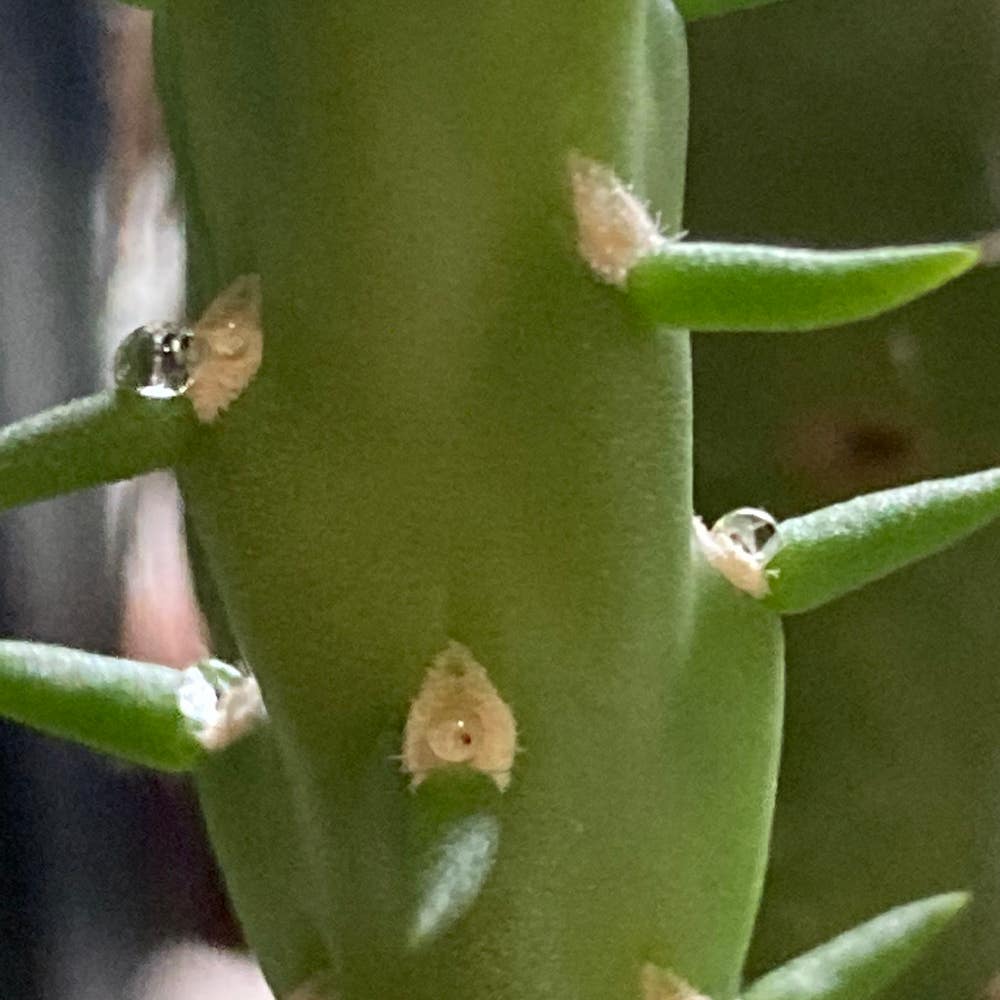
🌵 Why Is My Sonoran Jumping Cholla Not Doing Well?
Cylindropuntia fulgida
By the Greg Editorial Team
Mar 13, 2024•4 min read
This article was created with the help of AI so we can cover more plants for you. May contain errors. See one? Report it here.
- 🌵 Shriveling or yellow base? Your Cholla is thirsty or overwatered.
- Bright, indirect sunlight and 70°F to 90°F for optimal growth.
- Inspect and treat pests/diseases regularly; watch for root rot signs.
When Water Woes Strike
💧 Signs of Thirst or Drowning
Spotting the Difference
Your Sonoran Jumping Cholla's leaves shriveling like a deflated balloon? That's a thirst alert. Conversely, if the plant's base turns as yellow as a caution sign, you've overdone the watering. It's a fine line between neglect and over-care.
The Telltale Soil Test
Dry soil is a clear indicator your Cholla is thirsty. If it's pulling away from the pot's edge, it's time for a drink. But if the soil feels like a swamp, hold off on the water to prevent root rot.
Tailored Tips for Hydration
Crafting the Perfect Watering Schedule
Water your Cholla like it's living in the desert—because it is. Less frequent, deep watering sessions are key, allowing the soil to completely dry out in between. Adjust for cooler months by reducing the frequency.
The Drainage Mantra
Ensure your pot has drainage holes to avoid waterlogging. It's not just about how much you water, but how well the water can escape. Your Cholla's roots need to breathe, not swim.
Consistency is King
Establish a routine that mimics the natural dry spells of the Cholla's habitat. Use the finger test—when the top inch of soil feels dry, it's time to water. But remember, moderation is your mantra.
Light and Temperature Tango
🌞 Reading the Sunburn and Shivers
Your Sonoran Jumping Cholla is a sun worshipper with limits. Sunburn shows up as whitish, brittle areas on the plant, a clear sign it's pleading for less intense rays. Conversely, a Cholla stretching toward the light, with pale and elongated growth, is silently screaming for more sunshine.
Finding the Sweet Spot
To find your Cholla's happy place, aim for bright, indirect sunlight. Think of it as the plant's personal retreat—enough light to thrive, but shielded from the harsh midday sun. Temperature-wise, keep it between 70°F to 90°F (21°C to 32°C) during the day, with a slight drop at night to mimic its native desert chill. Remember, no sudden temperature swings—your Cholla craves stability like a cactus craves the desert heat.
The Unseen Invaders: Pests and Diseases
🐛 Bug Battles and Fungus Fights
Pests and diseases can be stealthy adversaries to your Sonoran Jumping Cholla. Vigilance is your best defense; regular inspections can catch issues early. Look for webbing, sticky residue, or unusual spots on your cactus. These are telltale signs of aphids, spider mites, or fungal infections.
🌵 Cholla-Specific Countermeasures
When it comes to treatment, natural remedies often suffice. Introduce predatory insects like ladybugs or lacewings to tackle aphid or mite problems. For fungal issues, increase airflow and consider eco-friendly fungicides. If necessary, escalate to insecticidal soap or neem oil, but always test a small area first. Remember, overwatering and poor circulation are your Cholla's worst enemies in this fight.
Root Rot: The Silent Killer
🌵 Unearthing the Problem
Root rot in the Sonoran Jumping Cholla is like a stealthy burglar, silent but devastating. Yellowing leaves and a wilted posture are the Cholla's distress signals. If the plant's base feels as if it's been through a wringer, it's time to investigate. A foul smell from the soil and discolored stems are the final red flags. These aren't just aesthetic issues; they're a cry for help.
Salvaging Your Spiny Specimen
Act fast—your Cholla's life depends on it. Cease watering and gently remove your cactus from its pot. Shake off the old soil and inspect the roots. If they're brown or black and smell like last week's compost, you've got a problem. Sterilize your scissors and cut away the rotten roots with the precision of a surgeon. Remember to balance the foliage to the remaining roots to keep your Cholla from toppling over. After the operation, let the cactus dry out before repotting in fresh, well-draining soil. Going forward, water sparingly and ensure proper drainage to prevent a relapse. If most roots are gone, propagate any healthy stems left. It's not just a rescue; it's a rebirth.
⚠️ Safety First
This content is for general information and may contain errors, omissions, or outdated details. It is not medical, veterinary advice, or an endorsement of therapeutic claims.
Always consult a qualified healthcare professional before using any plant as food, medicine, or supplement.
Never eat any plant (or feed one to pets) without confirming its identity with at least two trusted sources.
If you suspect poisoning, call Poison Control (800) 222-1222, the Pet Poison Helpline (800) 213-6680, or your local emergency service immediately.
Spotted an error? Please report it here.
Keep your Sonoran Jumping Cholla flourishing 🌵 with Greg's personalized watering schedules and sun exposure reminders, ensuring you never miss a beat in cactus care.