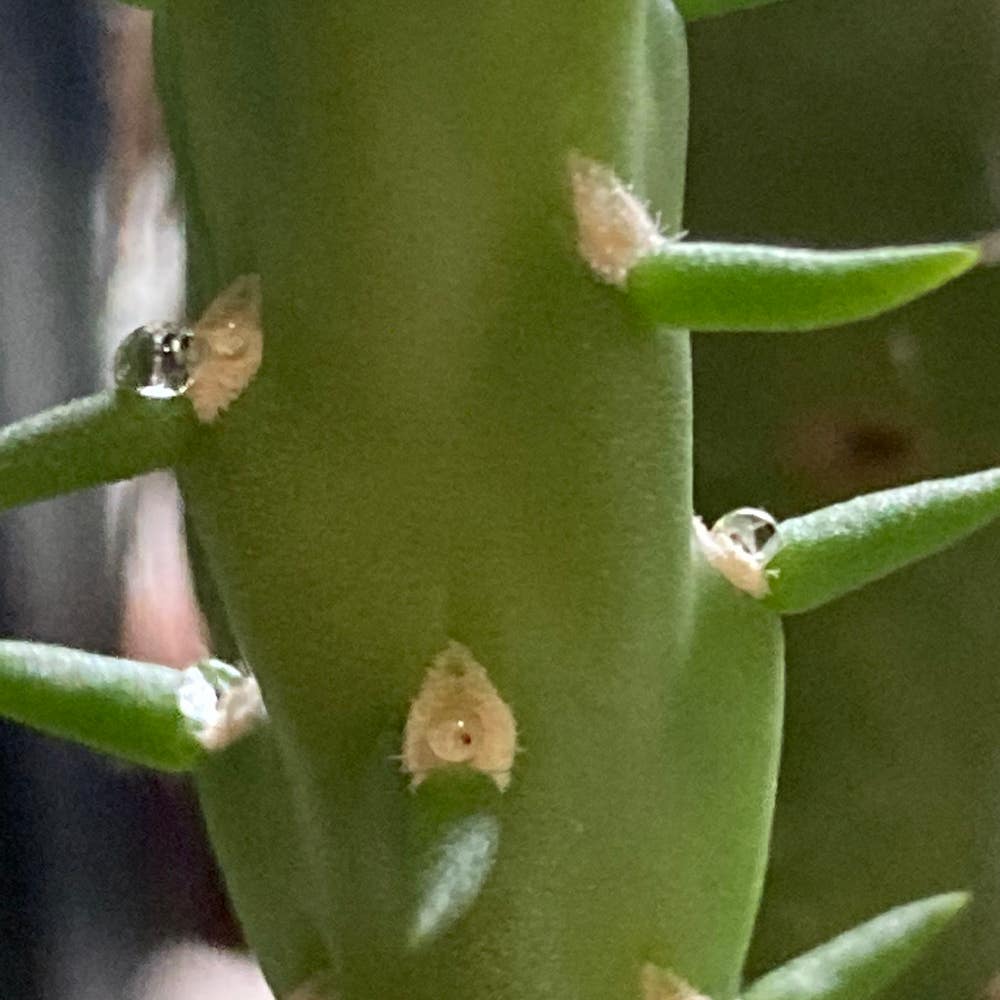
🌵 How to Cure Leaves Falling Over on Your Chain-Link Cholla
Cylindropuntia fulgida
By the Greg Editorial Team
Sep 28, 2024•4 min read
This article was created with the help of AI so we can cover more plants for you. May contain errors. See one? Report it here.
- 💧 Overwatering and underwatering both cause leaf drop; adjust watering habits accordingly.
- 🐛 Pest infestations like mealybugs can lead to leaf drop; check and treat regularly.
- 🌞 Ensure at least six hours of sunlight daily for optimal Chain-Link Cholla health.
Causes of Leaf Drop
💧 Overwatering: Signs and Solutions
Overwatering is a common issue that can lead to significant leaf drop in your Chain-Link Cholla. Look for yellowing leaves and mushy stems as initial signs.
If you inspect the roots and find them dark and mushy, root rot may be the culprit.
To remedy overwatering:
- Reduce your watering frequency.
- Improve soil drainage by repotting with a cactus mix.
- Allow the soil to dry out completely before rewatering.
🚰 Underwatering: Signs and Solutions
Underwatering can also cause your Cholla to drop leaves. Signs include wrinkled or shriveled leaves and stunted growth.
To address underwatering:
- Increase your watering frequency.
- Ensure thorough soaking of the soil.
- Regularly monitor soil moisture levels to prevent future issues.
🐛 Pest Infestations: Identification and Treatment
Pests can wreak havoc on your Chain-Link Cholla. Common offenders include mealybugs, which appear as white, cotton-like masses on stems, and scale insects, identifiable by their hard, shell-like bumps on leaves.
For treatment:
- Manually remove pests using a cotton swab dipped in alcohol.
- Apply insecticidal soap or neem oil for more extensive infestations.
🌡️ Environmental Stress Factors: Temperature and Humidity
Environmental conditions play a crucial role in your Cholla's health. The ideal temperature range is between 70°F to 100°F (21°C to 38°C), and low humidity is best for cacti.
Watch for signs of stress, such as leaf drop during extreme temperature changes or wilting due to high humidity levels.
Understanding these causes will help you take proactive steps to maintain your Chain-Link Cholla's health. Next, we’ll explore preventive measures to keep your plant thriving.
Preventive Measures
Proper Watering Techniques 🌊
To keep your Chain-Link Cholla thriving, it's crucial to establish a proper watering schedule. Allow the soil to dry out completely between waterings to prevent overwatering, which can lead to root rot.
Utilize the "soak and dry" method for optimal moisture levels. This technique ensures that the roots receive adequate hydration without sitting in waterlogged soil.
Ideal Soil Composition and Drainage 🏺
The right soil mix is vital for your cactus's health. A recommended blend is 50% cactus soil and 50% perlite or sand, which enhances drainage.
Good drainage is essential as it prevents root rot and promotes healthy growth. Without it, your Cholla may struggle to thrive.
Optimal Sunlight Exposure ☀️
Your Chain-Link Cholla craves sunlight, needing full exposure for at least six hours daily. Insufficient light can lead to stretching or leaning towards light sources, indicating it's time to reposition your plant.
By ensuring your cactus receives adequate sunlight, you help it maintain its vibrant health and robust growth.
Treatment Options
Immediate Care for Affected Plants 🌱
When you notice leaf drop on your Chain-Link Cholla, swift action is crucial. Start by assessing your watering habits; if you’ve been overwatering, cut back immediately.
Next, inspect your plant for pests. Look for signs like mealybugs or scale insects, and treat them as needed. If your plant is struggling for light, consider moving it to a sunnier spot to boost its health.
Long-Term Care Strategies 🌿
Establishing a consistent care routine is essential for the long-term health of your Cholla. Regularly check the soil moisture and adjust your watering schedule based on the plant's needs.
Additionally, keep an eye out for pests and diseases. Proactive monitoring can save your plant from future stress and ensure it thrives in your care.
By following these immediate and long-term strategies, you’ll set your Chain-Link Cholla on a path to recovery and robust growth.
Monitoring and Maintenance
Regular Checks for Leaf Health 🌿
To keep your Chain-Link Cholla thriving, conduct weekly inspections. Look for signs of stress or pests, focusing on leaf color, texture, and overall vigor.
Regular checks help you catch issues early, ensuring your plant stays healthy and vibrant. A little attention goes a long way in maintaining its beauty.
Signs of Recovery and Ongoing Care 🌱
After addressing any problems, watch for indicators of recovery. New growth emerging after treatment is a positive sign, as is improved leaf color and firmness.
Ongoing care is essential. Continue monitoring your plant and adjust care practices as needed to support its health and growth. This proactive approach will keep your Cholla flourishing for years to come.
With these monitoring and maintenance strategies, you're well-equipped to nurture your Chain-Link Cholla effectively. Next, let’s explore immediate care options for affected plants to ensure they bounce back quickly.
⚠️ Safety First
This content is for general information and may contain errors, omissions, or outdated details. It is not medical, veterinary advice, or an endorsement of therapeutic claims.
Always consult a qualified healthcare professional before using any plant as food, medicine, or supplement.
Never eat any plant (or feed one to pets) without confirming its identity with at least two trusted sources.
If you suspect poisoning, call Poison Control (800) 222-1222, the Pet Poison Helpline (800) 213-6680, or your local emergency service immediately.
Spotted an error? Please report it here.
Keep your Chain-Link Cholla thriving 🌵 by using Greg's tailored watering reminders and pest alerts to ensure it gets the care it needs to flourish!