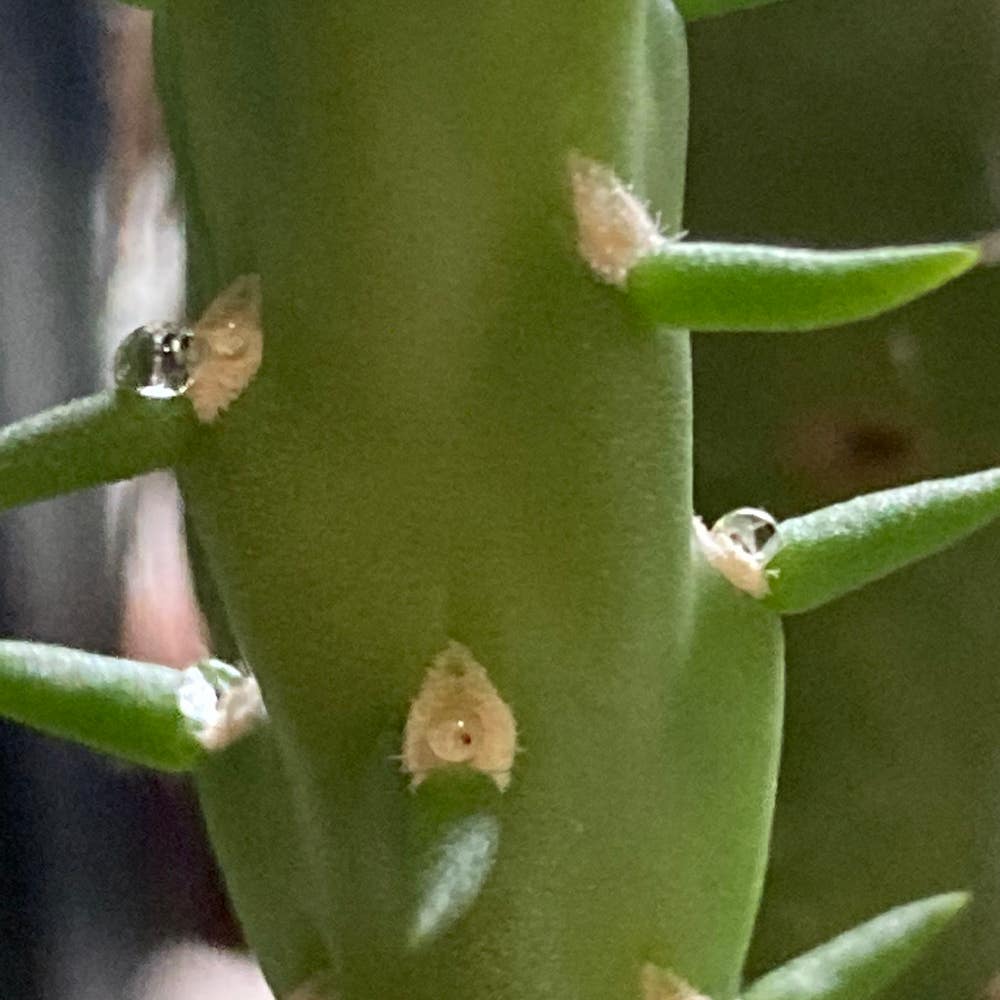
🌵 Understanding Chain-Link Cholla Leaves with Black Spots
Cylindropuntia fulgida
By the Greg Editorial Team
Sep 28, 2024•5 min read
This article was created with the help of AI so we can cover more plants for you. May contain errors. See one? Report it here.
- 🌱 Black spots on Chain-Link Cholla stem from fungal, bacterial, or pest issues.
- 💧 Overwatering and poor drainage can cause root rot, leading to black spots.
- 🔍 Early detection and inspection are key for effective treatment of black spots.
Causes of Black Spots
🦠 Fungal Infections
Fungal infections are a common culprit behind black spots on Chain-Link Cholla leaves. Pathogens like Fusarium and Botrytis thrive in high humidity and poor air circulation, leading to black spots that often appear fuzzy.
🦠 Bacterial Infections
Bacterial infections can also affect your Chain-Link Cholla. Look out for black, water-soaked spots that may ooze, typically caused by bacteria such as Erwinia or Pseudomonas. Overwatering and high humidity create ideal conditions for these bacteria to flourish.
🐛 Pest Infestations
Pests can wreak havoc on your Chain-Link Cholla, leading to unsightly black spots.
Scale Insects
Scale insects are notorious for leaving sticky residue and black spots on leaves. They weaken the plant and cause leaf discoloration, making it crucial to catch them early.
Mealybugs
Mealybugs present themselves as cotton-like clusters on stems and leaves. Their presence can stunt growth and increase the risk of disease transmission, so vigilance is key.
🌍 Environmental Stress Factors
Environmental conditions significantly impact the health of your Chain-Link Cholla.
Soil Moisture Issues
Both overwatering and underwatering can lead to black spots. Overwatering can cause root rot, while underwatering stresses the plant, making it more susceptible to diseases.
☀️ Sunburn
Excessive sun exposure can result in brown or black spots on leaves. To prevent this, gradually acclimatize your plant to full sun to avoid shock.
Understanding these causes is essential for maintaining the health of your Chain-Link Cholla. Next, we’ll explore the symptoms associated with black spots, helping you identify issues early on.
Symptoms Associated with Black Spots
Leaf Discoloration 🌿
Black spots on Chain-Link Cholla leaves can signal serious issues. Often, you'll notice yellowing edges accompanying these spots, indicating stress or infection.
Monitoring these discoloration patterns is crucial for early detection. Catching problems early can make a significant difference in treatment success.
Wilting or Drooping Leaves 😩
Wilting or drooping leaves can stem from various causes, including overwatering, pest damage, or disease. Each of these factors can severely impact the overall health of your plant.
If you see wilting, it’s a sign that your Cholla needs immediate attention. Ignoring this symptom can lead to further decline.
Other Visible Signs 👀
In addition to discoloration and wilting, keep an eye out for stunted growth or abnormal leaf shapes. These symptoms can indicate underlying issues that require timely intervention.
Addressing these signs promptly can help restore your Chain-Link Cholla to health. Remember, the sooner you act, the better the chances of recovery.
Diagnosis and Treatment
🌑 Identifying the Type of Black Spot Issue
Visual Inspection Techniques
To tackle black spots on your Chain-Link Cholla, start with a thorough visual inspection.
- Examine leaf surfaces for spots and discoloration.
- Check for pests on stems and leaves.
- Assess overall plant health and environmental conditions.
This methodical approach helps you pinpoint the issue effectively.
Differentiating Between Fungal and Bacterial Issues
Identifying whether the problem is fungal or bacterial is crucial for treatment.
Fungal infections typically present as black spots with a fuzzy appearance, while bacterial issues often show black, water-soaked spots that may ooze.
Accurate diagnosis ensures you choose the right treatment, leading to better outcomes for your plant.
🧪 Treatment Options for Black Spots
Fungicides and Bactericides
When it comes to treating black spots, fungicides and bactericides are your go-to solutions.
Look for products specifically designed for cacti, and follow the application instructions closely for the best results. Timing is key; apply treatments during the early morning or late afternoon to avoid sunburn on the leaves.
Natural Remedies
If you prefer organic options, consider using neem oil or a baking soda solution.
To prepare a baking soda solution, mix one tablespoon of baking soda with a quart of water. Spray it on affected areas, ensuring even coverage for effective treatment.
🐞 Pest Control Methods
Managing pest infestations is essential for maintaining your Chain-Link Cholla's health.
- Manual removal of pests is often the simplest first step.
- Application of insecticidal soap or horticultural oil can help eliminate stubborn pests.
- Regular monitoring and preventive measures will keep future infestations at bay.
By staying proactive, you can protect your plant and promote its vibrant growth.
With these diagnosis and treatment strategies in hand, you're well-equipped to tackle black spots on your Chain-Link Cholla. Next, let’s explore prevention strategies to keep your plant thriving.
Prevention Strategies
🌱 Best Practices for Care
Proper Watering Techniques
Watering your Chain-Link Cholla correctly is crucial. Aim to water only when the top inch of soil feels dry, allowing the soil to dry out completely between waterings.
This practice helps prevent root rot and keeps your plant healthy. Remember, less is often more when it comes to watering cacti.
Soil Selection and Drainage
Choosing the right soil is vital for optimal drainage. A well-draining cactus mix or a combination of potting soil and sand works best.
Ensure your pot has drainage holes to prevent water accumulation. This simple step can save your plant from soggy roots and black spots.
Sunlight Requirements
Chain-Link Cholla thrives in bright, direct sunlight. Ideally, provide at least six hours of sunlight daily for robust growth.
If your plant is transitioning to full sun, do it gradually to prevent sunburn. This acclimatization will help your cholla flourish without stress.
🌦️ Seasonal Care Tips
Adjusting Care During Different Seasons
As seasons change, so should your care routine. In warmer months, increase watering frequency, but reduce it during cooler months when the plant's growth slows.
Keep an eye on light exposure, especially in winter, to ensure your cholla gets enough sunlight. Adjusting care according to the season can make a significant difference in your plant's health.
Monitoring Environmental Conditions
Invest in tools to measure humidity and temperature around your Chain-Link Cholla. Maintaining stable conditions is essential for preventing stress and disease.
Creating a comfortable environment will help your plant thrive. Regular monitoring can lead to early detection of potential issues, keeping your cholla in top shape.
With these prevention strategies in place, you'll be well-equipped to keep your Chain-Link Cholla healthy and vibrant. Next, let's explore the symptoms associated with black spots on your plant.
⚠️ Safety First
This content is for general information and may contain errors, omissions, or outdated details. It is not medical, veterinary advice, or an endorsement of therapeutic claims.
Always consult a qualified healthcare professional before using any plant as food, medicine, or supplement.
Never eat any plant (or feed one to pets) without confirming its identity with at least two trusted sources.
If you suspect poisoning, call Poison Control (800) 222-1222, the Pet Poison Helpline (800) 213-6680, or your local emergency service immediately.
Spotted an error? Please report it here.
Combat black spots on your Chain-Link Cholla with Greg's tailored care tips 🌵, ensuring your plant stays healthy by mastering watering and pest management!