🌵 How Do I Know When My Sonoran Jumping Cholla Needs Water?
Cylindropuntia fulgida
By the Greg Editorial Team
Mar 13, 2024•3 min read
This article was created with the help of AI so we can cover more plants for you. May contain errors. See one? Report it here.
- 🌵 Shriveled stems mean water me, check with a squeeze test.
- Seasons change, so does Cholla's thirst; water more in heat, less in winter.
- Well-draining soil and sun are key to a happy, hydrated Cholla.
Spotting a Thirsty Cholla
💧 Visual Thirst Cues
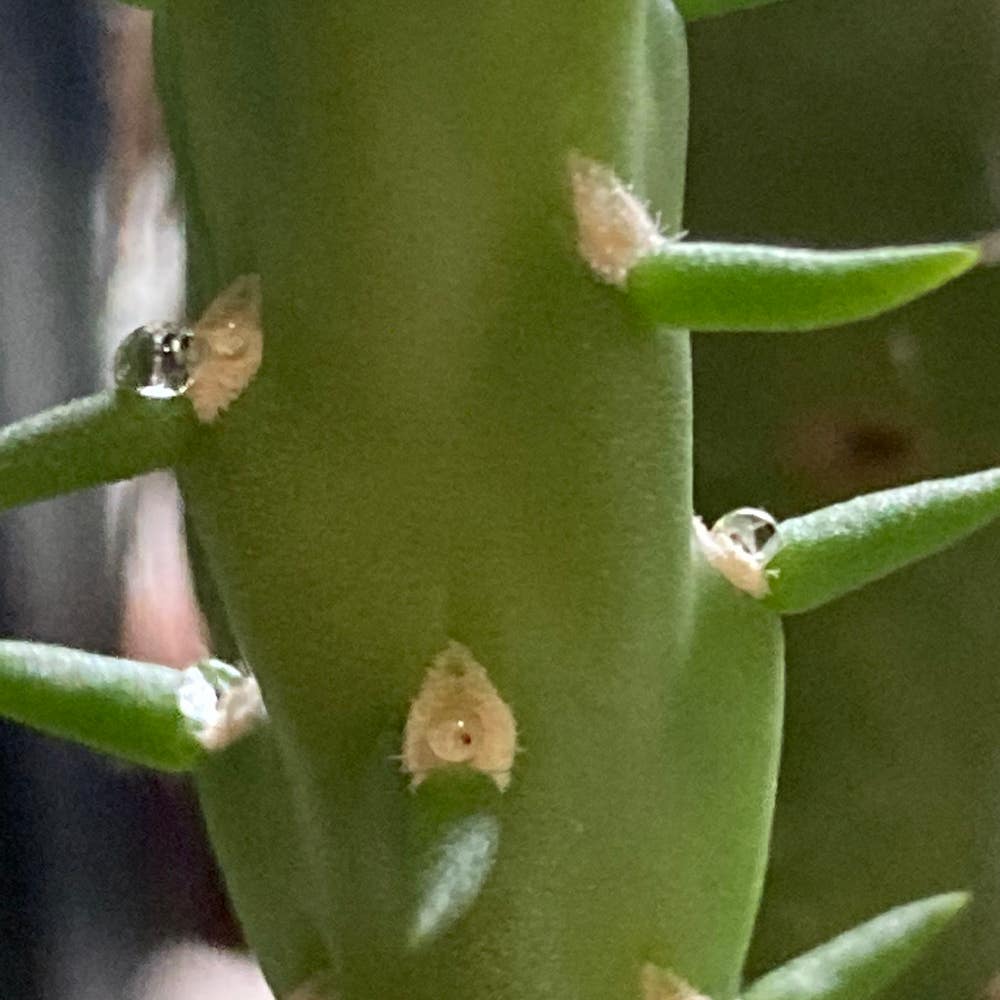
Shriveled stems on a Sonoran Jumping Cholla are a red flag for dehydration. This isn't just a bad hair day for your cactus; it's a cry for help. The once plump and firm texture will give way to a wrinkled appearance, much like a raisin. If your Cholla is channeling its inner prune, it's time to water.
💦 Tactile Checks
Safety first: when performing the "squeeze test" on a Cholla, protect your hands. Use gloves or a folded towel to gently press the stems. A well-hydrated Cholla will resist your pressure, while a thirsty one may feel a bit spongy. Also, consider the weight: a dry Cholla is surprisingly light, so if it feels like it's on a diet, it's probably time to water.
When to Water: Timing is Everything
💧 Drought Tolerance Explained
The Sonoran Jumping Cholla is not a frequent flyer at the watering hole. It's a survivor of the desert, where rain is a cameo appearance, not a regular cast member. This cactus has evolved to hoard water like a miser with gold, making it drought-tolerant.
🌦 Seasonal Watering Shifts
Seasons dictate the Cholla's thirst. When temperatures soar, your Cholla's roots get greedy, and you'll need to water more. Winter flips the script, ushering in a period of dormancy. During these cooler months, your watering can take a sabbatical.
🌱 Growth and Watering
Growth stages are like life stages; they change the Cholla's needs. Young Chollas, like sprightly youths, are thirsty for growth and require more water. As they mature, their roots become water banks, reducing the need for your intervention. Adjust your watering to match your Cholla's life stage, and watch it thrive.
Section
Adapting to Your Cholla's Environment
💧 Soil and Drainage
Your Sonoran Jumping Cholla thrives in soil that won't cling to water like a needy ex. Well-draining soil is non-negotiable. Mix in sand, perlite, and a dash of peat moss to create a loose, airy home base. This combo lets water rush through like a thrill-seeker on a waterslide, preventing the dreaded root rot.
Pots should come with drainage holes—they're not just for decoration. If you're feeling crafty, add a layer of gravel at the bottom to up the drainage game. Remember, your Cholla's roots hate waterlogged soil like cats hate water.
🌞 Sunlight and Temperature Factors
Sunlight for your Cholla is like a good morning coffee—absolutely essential. Aim for a spot that gets 6-8 hours of full sun daily, but watch out for the scorching afternoon rays. Think of it as putting on sunscreen; you want a tan, not a third-degree burn.
Temperature-wise, your Cholla is a fan of the heat but not a fan of frostbite. If the mercury dips too low, consider moving your spiky friend indoors or offer some protection. It's like giving your Cholla a warm blanket during a cold desert night.
Adjust your watering schedule with the sun's mood swings. More sun equals more frequent watering—check the soil often. Less sun, less water. It's a simple dance, but you've got to keep up with the rhythm.
⚠️ Safety First
This content is for general information and may contain errors, omissions, or outdated details. It is not medical, veterinary advice, or an endorsement of therapeutic claims.
Always consult a qualified healthcare professional before using any plant as food, medicine, or supplement.
Never eat any plant (or feed one to pets) without confirming its identity with at least two trusted sources.
If you suspect poisoning, call Poison Control (800) 222-1222, the Pet Poison Helpline (800) 213-6680, or your local emergency service immediately.
Spotted an error? Please report it here.
Ensure your Sonoran Jumping Cholla thrives with just-right watering 🌞 using Greg's custom reminders tailored to your home's environment and the Cholla's seasonal needs.