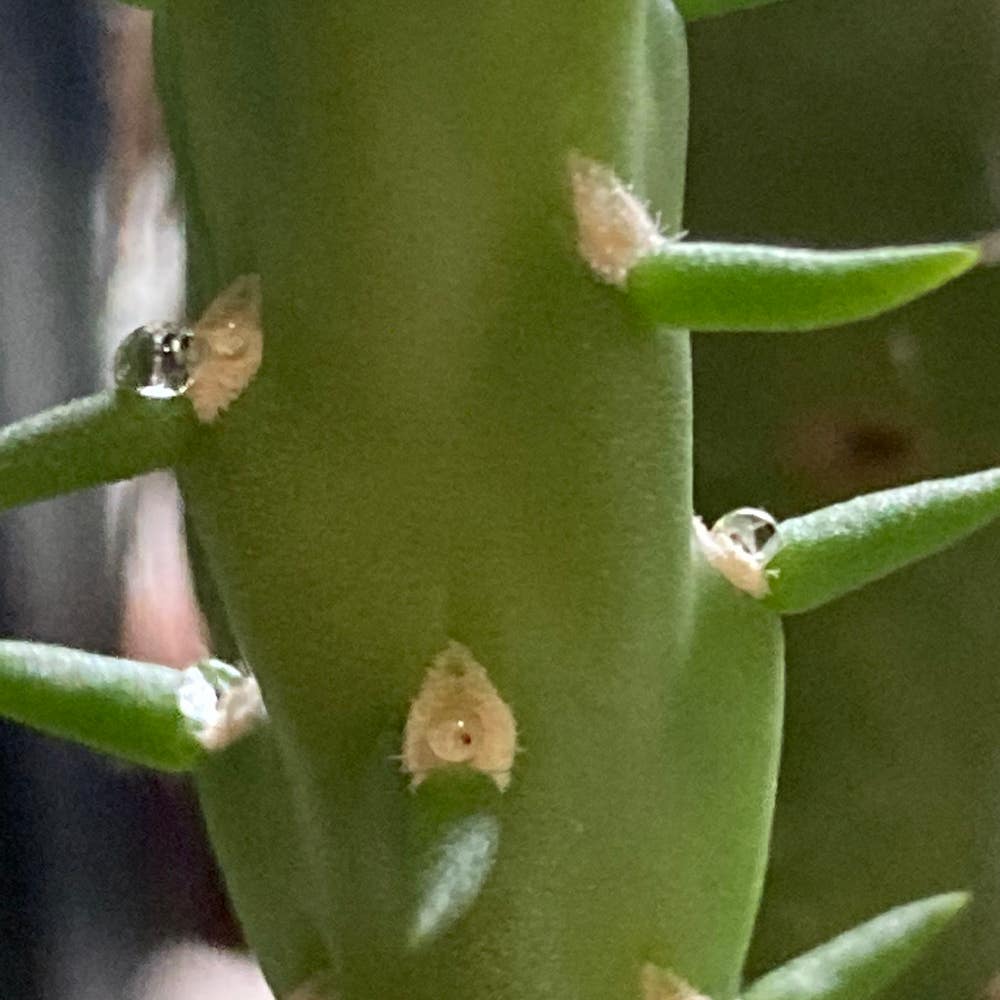
🌵 Should I Repot My Sonoran Jumping Cholla And If So, How?
Cylindropuntia fulgida
By the Greg Editorial Team
Mar 13, 2024•4 min read
This article was created with the help of AI so we can cover more plants for you. May contain errors. See one? Report it here.
- 🌵 Root-bound Cholla needs repotting, especially if roots peek through drainage holes.
- Repot in early spring with a slightly larger, shallow, and wide terracotta pot.
- Post-repotting care: Wait a week to water, then monitor growth and fertilize after a month.
When to Give Your Cholla a New Home
🌵 Spotting the Telltale Signs
Roots making a break for it through the drainage holes are your Cholla's version of sending up a flare. It's not just being nosy; it's root-bound. If your cactus has hit a growth plateau, it's not slacking off—it's silently screaming for more legroom. And if the soil dries out faster than you can say "thirsty," your Cholla is definitely hinting at a change of scenery.
🕰 Timing is Everything
Seasonal savvy is your best friend when it comes to repotting. Aim for the early spring, when your Cholla is gearing up for a growth spurt—it's like syncing with its internal clock for a smooth transition. Make sure the soil is as dry as a comedian's wit to avoid messy breakups and root damage. This isn't just about convenience; it's about setting the stage for your cactus's continued health and happiness.
Choosing the Right Pot
🏺 Material Matters
Terracotta, plastic, and ceramic are the main contenders for your Sonoran Jumping Cholla's new abode. Terracotta is the go-to for breathability, allowing moisture to escape and roots to breathe, reducing the risk of root rot. Plastic is the lightweight, cost-effective option, but beware, it holds moisture like a sponge, which can spell trouble for a cactus that prefers drier conditions. Ceramic pots are the middle ground, offering less porosity than terracotta but with a stylish finish. Remember, drainage holes are non-negotiable, regardless of your material choice.
📏 Size and Shape
When upsizing, think Goldilocks: not too big, not too small. A pot just a size up from your Cholla's current home is ideal. This prevents excess soil from retaining too much moisture, which could harm your plant. As for shape, shallow and wide is the way to go, matching the Cholla's natural rooting pattern. Deep pots are a no-no; they invite moisture to linger where roots can't reach, setting the stage for rot. Stability is also crucial; you don't want your spiky companion toppling over. Terracotta and ceramic bring the heft to stay put, while plastic may need some backup to keep it upright.
The Repotting Rodeo: A Step-by-Step Guide
🌵 Prep Work
Gear up: Before you dive into the repotting rodeo, slap on a pair of thick gloves. Those Cholla spines are no joke.
The old switcheroo: To get your Cholla out, think gentle persuasion, not brute force. Tilt and tap the pot, use tongs if needed, and avoid a spine-induced standoff.
🎪 The Main Event
Soil selection: Your Cholla's new crib needs the right mix. Aim for a blend that's like a backstage pass—exclusive access to drainage and aeration.
Planting the pioneer: Center your Cholla in the new pot like it's the star of the show. Fill in with soil, but don't pack it down—roots gotta breathe.
Aftercare: Helping Your Cholla Settle In
🌵 The First Few Days
After the repotting hustle, your Sonoran Jumping Cholla needs a moment. Hold off on watering for about a week to let any root trauma heal. This isn't neglect; it's giving your cactus the space it needs to recover. When you finally water, think less is more. A gentle sip, not a gulp, to quench its thirst.
Finding the right spot for your Cholla is like picking the best seat in a movie theater. Bright, indirect light is the sweet spot. Direct sunlight? That's a no-go. It's like putting your plant in the spotlight for a solo it didn't rehearse for. Keep it in a stable environment; no dramatic temperature swings that would make even a soap opera blush.
🌵 Long-term Success
Monitoring your Cholla post-repot is less about helicopter parenting and more about casual check-ins. New growth is a high-five for your efforts. But if you see wilting or a color palette that screams "I've seen better days," it's time to reassess your care routine.
Fertilizing is like giving your Cholla a pep talk, but timing is key. Wait a month before introducing any nutrients. It's not ready for a buffet of fertilizer right after the move. When you do start, keep it light—a monthly low-dose cactus fertilizer during the growing season should do the trick.
⚠️ Safety First
This content is for general information and may contain errors, omissions, or outdated details. It is not medical, veterinary advice, or an endorsement of therapeutic claims.
Always consult a qualified healthcare professional before using any plant as food, medicine, or supplement.
Never eat any plant (or feed one to pets) without confirming its identity with at least two trusted sources.
If you suspect poisoning, call Poison Control (800) 222-1222, the Pet Poison Helpline (800) 213-6680, or your local emergency service immediately.
Spotted an error? Please report it here.
With Greg's personalized care plans, you can repot your Sonoran Jumping Cholla and watch it flourish, making the transition effortlessly smooth 🌵.