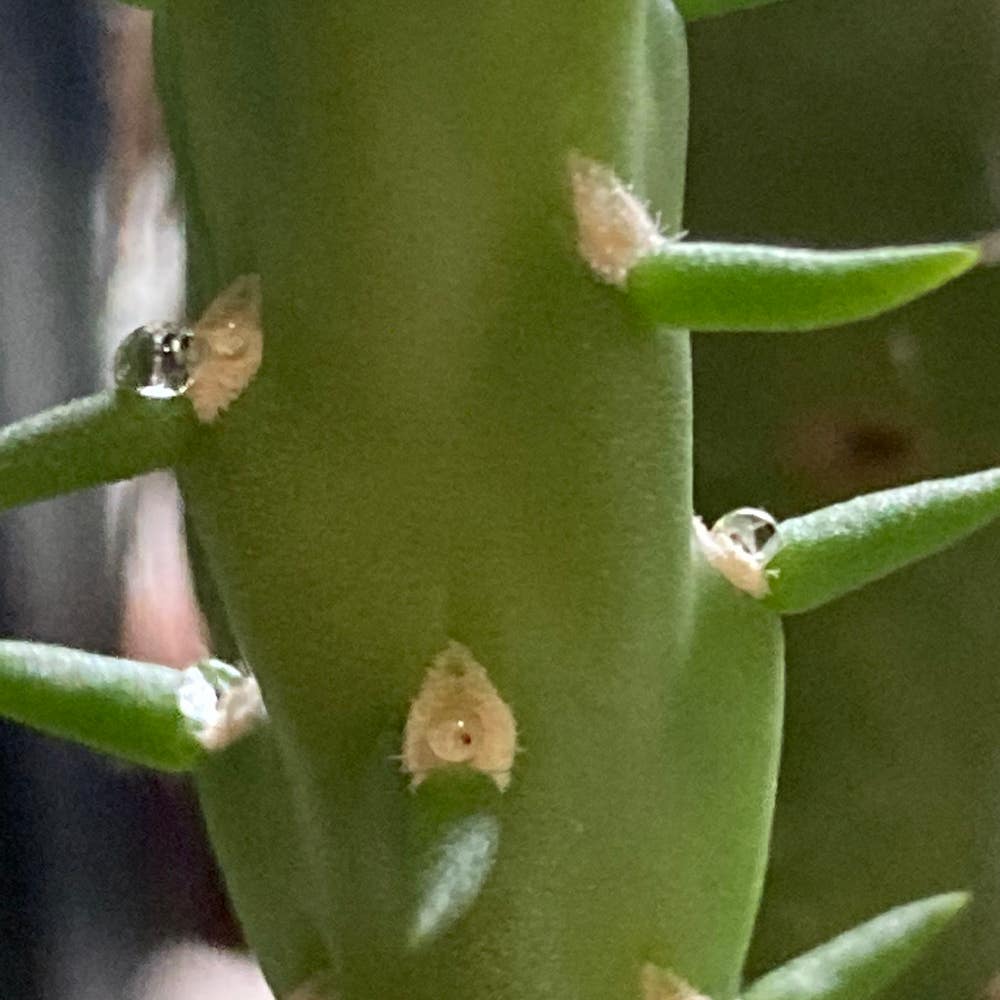
🌵 Why Does My Sonoran Jumping Cholla Have Yellow Leaves?
Cylindropuntia fulgida
By the Greg Editorial Team
Mar 13, 2024•3 min read
This article was created with the help of AI so we can cover more plants for you. May contain errors. See one? Report it here.
- 🌞 Sunshine matters: Rotate for even light, avoid direct harsh rays.
- 💦 Water wisely: Let soil dry between waterings; avoid over/underwatering.
- 🌱 Feed with care: Use balanced fertilizer, don't overfeed, especially in dormancy.
Spotting the Yellow Flags: Identifying Causes of Yellow Leaves
🌞 Lack of Sunshine Love
Sunshine is crucial for the Sonoran Jumping Cholla, as it affects leaf color. Without adequate light, leaves may turn yellow, signaling a plea for more rays.
- Rotate your Cholla to ensure even exposure.
- Provide bright, indirect light to avoid the harsh midday sun.
💧 Water Woes: Too Much or Too Little
Hydration is a delicate balance. Yellow leaves can indicate both underwatering and overwatering.
- Dry soil and curling leaves suggest your Cholla is thirsty.
- A mushy base and swampy soil are signs of overwatering.
🍽️ Hungry for Nutrients
Nutrients are the green fuel for your Cholla. A deficiency can lead to yellow leaves.
- Nitrogen is essential for leaf vibrancy.
- Check for general discoloration to spot a hungry Cholla.
First Aid for Yellow Leaves
💡 Let There Be (the Right Amount of) Light
Sunshine is the best medicine for your Cholla's yellow leaves. If it's basking in too much light, it's time to shade it up a bit. A sheer curtain can work like sunscreen, protecting your plant from harsh rays. Not enough light? Move it closer to a window where the sun's smile can reach it without scorching.
🚰 Watering Wisdom
Watering your Cholla is like a dance—know when to step in and when to hold back. If the soil feels like a wet sponge, give it a break. Let the top inch dry out before the next watering session. Too dry? Offer a deep drink to encourage roots to dive deeper for moisture and nutrients.
🍽️ Feeding Your Cholla
Fertilizer is your Cholla's snack, not a feast. Use a balanced, water-soluble type and follow the instructions like a secret recipe. Remember, overdoing it can cause more yellowing, so keep it light. If your Cholla is a drama queen showing off yellow leaves, a little nutrient boost might just be the encore it needs.
Preventing the Yellow Tinge: Long-Term Care Strategies
🌞 Light and Location
Finding the ideal spot for your Sonoran Jumping Cholla is like picking the best seat in a movie theater – it's all about the view and comfort. Place your cactus in a location that basks in bright, indirect sunlight. Direct sun can be harsh, so think of a spot that's sunny yet shielded, like under a patio or near a south-facing window with a sheer curtain.
💧 Watering Schedule and Techniques
Watering your Cholla shouldn't be a guessing game. Establish a consistent schedule that caters to the arid-loving nature of your plant. The soil should dry out between waterings – stick your finger in it; if it's dry an inch down, it's time to water. Remember, overwatering is the fast track to yellow leaves, so when in doubt, hold off on the H2O.
🍽️ Nutrient Management
Your Cholla isn't a glutton – it's more of a light snacker. Use a balanced fertilizer during the growing season, but don't go overboard. Overfeeding can lead to nutrient burn, which is just as bad as starving it. Apply fertilizer to moist soil to prevent root damage and ensure the nutrients are well-absorbed. Keep the feeding to the growing season; during dormancy, your Cholla is basically Netflixing and not in the mood to eat.
⚠️ Safety First
This content is for general information and may contain errors, omissions, or outdated details. It is not medical, veterinary advice, or an endorsement of therapeutic claims.
Always consult a qualified healthcare professional before using any plant as food, medicine, or supplement.
Never eat any plant (or feed one to pets) without confirming its identity with at least two trusted sources.
If you suspect poisoning, call Poison Control (800) 222-1222, the Pet Poison Helpline (800) 213-6680, or your local emergency service immediately.
Spotted an error? Please report it here.
Banish the yellow and restore 🌞 your Sonoran Jumping Cholla's vibrancy with Greg's tailored sunlight and watering plans, ensuring it thrives under your care.