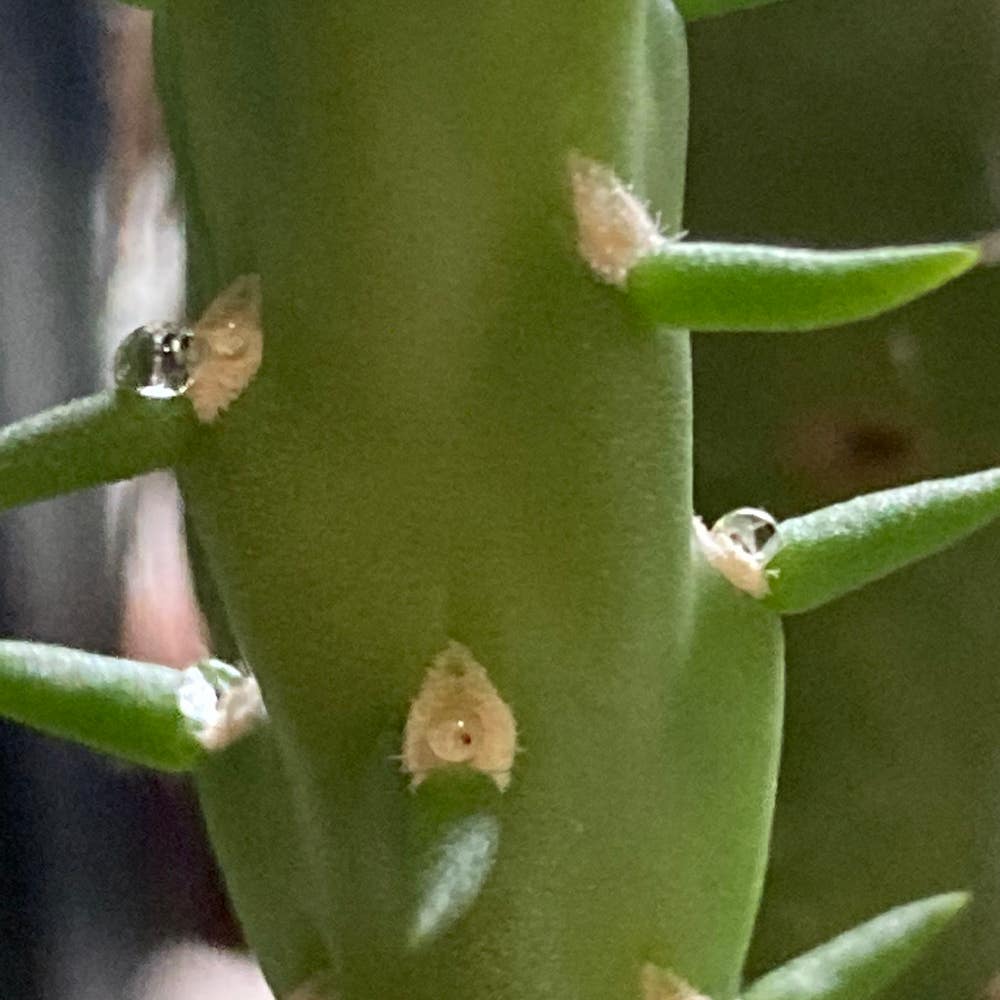
🌵 Understanding Curling Leaves on Your Chain-Link Cholla
Cylindropuntia fulgida
By the Greg Editorial Team
Sep 28, 2024•5 min read
This article was created with the help of AI so we can cover more plants for you. May contain errors. See one? Report it here.
- 🌡️ Extreme temperatures between 70°F and 100°F prevent curling leaves on Chain-Link Cholla.
- 💧 Low humidity and strong winds can dehydrate your cactus, causing leaf curling.
- 🐛 Pests and nutrient deficiencies lead to curling leaves; regular inspections are crucial.
Causes of Curling Leaves
🌡️ Environmental Stress Factors
Extreme temperatures can wreak havoc on your Chain-Link Cholla. High heat or sudden cold snaps create stress that leads to curling leaves.
Humidity levels also play a crucial role. Low humidity can cause dehydration, resulting in those telltale curls.
Wind exposure is another factor to consider. Strong winds can exacerbate water loss, further stressing your plant.
🐛 Pests Affecting Chain-Link Cholla
Common pests like mealybugs and scale insects are notorious for infesting cacti. If you notice sticky residue, webbing, or visible insects, it’s time to take action.
These pests can sap nutrients and moisture, leading to unhealthy, curling leaves. Keeping an eye out for these signs is essential for maintaining your plant's health.
🥦 Nutrient Deficiencies
Essential nutrients such as nitrogen, phosphorus, and potassium are vital for your Chain-Link Cholla. A deficiency in these can manifest as yellowing leaves, stunted growth, and, of course, curling.
Soil testing is crucial for assessing nutrient levels. This ensures your cactus gets the optimal nutrients it needs for robust growth.
💧 Watering Issues
🚰 Overwatering
Overwatering is a common pitfall for many plant owners. Symptoms include root rot, mushy stems, and curling leaves.
If you notice yellowing leaves or a foul odor from the soil, these are clear signs of overwatering. Adjusting your watering habits can make a significant difference.
🌵 Underwatering
On the flip side, underwatering can also lead to curling leaves. Symptoms include dehydration, shriveling, and a lack of vitality.
Signs of underwatering include dry, brittle stems and soil pulling away from the pot. Finding the right balance in watering is key to keeping your Chain-Link Cholla healthy.
Understanding these causes is the first step in diagnosing and treating curling leaves. Next, we’ll explore how to effectively diagnose the problem.
Diagnosing the Problem
Assessing Environmental Conditions 🌡️
To keep your Chain-Link Cholla thriving, start by checking the temperature. The ideal range is between 70°F and 100°F; anything outside this can stress your cactus.
Humidity is another critical factor. Cacti prefer low humidity levels, so ensure your environment isn't too damp, which can lead to curling leaves.
Identifying Pests and Diseases 🐛
Regular visual inspections are essential for spotting pests and diseases early. Look for common culprits like mealybugs or signs of root rot and fungal infections.
If you notice sticky residue or webbing, it’s time to act. These signs indicate pest infestations that can sap your plant's vitality.
Evaluating Watering Practices 💧
Watering frequency plays a significant role in your cactus's health. Aim to water every 2-4 weeks, adjusting based on environmental conditions.
Soil moisture testing is also crucial. Use a moisture meter or the finger test to ensure your soil isn’t too dry or too wet.
Soil Analysis for Drainage and Nutrients 🏺
The right soil composition is vital for your Chain-Link Cholla. Well-draining soil helps prevent root rot and supports healthy growth.
Don’t forget to check drainage. Ensure your pots have adequate drainage holes to avoid water accumulation, which can lead to various issues.
By diagnosing these factors, you can take proactive steps to restore your cactus's health and prevent future curling leaves. Next, let’s explore how to treat those curling leaves effectively.
Treating Curling Leaves
🌊 Immediate Actions to Take
Adjusting Watering Schedule
- Begin by assessing your current watering frequency.
- Modify it based on environmental conditions and the moisture level of the soil.
- Always allow the soil to dry out between waterings to prevent further curling.
Treating Pests and Diseases
- Identify any specific pests or diseases that may be affecting your Chain-Link Cholla.
- Apply appropriate treatments, such as insecticidal soap for pest infestations.
- If necessary, remove any affected areas to promote overall plant health.
📅 Long-Term Care Strategies
Improving Soil Drainage
- For optimal health, use a soil mix of 50% cactus soil and 50% perlite or sand.
- Consider repotting if drainage issues persist, as this can significantly improve your cactus's well-being.
Fertilization Tips for Chain-Link Cholla
- Choose a balanced, low-nitrogen cactus fertilizer to nourish your plant.
- Apply this fertilizer every 4-6 weeks during the growing season for best results.
By implementing these immediate and long-term strategies, you can effectively treat curling leaves and promote a healthier Chain-Link Cholla. Next, let’s explore how to prevent future curling through best practices and regular maintenance.
Preventing Future Curling
🌞 Best Practices for Chain-Link Cholla Care
Optimal Sunlight Exposure
Chain-Link Cholla thrives in full sun, requiring 6 to 8 hours of direct sunlight daily. During extreme weather conditions, consider moving your cactus indoors to protect it from harsh elements.
Seasonal Care Adjustments
In winter, reduce your watering frequency as the plant enters dormancy. Conversely, in summer, keep a close eye on your Cholla's water needs, as it may require more hydration during hotter months.
🔍 Regular Monitoring and Maintenance
Signs to Watch for in Healthy Plants
Look for vibrant colors and new growth patterns as indicators of a healthy Chain-Link Cholla. Regular inspections can help ensure your plant remains pest-free and thriving.
Routine Checks for Pests and Diseases
Conduct monthly inspections to catch any signs of pests or diseases early. Preventive treatments, like applying neem oil or insecticidal soap, can safeguard your cactus from potential infestations.
By following these best practices and maintaining a vigilant eye, you can help your Chain-Link Cholla flourish and avoid curling leaves in the future. Next, let's explore how to treat curling leaves effectively when they do occur.
⚠️ Safety First
This content is for general information and may contain errors, omissions, or outdated details. It is not medical, veterinary advice, or an endorsement of therapeutic claims.
Always consult a qualified healthcare professional before using any plant as food, medicine, or supplement.
Never eat any plant (or feed one to pets) without confirming its identity with at least two trusted sources.
If you suspect poisoning, call Poison Control (800) 222-1222, the Pet Poison Helpline (800) 213-6680, or your local emergency service immediately.
Spotted an error? Please report it here.
Keep your Chain-Link Cholla thriving 🌵 by using Greg's tailored care tips and soil moisture alerts to prevent curling leaves and ensure optimal growth!