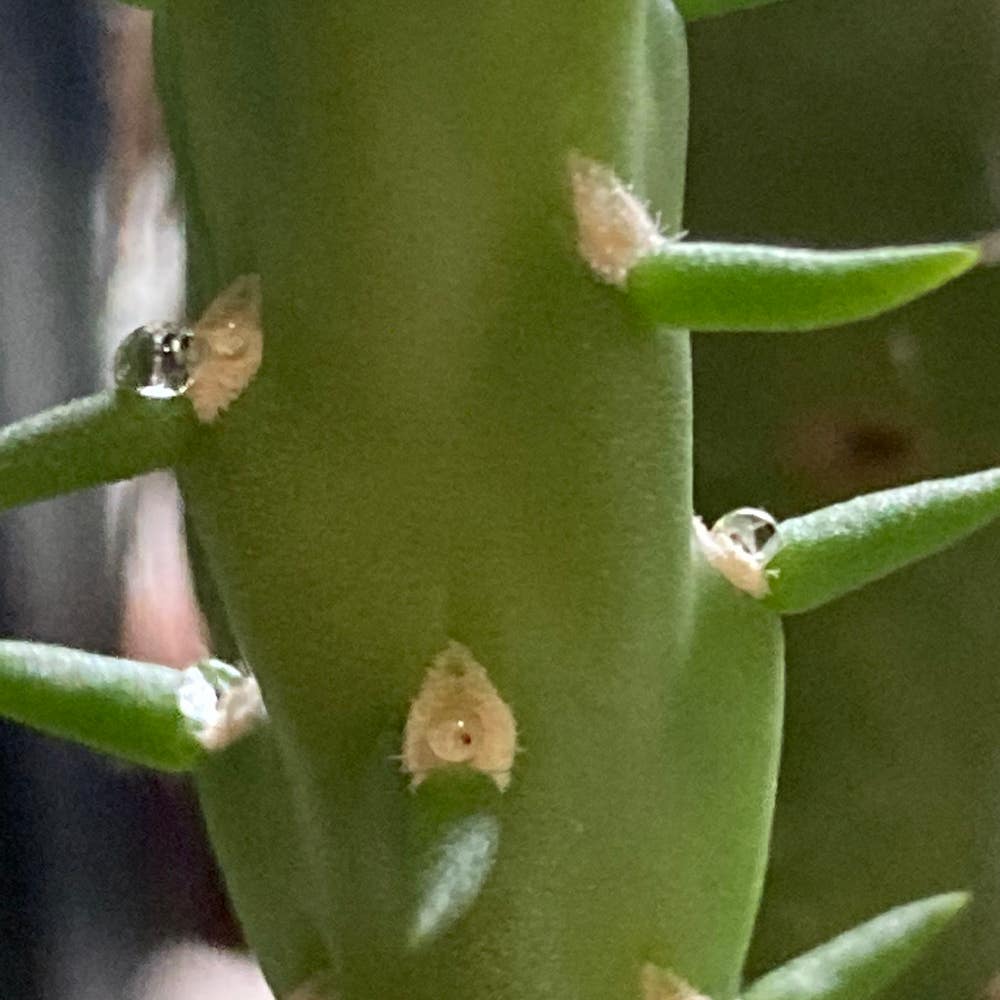
🌵 How to Get a Sonoran Jumping Cholla to Bloom
Cylindropuntia fulgida
By the Greg Editorial Team
Mar 13, 2024•4 min read
This article was created with the help of AI so we can cover more plants for you. May contain errors. See one? Report it here.
- 6-8 hours of sunlight daily ensures Sonoran Jumping Cholla blooms.
- 70°F-100°F day, above 50°F night - ideal blooming temperatures.
- Balanced watering and nutrients with phosphorus boost flowering.
Sunlight and Temperature: The Dynamic Duo for Dazzling Blooms
☀️ Catching the Rays: Sunlight Exposure for Optimal Flowering
Sunlight is non-negotiable for the Sonoran Jumping Cholla's blooming bonanza. These cacti demand a daily dose of direct sunlight, ideally clocking in at 6 to 8 hours. But it's not just about quantity; the quality of light matters too.
During the shorter days of winter, your cactus might need a light supplement to keep it on the blooming track. As the seasons change, so should your plant's position—always chasing the sun's embrace for consistent flowering.
🔥 Feeling the Heat: Temperature Ranges to Get the Blooms Going
When it comes to temperature, think Goldilocks: not too hot, not too cold. The Sonoran Jumping Cholla blooms best when daytime temps hover around 70°F to 100°F and nighttime doesn't dip below 50°F.
But here's the kicker: fluctuations are part of the game. These cacti can handle a bit of a temperature rollercoaster, as long as it's not too extreme. To keep the blooms coming year-round, protect your spiky friend from frost and scorching heat waves.
The Groundwork for Growth: Soil and Drainage
🌵 Mixing it Up: Soil Composition for Flower Power
The perfect soil mix is non-negotiable for a Sonoran Jumping Cholla poised to bloom. To whip up this botanical brew, blend inorganic and organic components. Inorganic materials like perlite or coarse sand ensure the mix is loose and aerated. Organic matter, think compost or manure, is the secret ingredient that adds nutrients and improves soil structure.
For soil pH, aim for a slightly acidic to neutral range, between 6.0 and 7.0, to facilitate optimal nutrient uptake. If your soil's pH is off-key, tweak it with sulfur to lower or lime to raise it. Remember, the right pH is like hitting the right note—it makes all the difference.
🌊 Let it Flow: Drainage Essentials to Prevent Bloom Blockers
Proper drainage is the unsung hero of bloom health. To prevent your cactus from drowning in excess moisture, make sure your soil mix is the horticultural equivalent of a well-draining sponge. Incorporate materials like perlite, coarse sand, or orchid bark to keep things flowing.
Moisture balance is a delicate dance. Your cactus craves hydration without the sogginess. To maintain this equilibrium, use a pot with drainage holes and avoid compacting the soil. Compact soil is like a traffic jam for water—nothing gets through, and your plant's roots will throw a fit. Keep it loose, and those blooms will thank you.
Water Wisely: Hydration for Happy Blooms
💧 Timing is Everything: Watering Schedules that Promote Blooms
Watering your Sonoran Jumping Cholla is less about sticking to a strict schedule and more about observing its needs. During the growth season, typically spring and summer, your cactus will be as thirsty as a marathon runner. Increase watering during these months, but as the cooler weather rolls in, cut back. Your cactus is about to binge-watch its favorite shows through the winter and won't need as many drink refills.
🌊 The Delicate Dance: Balancing Water Stress and Bloom Boost
It's a fine line between too much and too little water. Signs of water stress, like wilting or yellowing, are your cactus crying out for help. Adjust your watering technique to find that sweet spot where your plant is neither drowning in excess nor gasping for moisture. Think of it as a hydration tango – it takes two to get it right, and you're leading the dance.
Feed Your Flowers: Nutrients for Knockout Blooms
💪 The Bloom Boosters: Key Nutrients for Flower Formation
Phosphorus and potassium are the VIPs when it comes to getting your Sonoran Jumping Cholla to show off its flowers. Phosphorus is the headliner for bloom production, while potassium plays a crucial role in overall plant health, ensuring your cactus has the stamina to support those blooms. Don't let nitrogen steal the show; it's great for green growth, but too much can lead to all leaf, no flower.
🌱 Fertilizing Finesse: When and How to Feed for Blooms
Start your cactus on a fertilizer regimen a couple of months before you expect the floral fanfare. A balanced liquid fertilizer, diluted to half-strength, should be your go-to monthly during the growing season. Keep an eye out for fertilizers with a higher phosphorus content, something like a 2-3-1 N-P-K ratio is tailored for flower production. Remember, overfeeding is the equivalent of binge eating for plants; it can lead to nutrient burn. So, stick to the recommended amounts and watch your cactus thrive.
⚠️ Safety First
This content is for general information and may contain errors, omissions, or outdated details. It is not medical, veterinary advice, or an endorsement of therapeutic claims.
Always consult a qualified healthcare professional before using any plant as food, medicine, or supplement.
Never eat any plant (or feed one to pets) without confirming its identity with at least two trusted sources.
If you suspect poisoning, call Poison Control (800) 222-1222, the Pet Poison Helpline (800) 213-6680, or your local emergency service immediately.
Spotted an error? Please report it here.
Ensure your Sonoran Jumping Cholla thrives and blooms 🌵 with Greg's personalized care reminders for sunlight, watering, and fertilizing, tailored to your home environment.