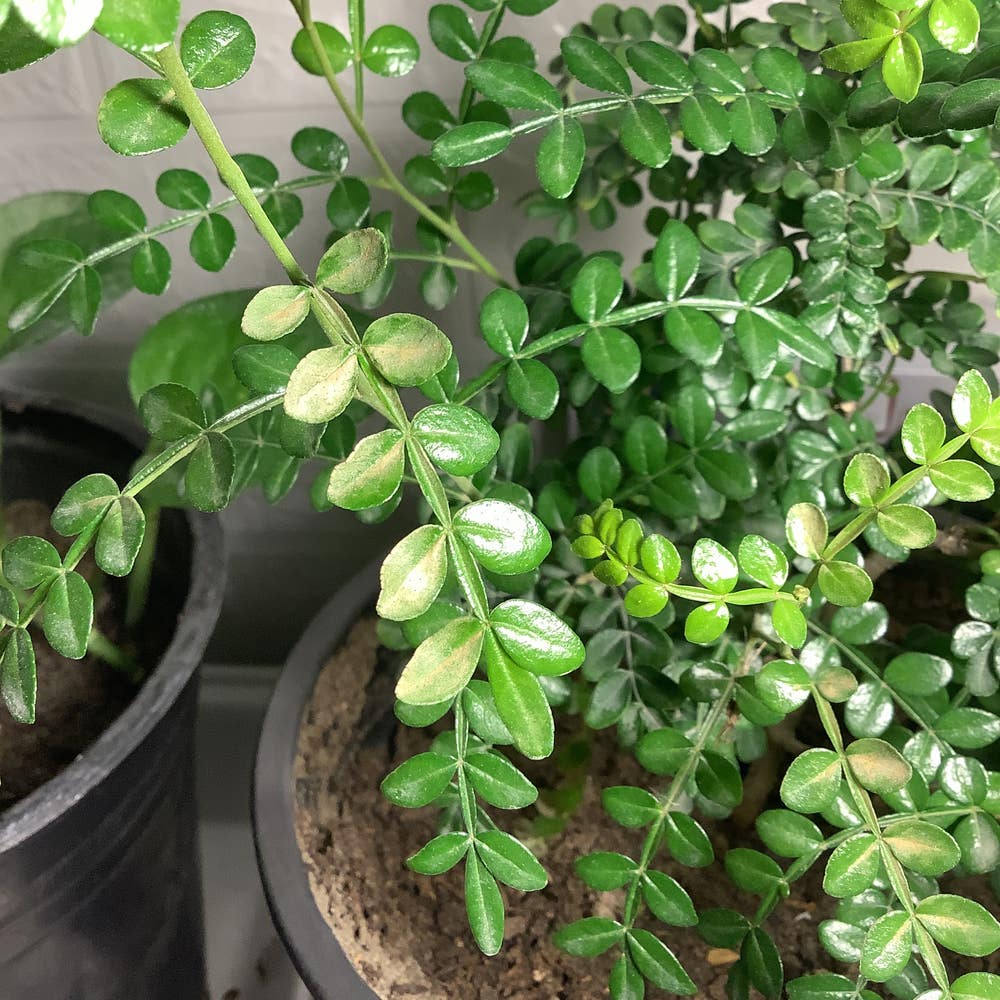
💧 Ultimate Guide to Humidity for Sichuan Pepper
Zanthoxylum schinifolium
By the Greg Editorial Team
Oct 25, 2024•4 min read
This article was created with the help of AI so we can cover more plants for you. May contain errors. See one? Report it here.
Unlock the secret to thriving Sichuan pepper plants 🌱 by mastering humidity control for vibrant growth year-round! 💧
- 🌧️ Humidity levels of 50-70% are ideal for thriving Sichuan pepper plants.
- 📏 Use a hygrometer to accurately monitor humidity and adjust care accordingly.
- 🌱 Group plants together to create a microclimate that boosts humidity naturally.
Ideal Humidity Levels for Sichuan Pepper
🌧️ Humidity Definitions
Understanding humidity is crucial for the health of your Sichuan pepper plants.
Absolute humidity measures the actual amount of water vapor in the air, expressed in grams per cubic meter.
On the other hand, relative humidity indicates the percentage of moisture in the air compared to the maximum it can hold at a specific temperature.
Both types of humidity play a significant role in moisture retention and overall growth, making them vital for your plant's health.
📏 Assessing Local Humidity
Measuring local humidity is essential for effective plant care.
Using a hygrometer—either digital or analog—can provide accurate readings.
For the best results, place the hygrometer near your Sichuan pepper plant, avoiding direct sunlight or drafts that could skew the measurements.
🌦️ Seasonal Humidity Variations
Humidity levels fluctuate with the seasons, impacting your plant's needs.
In winter, indoor air tends to be drier, while summer often brings higher humidity levels.
Adjust your care routine accordingly; for instance, increase watering during dry months and consider humidity-boosting strategies in the summer.
By staying attuned to these seasonal changes, you can ensure your Sichuan pepper thrives year-round.
This foundational understanding of humidity sets the stage for exploring effective strategies to maintain optimal levels for your plants.
Strategies for Boosting Humidity
🌬️ Using Humidifiers
When it comes to boosting humidity for your Sichuan Pepper, humidifiers are a game-changer. You can choose between cool mist and warm mist options, both of which have their benefits.
Cool mist humidifiers are great for maintaining a refreshing environment, while warm mist models can help raise the temperature slightly, which can be beneficial in cooler months. Aim for a humidity level of around 50-70% for optimal growth.
🤝 Grouping Plants Together
Clustering your plants can significantly enhance humidity levels. This technique creates a microclimate through transpiration, where moisture from one plant benefits its neighbors.
When grouping plants, consider their light and space needs. Ensure that all plants receive adequate light without overcrowding, which can lead to competition for resources.
🪨 Pebble Trays and Water Bowls
Creating a pebble tray is a simple yet effective way to increase humidity. Here’s how to do it:
- Fill a shallow tray with pebbles.
- Add water until it just touches the pebbles.
- Place the pot on top of the pebbles.
This setup allows water to evaporate, raising humidity around your plant.
Water bowls can also enhance humidity. Place them near your plants, ensuring they are regularly filled and maintained to prevent stagnation.
By implementing these strategies, you can create a thriving environment for your Sichuan Pepper, ensuring it receives the humidity it craves. Next, let’s explore ways to reduce humidity when necessary.
Strategies for Reducing Humidity
🌬️ Improving Air Circulation
Airflow is crucial in high humidity conditions. It helps prevent mold and mildew, which can be detrimental to Sichuan Pepper plants.
To enhance circulation, consider placing fans strategically around your plants. Oscillating fans can distribute air evenly, creating a more stable environment.
💧 Using Dehumidifiers
Dehumidifiers can be a game-changer for indoor gardening. They help maintain optimal humidity levels, especially in damp climates.
You have two main options: portable dehumidifiers for small spaces or whole-home systems for larger areas. Set your dehumidifier to maintain humidity levels between 40-60% for the best results.
🌱 Choosing the Right Potting Mix
The right potting mix is essential for moisture control. A well-draining soil prevents excess water retention, which can lead to root rot.
Look for mixes that include perlite, sand, and organic matter. A good ratio is 1 part perlite, 1 part sand, and 2 parts organic matter to ensure proper drainage and aeration.
By implementing these strategies, you can effectively manage humidity levels for your Sichuan Pepper plants. This proactive approach will help maintain their health and vigor, setting the stage for a thriving garden.
Common Humidity-Related Problems
Identifying Signs of Humidity Stress 🌬️
Humidity stress can manifest in various ways. Look for changes in leaf texture, such as curling or crisping, which often indicate low humidity levels.
Discoloration is another red flag; yellowing leaves may suggest your Sichuan Pepper is struggling. Additionally, stunted growth patterns can signal that your plant isn't receiving the moisture it needs.
Early detection is crucial for maintaining plant health. The sooner you recognize these signs, the quicker you can take action to remedy the situation.
Solutions for Humidity-Related Issues 💧
When you notice signs of low humidity stress, quick fixes can make a big difference. Immediately increase humidity by misting the leaves or placing a humidifier nearby.
For long-term solutions, regular monitoring is key. Adjust your watering schedule and humidity-boosting strategies based on the plant's needs and seasonal changes.
Maintaining optimal humidity levels is an ongoing process. Stay attentive to your Sichuan Pepper's environment, and make adjustments as necessary to keep it thriving.
With the right care, you can ensure your plant remains healthy and vibrant, ready to flourish in its ideal conditions.
⚠️ Safety First
This content is for general information and may contain errors, omissions, or outdated details. It is not medical, veterinary advice, or an endorsement of therapeutic claims.
Always consult a qualified healthcare professional before using any plant as food, medicine, or supplement.
Never eat any plant (or feed one to pets) without confirming its identity with at least two trusted sources.
If you suspect poisoning, call Poison Control (800) 222-1222, the Pet Poison Helpline (800) 213-6680, or your local emergency service immediately.
Spotted an error? Please report it here.
Keep your Sichuan pepper thriving by mastering humidity levels with Greg's tailored reminders and tips for creating the ideal environment 🌧️ your plants crave!