🦁 Why Are My Lion's Tail Agave Leaves Falling Over?
Agave attenuata
By the Greg Editorial Team
Jun 15, 2024•8 min read
This article was created with the help of AI so we can cover more plants for you. May contain errors. See one? Report it here.
- Overwatering? Yellow, mushy leaves and translucent patches signal it's time to dry out.
- Underwatering symptoms include lackluster, wrinkled, brown, and crispy leaves.
- Light and drainage are key; ensure sunny spots and well-draining soil for stability.
Diagnosing Overwatering Issues
💦 Signs of Overwatering
Yellowing leaves and a mushy feel to your Lion's Tail Agave are the telltale distress signals of too much water love. If the leaves look more like overripe bananas than fierce lion's tails, you've got a classic case of overwatering on your hands. Translucent patches or leaves that seem to have thrown in the towel and burst are the plant's way of waving a white flag.
💧 Steps to Address Overwatering
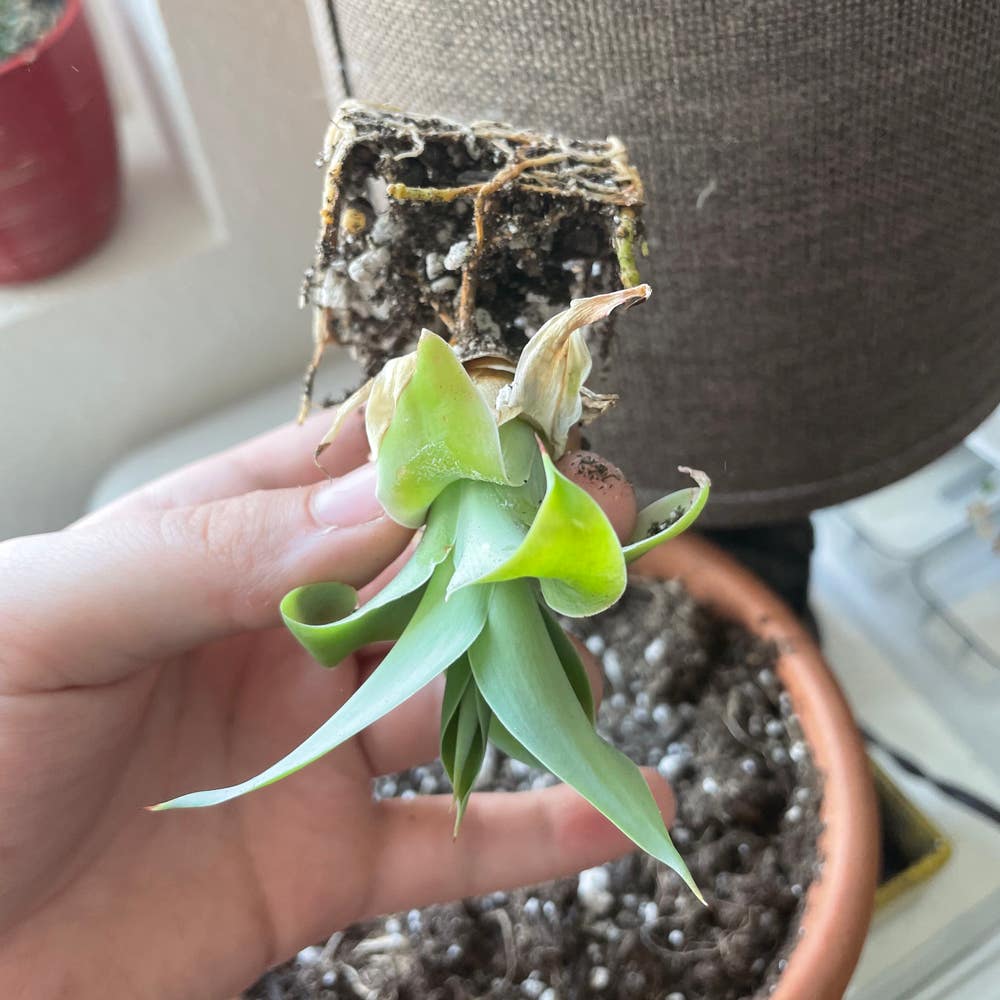
First, stop watering; your Agave isn't on a swim team. If the soil feels like a wet sponge, it's time to evict your plant from its pot. Get up close and personal with the roots. Dark, mushy roots? That's root rot. Snip the offenders with a sterile knife—no mercy for the mush. Give the survivors a bleach bath (1:10 ratio with water) to zap any lingering fungi. After a 2-3 day spa retreat in a warm, dry spot, repot in fresh, well-draining soil. Hold off on the fertilizer; let the roots find their zen first. If your Agave looks like it's been through a blender, it might be time to start fresh. Remember, overwatering is the helicopter parenting of plant care—sometimes you just need to let them breathe.

Identifying Underwatering Symptoms
💧 Signs of Underwatering
Underwatering your Lion's Tail Agave can leave it looking lackluster and wrinkled, with leaves that may turn brown and crispy. A clear sign is bone-dry soil. If the plant's heft feels unusually light, it's likely crying out for a drink.
Correcting Underwatering
To remedy this, thoroughly water your plant, ensuring moisture reaches the roots. Consider submerging the pot in water for a few minutes for deep rehydration. Afterward, the soil's surface should feel moist to the touch, indicating a successful watering.

Addressing Poor Soil Drainage
🌧️ The Impact of Poor Drainage on Leaf Stability
Poor drainage is the silent saboteur of your Lion's Tail Agave's posture. When water lingers like an awkward guest, roots become vulnerable to rot, leaving leaves to flop in distress.
🛠️ How to Improve Soil Drainage for Lion's Tail Agave
To turn the tide against soggy soil, mix in some perlite or coarse sand. These are the unsung heroes that keep the earth loose and breathable. Think of it as giving your plant's roots a room with a view instead of a basement without windows.
🌱 Soil Examination and Maintenance
Don't just water and walk away. Get your hands dirty and feel the soil's texture. If it clumps like cold oatmeal, it's time for an intervention. Aerate the soil regularly to prevent compaction, ensuring your Agave's roots aren't suffocating.
🌵 Tips for Soil Improvement
Remember, your Lion's Tail Agave craves a well-draining environment like a cat craves a sunbeam. If you're repotting, choose a gritty, succulent-specific mix that's more boutique hotel than roadside motel for your plant's roots.
🏺 Choosing the Right Pot
It's not just about the soil—your choice of pot is pivotal. Go for one with drainage holes that could make a colander jealous. And if you're feeling fancy, a pot with feet can elevate your Agave's drainage game to new heights.

Ensuring Adequate Light for Leaf Support
💡 The Role of Light
Light is the unsung hero in the epic of keeping your Lion's Tail Agave from flopping over. Without enough of it, your plant's leaves might as well wave a white flag and surrender to gravity.
💡 Tips for Optimal Light Exposure
Rotate your plant regularly to avoid a lopsided growth habit—think of it as plant yoga to maintain balance. Place your Lion's Tail Agave near a window, but not just any window—a sunny one. If the sun is playing hard to get, consider grow lights as your plan B. Keep them about a foot away, though; we're not trying to roast marshmallows here.
Remember, as the seasons change, so does the light. Play musical chairs with your plant to keep it basking in those sweet rays. If your Agave starts impersonating a sunbather with too much tan, dial it back—indirect light is your friend.
Lastly, don't let your plant get too cozy in one spot. It might enjoy the view, but variety is the spice of life—and light. Keep an eye out for stretching or leaning; it's your plant's way of saying, "I could use a change of scenery."
Correcting Watering Practices
💧 Adjusting Watering to Prevent Leaf Droop
Check the soil before you water—this isn't a guessing game. If the top inch feels like a dry desert, it's time to hydrate. But if it's damp, hold off. Your Lion's Tail Agave isn't a fan of soggy feet. Use room-temperature water to avoid shocking the roots, and always ensure your pot has drainage holes. Overwatering is like inviting root rot to a banquet, and trust me, it's a voracious guest.
📆 Establishing a Consistent Watering Schedule
Your plant doesn't care what day of the week it is. Ditch the calendar and water based on need, not routine. In the heat, your Agave might be thirstier, so keep an eye out. When it's cooler, it's more about the occasional sip than a full-on gulp. And remember, consistency is key—your plant's health depends on it, so no slacking.
Soil Improvement Strategies
🌱 Amending Soil to Prevent Leaf Fall
Amending your Lion's Tail Agave's soil is like upgrading its diet from fast food to gourmet meals. To prevent leaf fall, mix in organic materials such as compost or well-aged manure, which act like a slow-release fertilizer, enriching the soil over time. For an aeration boost, add perlite or peat moss, making the soil fluffy enough for roots to breathe and water to drain effectively.
🌷 When and How to Repot for Better Soil Conditions
Repotting should be on your calendar every couple of years or when you notice the soil quality decline. Spring is the ideal time, as plants are entering a growth phase. Choose a pot that's a size up if your agave's growth is being stifled, but avoid going too large to prevent waterlogging. Ensure the new pot has drainage holes to avoid soggy soil scenarios. When repotting, gently tease the roots to encourage them to spread out in their new home. Remember, fresh potting soil is like a nutrient buffet for your plant, so skip the fertilizer for a while post-repot.
Adjusting Plant Location for Optimal Light
Relocating your Lion's Tail Agave can be a game-changer for its health and posture. This succulent craves bright light, so a spot within a foot of a sunny window is prime real estate.
🌞 Gradual Transition
Avoid a plant freak-out by shifting its position slowly. A few inches per day towards more light can prevent shock and acclimate your Agave to its new sun-soaked digs.
🍂 Seasonal Monitoring
As the seasons change, so does the light. Keep an eye on your plant; it might need a move as the sun shifts. Winter may call for a closer spot to the window, while summer might mean a step back to avoid leaf scorch.
🔄 Rotation Ritual
Rotate your plant regularly. This isn't just for a 360-degree view of its beauty, but to keep growth even and prevent the plant from reaching out like a sun-starved zombie.
💡 Light Quality Check
Not all light is created equal. If your indoor lighting is more 'dungeon' than 'sunroom', consider a grow light to fill in the gaps. Your Agave will thank you with upright, perky leaves.
🧪 Trial and Error
If your plant still looks like it's had better days, don't be afraid to experiment with its placement. Sometimes the perfect spot is just a shuffle away.
Managing Temperature and Humidity
Temperature and humidity are like the unsung heroes of plant health, especially for the Lion's Tail Agave. Leaf health can take a nosedive if these factors aren't kept in check.
🌡️ The Temperature Tango
Keep your Lion's Tail Agave in a Goldilocks zone – not too hot, not too cold. Aim for a steady range between 65 and 85 degrees Fahrenheit. Remember, these plants don't wear tiny plant sweaters, so avoid the chill and keep them away from drafts.
💦 Humidity Hustle
Humidity is the plant's invisible partner in the photosynthesis dance. Too low, and you'll see your Agave's leaves throw in the towel, becoming dry and brittle. Too high, and you're inviting a fungal fiesta.
🔄 Keeping Conditions Consistent
Consistency is key. Dramatic swings in temperature and humidity are like throwing a wrench in the works. Use tools like hygrometers to monitor the environment, and consider a humidifier if your air is drier than a stand-up comedian's wit.
💨 Air Circulation: The Bouncer of the Plant World
Good air circulation is crucial. It keeps the air from getting stale and helps maintain an even temperature and humidity level. Think of it as the bouncer at the club, keeping trouble out and balance in.
🌱 The Ripple Effect
Get the temperature and humidity right, and you'll see your Lion's Tail Agave stand tall and proud. It's not just about looking good; it's about fostering an environment where your plant can thrive without throwing a tantrum.
⚠️ Safety First
This content is for general information and may contain errors, omissions, or outdated details. It is not medical, veterinary advice, or an endorsement of therapeutic claims.
Always consult a qualified healthcare professional before using any plant as food, medicine, or supplement.
Never eat any plant (or feed one to pets) without confirming its identity with at least two trusted sources.
If you suspect poisoning, call Poison Control (800) 222-1222, the Pet Poison Helpline (800) 213-6680, or your local emergency service immediately.
Spotted an error? Please report it here.
Nurture your Lion's Tail Agave back to sturdy splendor 🌵 with the gentle guidance of Greg, ensuring perfect watering and care for your plant's unique needs.