Should I Repot My Lion's Tail Agave?
Agave attenuata
By the Greg Editorial Team
Dec 16, 2023•5 min read
This article was created with the help of AI so we can cover more plants for you. May contain errors. See one? Report it here.
- Visible roots and slowed growth signal it's repotting time.
- 🏺 Terracotta or clay pots are best for drainage and breathability.
- Avoid overpotting and overwatering post-repotting for healthy growth.
Recognizing When to Repot
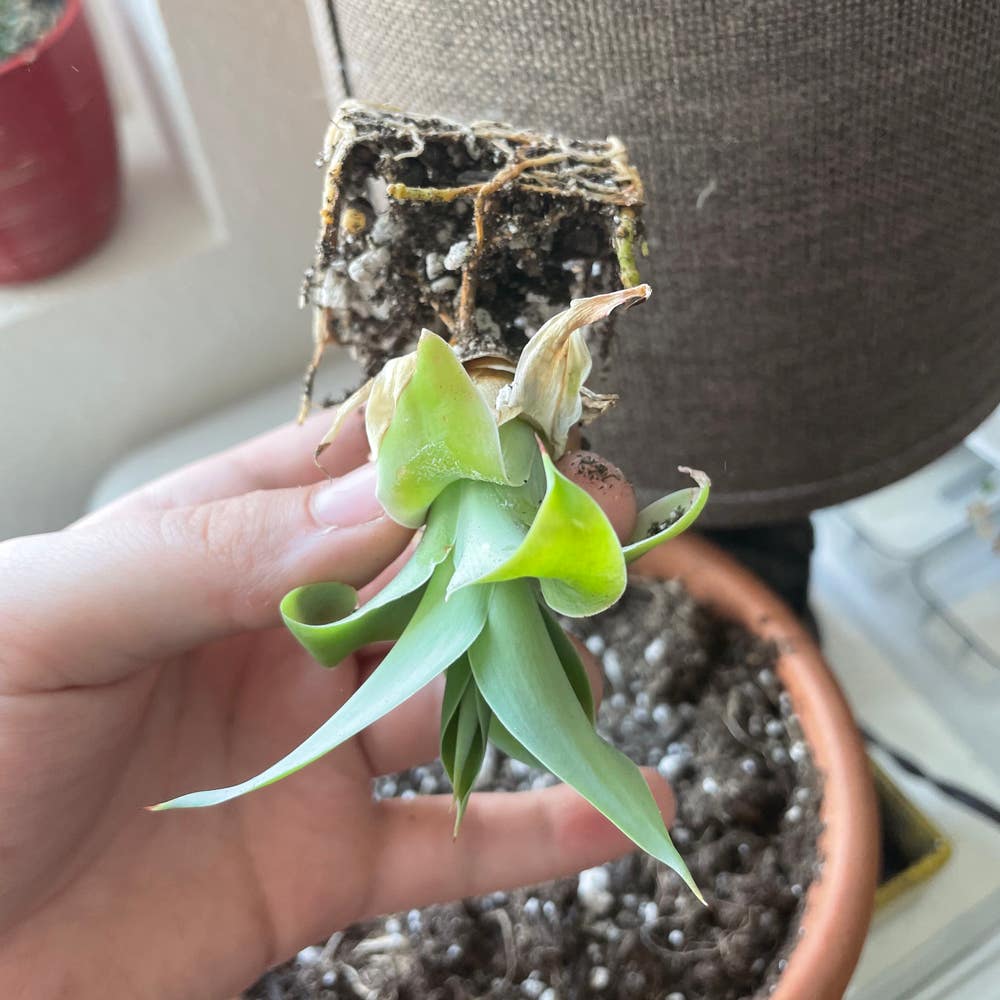
🌱 Visible roots are your first clue; it's like your Lion's Tail Agave is trying to escape its pot. If you see roots poking out of the drainage holes or winding their way above the soil, it's time for a change of scenery.
📉 Slowed growth is another telltale sign. This plant isn't lazy; if it's not growing like it used to, it's likely because it's run out of room. Think of it as being stuck in a cramped elevator; you wouldn't grow much in there either.
💧 Dry soil that drinks up water faster than a camel in the desert suggests your plant's roots have taken over. If water zips through the pot without a second thought, leaving the soil dry, your agave is probably more root than soil.
🏋️ Misshapen pots can be a sign, especially with plastic ones. If your pot looks like it's been hitting the gym on one side, your agave's roots are likely bulging out.
Lastly, if it's been a couple of years since the last repotting, consider giving your plant a new home. It's not just about space; fresh soil means fresh nutrients, kind of like swapping out a stale sandwich for a gourmet meal.
Remember, repotting is not just a chore; it's an opportunity to check the health of your plant's roots. Healthy roots equal a thriving Lion's Tail Agave. So, roll up your sleeves and get ready to give your plant some love.
Choosing the Right Pot
Selecting the right pot for your Lion's Tail Agave is a critical step in ensuring its health and longevity.
🏺 Material Matters
Terracotta or clay pots are ideal for their breathability and drainage capabilities. Their porous nature helps prevent water retention, a common enemy of the Lion's Tail Agave's roots.
📏 Size and Stability
Choose a pot that's one size larger than the current one. This gives your plant room to grow without being oversized, which can lead to waterlogged soil.
🚰 Drainage is Key
Ensure the pot has drainage holes. Without them, you're signing up for a swampy mess and a one-way ticket to root rot city.
🚫 Avoiding the Plastic Trap
While plastic pots are tempting due to their affordability and variety, they're not the best choice for your agave. They can restrict airflow and encourage overwatering.
🏋️♂️ A Note on Weight
Remember, a heavier pot provides stability for your growing agave, especially as it gets larger and top-heavy.
🪨 The Inside Scoop
Lining the bottom of the pot with rocks or gravel can improve drainage further, just don't go overboard. You want water to flow, not to create a rock garden.
🕵️♂️ Final Touches
Before you commit, give the pot a quick inspection. No cracks or chips means you're good to go. A damaged pot can harm more than it helps.
The Repotting Process
🌱 Soil Preparation
Well-draining soil is non-negotiable for your Lion's Tail Agave. Skip the fertilizers; this plant's not a high-maintenance date. Ensure the mix is free of peat moss and other moisture-hogging additives. An "Earth Positive" mix like Rosy gets the green thumbs up.
🌿 Plant Transfer
When your Agave's roots start playing peek-a-boo, it's time for a new pot. Choose one just a size up—think cozy, not cavernous. Gently coax the plant out of its old home. If it's playing hard to get, a little tilt and shimmy should do the trick. No yanking—this isn't a game of plant tug-of-war.
🚫 Common Mistakes
Overpotting is like giving a goldfish a swimming pool; it's just too much space. And let's not drown the poor thing—overwatering post-repot is a no-go. Remember, it's a succulent, not a sponge. Lastly, don't be a root ruffian. Massage the roots to encourage them to spread their wings in their new abode. Gentle is the name of the game.
🎓 Pro Tips
Label your plant with its Latin name and the repotting date. It's like a birth certificate for your green buddy. Keep a log book if you fancy yourself the scholarly type. And if you're dealing with a spiky character, kitchen tongs are your new best friend—no pricks allowed.
Immediate Aftercare
After repotting your Lion's Tail Agave, 🚿 Immediate Aftercare is crucial for its recovery and growth. Here's how to nail it:
💧 Watering Schedule
Initially, 💦 water more frequently to help the plant adjust. But don't drown it—check the soil moisture before giving it a drink. Overwatering is a no-go.
🌿 Light Requirements
Keep your Agave out of direct sunlight during its post-repotting spa period. Bright, indirect light is its best friend right now.
🚫 Hold Off on Fertilizer
🌱 Avoid fertilizing for about a month. Your plant's roots are tender and healing, so let's not stress them out with chemicals, shall we?
👀 Monitoring
Watch your plant like a hawk. Look for signs of stress or disease. If it's thriving, you're doing it right. If not, reassess your care strategy.
🛠️ Adjustments
The repotted Agave might be thirstier or need less water than before. Stay flexible and be ready to tweak your care routine.
Remember, patience is key. Your Lion's Tail Agave is settling into its new home, so give it some time to flourish!
⚠️ Safety First
This content is for general information and may contain errors, omissions, or outdated details. It is not medical, veterinary advice, or an endorsement of therapeutic claims.
Always consult a qualified healthcare professional before using any plant as food, medicine, or supplement.
Never eat any plant (or feed one to pets) without confirming its identity with at least two trusted sources.
If you suspect poisoning, call Poison Control (800) 222-1222, the Pet Poison Helpline (800) 213-6680, or your local emergency service immediately.
Spotted an error? Please report it here.
Ensure your Lion's Tail Agave thrives in its new pot by using Greg to track growth, moisture levels, and repotting time 🪴 with precision and ease.