Diagnosing Lion's Tail Agave Root Rot
Agave attenuata
By the Greg Editorial Team
Dec 16, 2023•6 min read
This article was created with the help of AI so we can cover more plants for you. May contain errors. See one? Report it here.
- Overwatering and poor drainage lead to Lion's Tail Agave root rot.
- Early symptoms: Wilting leaves, discoloration, foul-smelling roots.
- Treatment: Prune roots, apply fungicide, repot with well-draining soil.
Identifying the Causes of Root Rot
Root rot in Lion's Tail Agave is primarily a water issue. Overzealous watering and inadequate drainage create a soggy environment where harmful fungi thrive.
💦 Overwatering: A Slippery Slope
Overwatering is the express lane to root rot. It's not just about the quantity of water but the frequency. Roots need to breathe, and too much water drowns them, leading to decay.
🚱 Poor Drainage: The Silent Culprit
Even with perfect watering, poor drainage can sabotage your efforts. If water can't escape, it's a party for pathogens and a nightmare for roots.
🍄 Fungal Pathogens: Unwanted Guests
Fungi like Phytophthora and Pythium are the usual suspects when it comes to root rot. They're opportunistic, attacking when the plant is most vulnerable—sitting in waterlogged soil.
🌡️ Environmental Factors: Compounding Problems
Factors like low temperatures and overfertilization can worsen water retention, indirectly contributing to root rot. It's a delicate balance, and every element counts.
🌱 The Pot: Size Matters
Choosing the right pot size is crucial. Too small, and roots become constricted; too large, and soil stays wet longer. Both scenarios can lead to root rot, so size up wisely.
💤 Dormancy Periods: A Time for Rest
Watering during a plant's dormant period is like waking someone up in the middle of a good sleep—unnecessary and harmful. Plants use less water during dormancy, so adjust your watering schedule accordingly.
By understanding these causes, you can turn the tide against root rot and keep your Lion's Tail Agave healthy and thriving.
Recognizing Symptoms of Root Rot
🚨 Early Detection: Your Plant's Cry for Help
Early detection of root rot in Lion's Tail Agave is crucial. Look for lesions around the plant crown and an overall unhealthy appearance of leaves. If your agave seems to tip over easily or the roots appear slimy with a black or grey hue, it's time to act fast.
🕵️ Visible Signs: The Tell-Tale Heart of Plant Distress
Wilting leaves and discoloration are your first visual clues. A Lion's Tail Agave with root rot may exhibit leaves that are less than lush, signaling internal turmoil. Soft and darkened roots are a definitive sign of trouble below the soil line.
👃 The Smell Test: A Foul Odor That Doesn't Lie
Sniff out root rot by its foul odor. If your plant's roots smell like decay, trust your nose – it's likely root rot. This symptom is a red flag that requires immediate attention.
✋ Touch and See: The Tactile Diagnosis
Gently squeeze the base of your Lion's Tail Agave. If it feels mushy or the roots crumble to the touch, root rot has set in. Healthy roots should be firm and resilient, not soft or brittle.
👀 The Weevil Factor: An Unseen Enemy
Keep an eye out for the Agave Snout Weevil, a pest that exacerbates root rot. These critters bore into the plant, causing additional damage and opening the door for rot to spread.
⏳ The Bottom Line: Act Now or Weep Later
Root rot won't wait for a convenient time. Immediate action is necessary to save your Lion's Tail Agave. Remember, the longer you wait, the slimmer the chances of recovery.
Steps for Diagnosing Root Rot
🕵️♂️ Initial Inspection
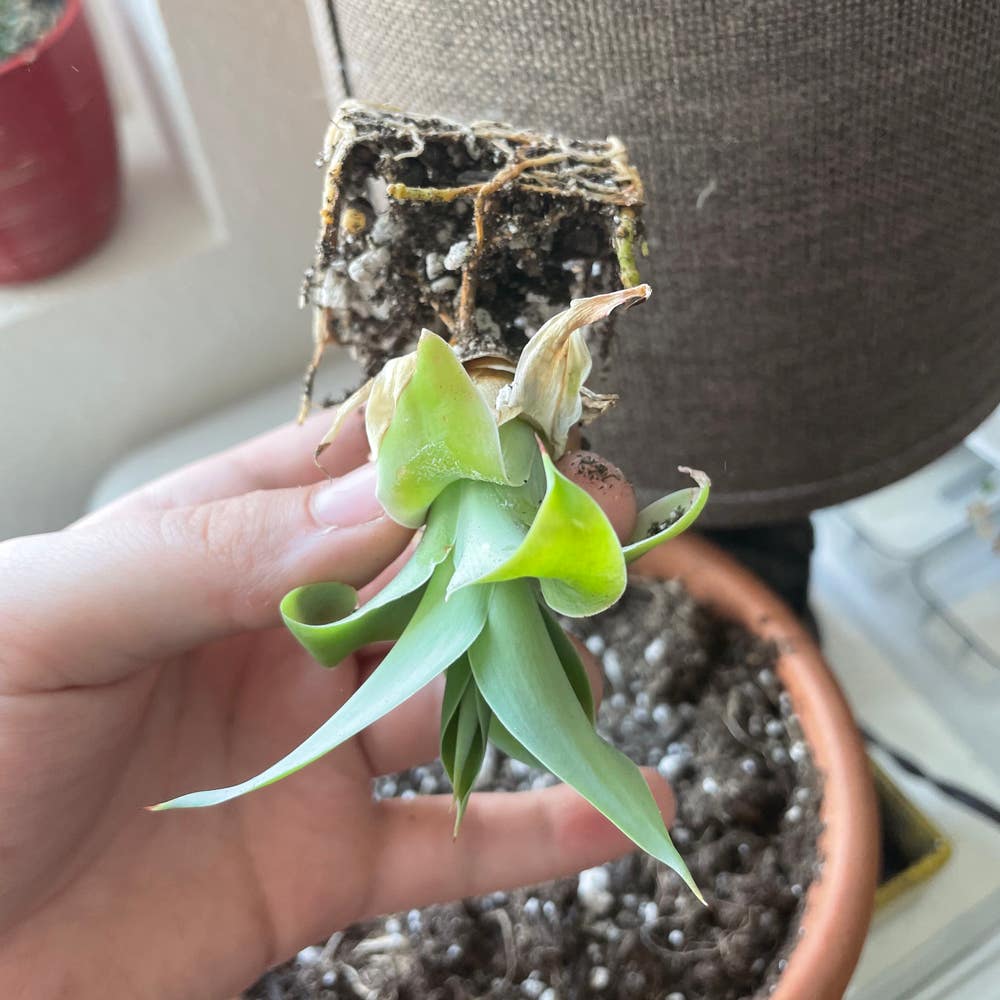
To diagnose root rot in Lion's Tail Agave, start with a visual and tactile inspection. Gently remove the plant from its pot, being as careful as if you were handling a raw egg with a temper.
🕵️♂️ What to Look For
Darkened roots are a telltale sign; they're the plant's equivalent of a blackened banana. If the roots are more mush than firm, you've hit the jackpot of yuck. And the smell? If it's reminiscent of a forgotten gym locker, that's the stench of decay.
🕵️♂️ Sensory Clues
Trust your senses. Healthy roots don't play hide and seek; they're white and firm, not slimy or lurking in the shadows of the soil. If you're greeted with a squishy handshake from the roots, it's time to take action.
🧼 Cleaning Up
After the initial assessment, clean the roots with room-temperature water. This isn't a spa day—it's a critical step to remove lurking fungus and assess the damage more accurately.
✂️ Pruning the Damage
Snip away the rotted parts like a gardener on a mission, using tools as sterile as a surgeon's scalpel. Remember, you're not giving the plant a haircut; you're saving its life.
🦠 Fungicide Application
Post-trim, it's time for a fungicide treatment. Think of it as an antiseptic for plants, because that's exactly what it is. Use products like thiopanate methyl or neem oil, but don't go pouring it like it's hot sauce on tacos—follow the label directions.
🌱 Repotting
Finally, repot your Lion's Tail Agave in fresh, well-draining soil. Consider adding pumice to improve drainage, because nobody likes wet feet, especially not plants.
Treating Root Rot in Lion's Tail Agave
🚑 Immediate Actions
Upon suspecting root rot, time is not your ally. Prune all decayed roots without mercy—think of it as surgery for your plant's survival. Sterilize your tools with a bleach solution or heat, as clean cuts prevent further infection.
🦠 Fungicide Application
Fungicides are your next line of defense. Copper fungicides, neem oil, or products containing thiophanate methyl are your go-to options. Apply directly to the remaining roots and surrounding soil, but don't expect miracles—fungicides are more about prevention than cure.
🌱 Soil and Environment Overhaul
Replant your Lion's Tail Agave in fresh, well-draining soil. Mix in pumice or similar to boost drainage. Consider the environment—more sunlight and less moisture are your new best friends.
🛡️ Post-Treatment Care
Monitor your plant like a hawk. Adjust watering habits to the drier side of life and keep an eye out for signs of recovery or further decay. Remember, overwatering is the enemy of progress here.
Preventing Future Root Rot
🚰 Adjusting watering practices is crucial. Only water when the soil feels dry an inch below the surface. If you're the type to forget, set a reminder, or better yet, stick your finger in the dirt—nature's moisture meter.
🍽️ Choosing the right soil and pot is like picking a good pair of shoes; it needs to fit and breathe. Opt for a pot with drainage holes; it's non-negotiable. Your plant's life literally depends on it. And soil? Think light and airy. A mix with perlite, vermiculite, or sand isn't just for show—it's functional, preventing your plant's roots from taking an unwanted swim.
Remember, overwatering is the express lane to Root Rot City. Don't let your Lion's Tail Agave hitch that ride.
⚠️ Safety First
This content is for general information and may contain errors, omissions, or outdated details. It is not medical, veterinary advice, or an endorsement of therapeutic claims.
Always consult a qualified healthcare professional before using any plant as food, medicine, or supplement.
Never eat any plant (or feed one to pets) without confirming its identity with at least two trusted sources.
If you suspect poisoning, call Poison Control (800) 222-1222, the Pet Poison Helpline (800) 213-6680, or your local emergency service immediately.
Spotted an error? Please report it here.
Keep your Lion's Tail Agave thriving 🦁 with Greg's tailored watering reminders and potting tips, ensuring root rot becomes a thing of the past.