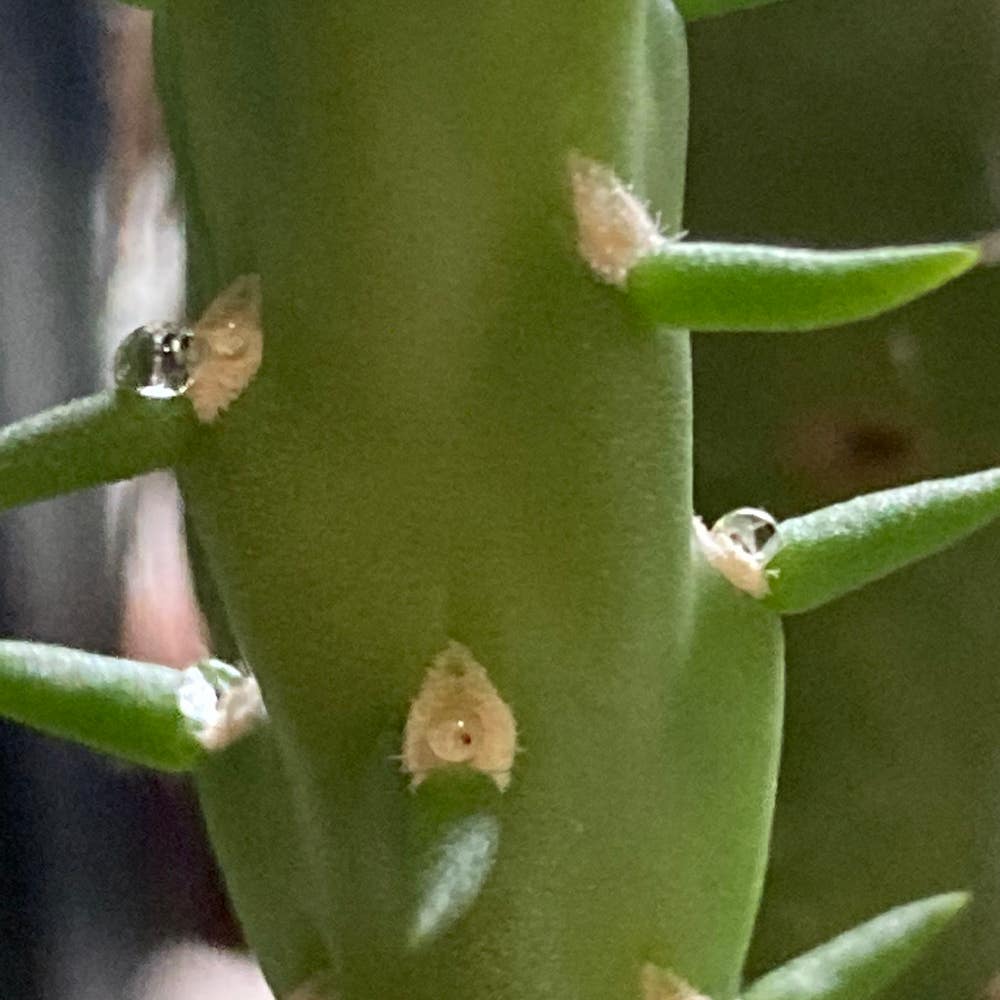
🌵 How Often Should I Water My Cane Cholla?
Cylindropuntia imbricata
By the Greg Editorial Team
Jun 18, 2024•4 min read
This article was created with the help of AI so we can cover more plants for you. May contain errors. See one? Report it here.
Nurture a lush cane cholla 🌵 with the perfect watering schedule—your guide to a happy, healthy cactus!
- 🌵 Seasonal watering is key: more in summer, less in winter.
- 🌡️💧 Adjust for environment: temperature, humidity, light, and indoor vs. outdoor.
- 🧐 Use moisture meters/finger test to perfect watering times.
When Thirst Strikes: Decoding Cane Cholla's Water Needs
💧 Seasonal Watering Shifts
Summer is the cane cholla's time to shine, demanding more frequent watering to support its growth. As temperatures soar, so does its thirst. Winter, on the other hand, is a period of rest; your cactus prefers a drier environment, mimicking its natural dormant state. During these cooler months, watering once a month is typically sufficient.
💡 Environmental Influences
Temperature, humidity, and light are the holy trinity affecting your cane cholla's water needs. High heat and intense light can increase the frequency of watering, while higher humidity might reduce it. Indoor plants generally require less water due to more stable environmental conditions, but always be vigilant for signs of thirst or overwatering.
🏡 Adapting to Indoor Versus Outdoor Growing Conditions
Indoors, your cactus is sheltered from the elements, leading to a more controlled and often reduced watering schedule. Outdoors, be prepared to adjust your watering routine to accommodate for natural precipitation and the drying effects of wind and sun. Remember, cane cholla's watering needs are not set in stone; they require observation and adaptation.

The Balancing Act: Avoiding Too Much or Too Little
🚱 Spotting the Signs of Thirst
Recognizing when your cane cholla is parched is key to its survival. Look for wrinkled skin and a lackluster appearance, signaling it's time to water. The soil will be bone dry, and the plant may have brown, crispy areas, especially at the tips.
💦 Drowning in Excess
Conversely, symptoms of overwatering include yellowing, soft spots on the plant, and a general soggy feel to the stems. Root rot is the silent killer here, caused by persistent wetness enabling harmful fungi and bacteria. If you suspect overwatering, increase air circulation and adjust your watering frequency immediately.

Crafting Your Cane Cholla Watering Schedule
🌵 Tailoring to Your Plant's Needs
Crafting a flexible watering schedule for your cane cholla is more art than science. It's about tuning into the plant's needs and the whispers of your environment. Indoor plants might beg for water less often than their sun-kissed, outdoor cousins. And if your cholla is basking in a south-facing window, it's likely to get thirstier than one chilling in dimmer conditions.
🛠 Tools and Techniques
Ditch the guesswork. Moisture meters are your secret weapon, giving you the dirt on, well, your dirt's wetness. If tech's not your thing, go old-school with the finger test. Poke your digit into the soil about an inch deep; if it's dry, it's time to water. If it's damp, give it a break. Remember, overwatering is the fast track to a sad, soggy cactus.
Keep your watering can on standby but use it wisely. Your cane cholla doesn't care for a drink on a schedule—it's all about when it's actually thirsty. So, keep an eye out for that dry soil and let your plant lead the way.

Watering Wisdom: Tips and Tricks for Hydration Success
💦 The Right Way to Water
Watering your cane cholla isn't rocket science, but it does require some finesse. Soak the soil thoroughly until water escapes from the drainage holes, simulating a desert downpour. Then, let the soil dry out completely before the next watering session. This soak-and-dry method encourages deep root growth and prevents the roots from getting too cozy with moisture, which they despise.
🌱 Soil and Pot Considerations
The right soil and pot are your cane cholla's best friends. Use a well-draining cactus mix to avoid water retention, and ensure your pot has drainage holes to let excess water escape. The pot size should be snug, not spacious; a pot that's too large holds more moisture than your cholla would ever want to sip on.
⚠️ Safety First
This content is for general information and may contain errors, omissions, or outdated details. It is not medical, veterinary advice, or an endorsement of therapeutic claims.
Always consult a qualified healthcare professional before using any plant as food, medicine, or supplement.
Never eat any plant (or feed one to pets) without confirming its identity with at least two trusted sources.
If you suspect poisoning, call Poison Control (800) 222-1222, the Pet Poison Helpline (800) 213-6680, or your local emergency service immediately.
Spotted an error? Please report it here.
Keep your cane cholla perfectly quenched 🌵 with Greg's adaptive watering schedule that considers seasonal changes and your unique indoor climate.