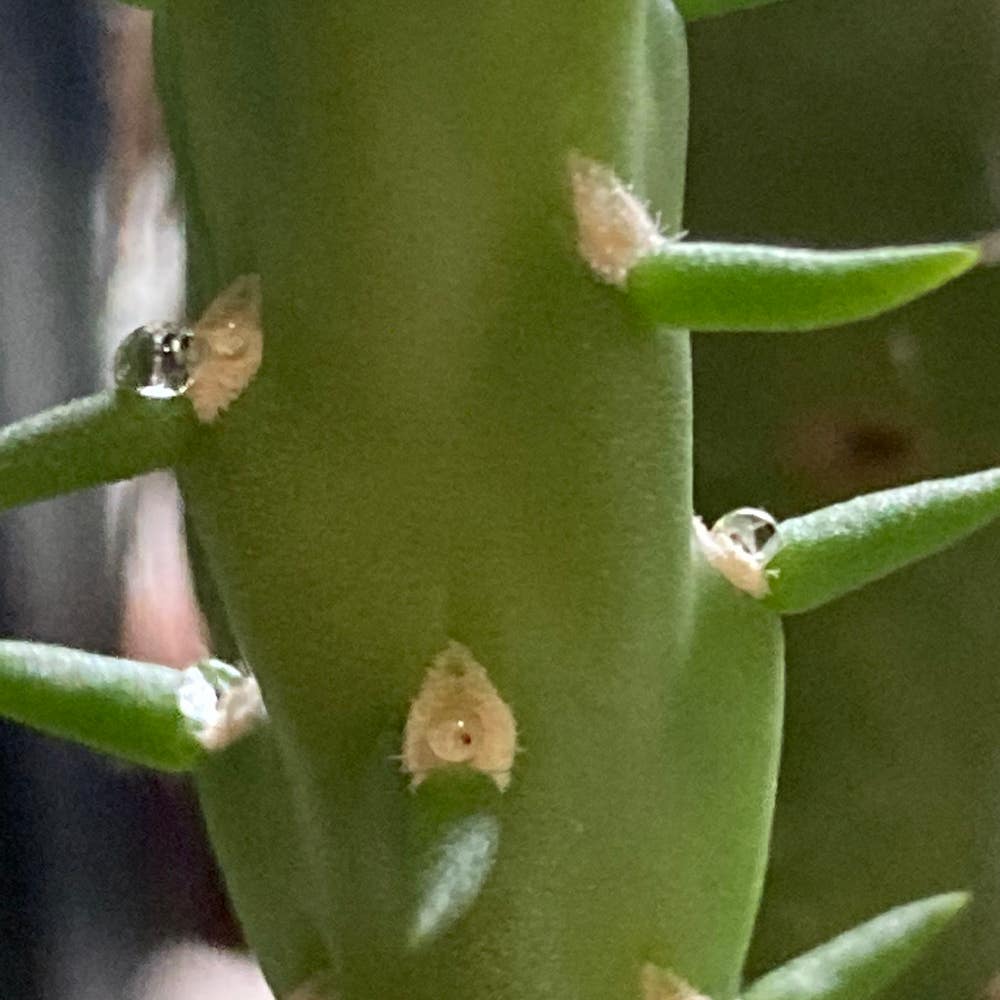
Why Are There Brown Spots on My Cane Cholla Leaves?
Cylindropuntia imbricata
By the Greg Editorial Team
Jun 18, 2024•4 min read
This article was created with the help of AI so we can cover more plants for you. May contain errors. See one? Report it here.
Eradicate brown spots on your Cane Cholla 🌵 for a lush, spotless display!
- Overwatering leads to brown spots; let soil dry before rewatering.
- Fungal/bacterial infections need treatment; use fungicides or bactericides.
- Protect from sunburn and pests; provide shade and control with soaps or predators.
Spotting the Culprits: Common Causes of Brown Spots
💦 Too Much Love: Overwatering Woes
Overwatering is the equivalent of helicopter parenting in the plant world. It's well-intentioned but can smother your Cane Cholla with too much H2O. Telltale signs include soft, mushy spots on leaves and a general look of discomfort. To fix this, let the soil dry out before watering again. For the future, stick your finger in the soil; if it's wet, skip the watering can.
🦠 Unwanted Guests: Fungal and Bacterial Battles
Fungal and bacterial infections are the ninjas of plant problems—stealthy and damaging. Look for yellow halos or concentric rings on spots. Fungicides or bactericides can be your sword in this fight, but choose wisely. Always read labels and apply as directed to avoid further harm.
🌞 Sun-Kissed or Sunburnt: Light and Heat Factors
Your Cane Cholla can get sunburnt just like you, except it can't slap on some SPF 50. Brown, crispy spots often indicate too much sun. To remedy, provide partial shade during peak hours. Remember, plants need time to acclimate to new lighting conditions, so make changes gradually.
🐜 Tiny Troublemakers: Pest Infestations
Pests are the graffiti artists of the plant world, leaving unsightly marks on your Cane Cholla. Common culprits include aphids and spider mites. For effective control, introduce natural predators like ladybugs, or use insecticidal soaps. Always isolate infested plants to prevent a full-blown pest invasion.

First Aid for Your Cane Cholla: Treating Brown Spots
💧 Adjusting Your Watering Technique
Cane Cholla thrives on neglect when it comes to watering. Water sparingly, allowing the soil to dry out completely between sessions. Use your finger to check the soil moisture; if the top inch feels like a desert, it's time to water. Overhydration is a no-go—think of your Cholla as a camel, not a fish.
🦠 Infection Intervention
Caught a fungus among us? Copper-based fungicides are your go-to. Apply with the precision of a sniper, ensuring every nook and cranny is covered. Stick to the schedule like it's your life's routine. If the infection persists, don't hesitate to call in the cavalry—professional help is sometimes necessary.
🌞 Creating a Sun-Safe Haven
Sunburn can be a real buzzkill for your Cane Cholla. If you spot brown or white patches, it's time to dial down the solar love. Provide some shade during the harshest hours, or consider relocating to a spot with indirect light. Your plant will thank you by not looking like a lobster.
🐜 Pest Control Protocols
Mealybugs and other critters can turn your Cholla into an all-you-can-eat buffet. If you spot these tiny troublemakers, break out the rubbing alcohol or insecticide. Isolate the plant to prevent a pest pandemic. Remember, spray away from direct sunlight and let the plant dry before its sunbath.

Keeping Brown Spots at Bay: Prevention Tips
💧 The Perfect Sip: Watering Schedule Mastery
Watering your Cane Cholla is less about quantity and more about timing. Establish a routine that lets the soil dry between waterings. Early morning is prime time, allowing leaves to dry out before nightfall, which cuts down the after-party for fungi and bacteria.
🌬 Clean and Clear: Circulation and Cleanliness
Airflow is your plant's best friend. Keep your Cane Cholla's environment airy and clutter-free. Sterilize your gardening tools—think of it as hygiene for plant health. A clean plant is less inviting to diseases.
🕵️ Regular Recon: Pests and Disease Surveillance
Be the Sherlock of shrubbery. Regular checks can catch pests and diseases before they turn into a brown spot bonanza. Quarantine new plants to avoid introducing unwanted guests.
🌿 Optimal Living: Cultivating Robust Leaf Health
Create a leaf utopia. Balance light exposure, avoid temperature extremes, and provide proper nutrition. Healthy plants are like bouncers, turning away most brown spot-causing troublemakers. Keep the soil well-draining to prevent waterlogging, the VIP lounge for pathogens.

⚠️ Safety First
This content is for general information and may contain errors, omissions, or outdated details. It is not medical, veterinary advice, or an endorsement of therapeutic claims.
Always consult a qualified healthcare professional before using any plant as food, medicine, or supplement.
Never eat any plant (or feed one to pets) without confirming its identity with at least two trusted sources.
If you suspect poisoning, call Poison Control (800) 222-1222, the Pet Poison Helpline (800) 213-6680, or your local emergency service immediately.
Spotted an error? Please report it here.
Eradicate those pesky brown spots and ensure your Cane Cholla flourishes with Greg's tailored reminders for watering, sun protection, and pest management 🌵.