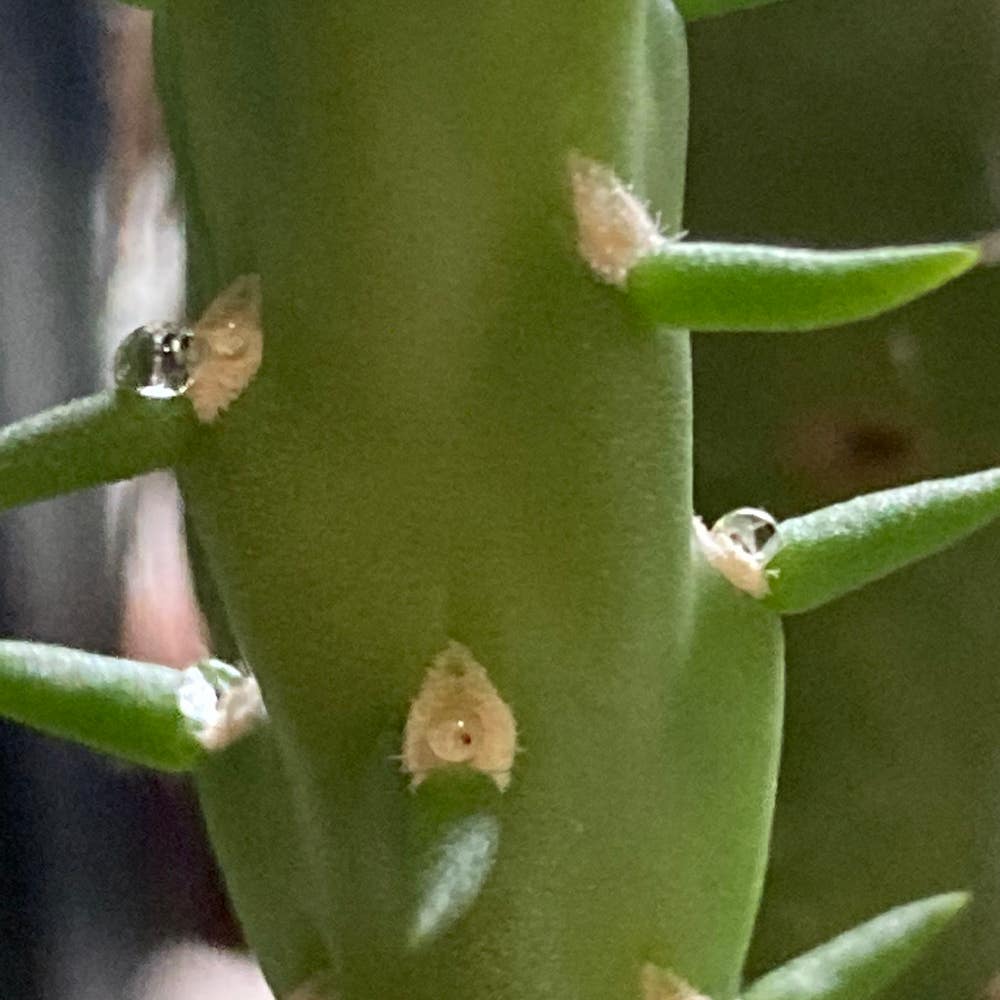
Why Is My Cane Cholla Not Doing Well?
Cylindropuntia imbricata
By the Greg Editorial Team
Jun 18, 2024•3 min read
This article was created with the help of AI so we can cover more plants for you. May contain errors. See one? Report it here.
Nurture a thriving Cane Cholla 🌵 by sidestepping these typical care mistakes!
- 🌵 Shriveled stems mean more water; soft, smelly stems mean less.
- 🌞 Stem discoloration and leaf scorch signal light and temperature issues.
- 🕵️♂️ Check for root rot, pests, and fungus to prevent further distress.
When Watering Gets Tricky
💧 Spotting the Signs of Water Woes
Cane Cholla can be a bit of a drama queen when it comes to watering. Shriveled stems are the plant's way of throwing a tantrum for more water. Conversely, if your Cholla's stems feel soft or you catch a whiff of something foul, it's likely been overindulged with H2O.
💦 Fine-Tuning Your Watering Routine
Getting the watering right for your Cane Cholla isn't rocket science, but it does require some finesse. Aim for soil that's damp to the touch—think of the moisture level of a sponge that's been squeezed out. When the seasons change, so should your watering schedule; less when it's cooler, more in the heat. Remember, consistency is your friend here.

Light and Temperature: The Balancing Act
🌞 Reading the Cane Cholla's Light Language
Cane Cholla thrives in bright light, but too much can lead to a sunburned appearance. Stem discoloration—a shift towards a paler or more yellow hue—signals an unhappy plant. Conversely, dark, rich colors and robust growth indicate your Cane Cholla is basking in just the right amount of sunlight.
🌡️ Keeping the Temperature Just Right
Cane Cholla prefers a consistent temperature range, ideally between 65-85℉. Fluctuations can stress the plant, leading to poor health. Keep it away from drafty spots and direct heat sources like radiators. Remember, a stable environment means a happy Cane Cholla.

The Unseen Enemy: Root Rot and Fungal Foes
🕵️ Unearthing the Problem
Root rot in Cane Cholla is a covert crisis. Below the soil line, trouble brews unseen. To catch it, you'll need to become a plant detective. Look for darkened roots that feel as if they've lost their will to live—soft, mushy, and with a distinct funk that's anything but groovy. If your Cane Cholla's roots resemble overcooked noodles, it's time for an intervention.
🍄 Fungal Issues Above Ground
Fungus among us? On your Cane Cholla, it's a sign of distress. Yellow leaves and odd growths are the plant's way of waving a white flag. Mold on the soil surface is like a billboard advertising root rot's residency. Spot these signs, and it's time to play offense with a fungicide and some serious soil scrutiny. Remember, prevention is your best defense—keep your Cane Cholla's environment clean and don't let moisture become a mold motel.

Pests and Scorch: External Stressors
🐛 Bug Battles: Keeping Pests at Bay
Cane Cholla cacti can fall victim to sneaky pests like scale insects and mealybugs. These critters are like uninvited guests that refuse to leave, sucking the life out of your plant. Check regularly under leaves and around stems for these pests. If you spot them, show them the door with a strong stream of water or apply insecticidal soap. For a full-blown infestation, you might need to bring out the big guns—like neem oil or a systemic insecticide.
☀️ Sun Stress: Preventing Leaf Scorch
Your Cane Cholla loves the sun, but too much can lead to the equivalent of a nasty sunburn. Leaf scorch appears as crispy, brown edges on leaves, signaling your plant is waving a white flag. To prevent this, ensure your Cane Cholla isn't getting more light than it can handle, especially during scorching summer afternoons. Create some shade or use a sheer curtain to filter intense sunlight. Remember, it's about finding that sweet spot—enough sun to thrive, but not so much that it fries.
⚠️ Safety First
This content is for general information and may contain errors, omissions, or outdated details. It is not medical, veterinary advice, or an endorsement of therapeutic claims.
Always consult a qualified healthcare professional before using any plant as food, medicine, or supplement.
Never eat any plant (or feed one to pets) without confirming its identity with at least two trusted sources.
If you suspect poisoning, call Poison Control (800) 222-1222, the Pet Poison Helpline (800) 213-6680, or your local emergency service immediately.
Spotted an error? Please report it here.
Keep your Cane Cholla happy and healthy 🌵 with Greg's custom care plan, ensuring perfect watering and sunlight without the guesswork!