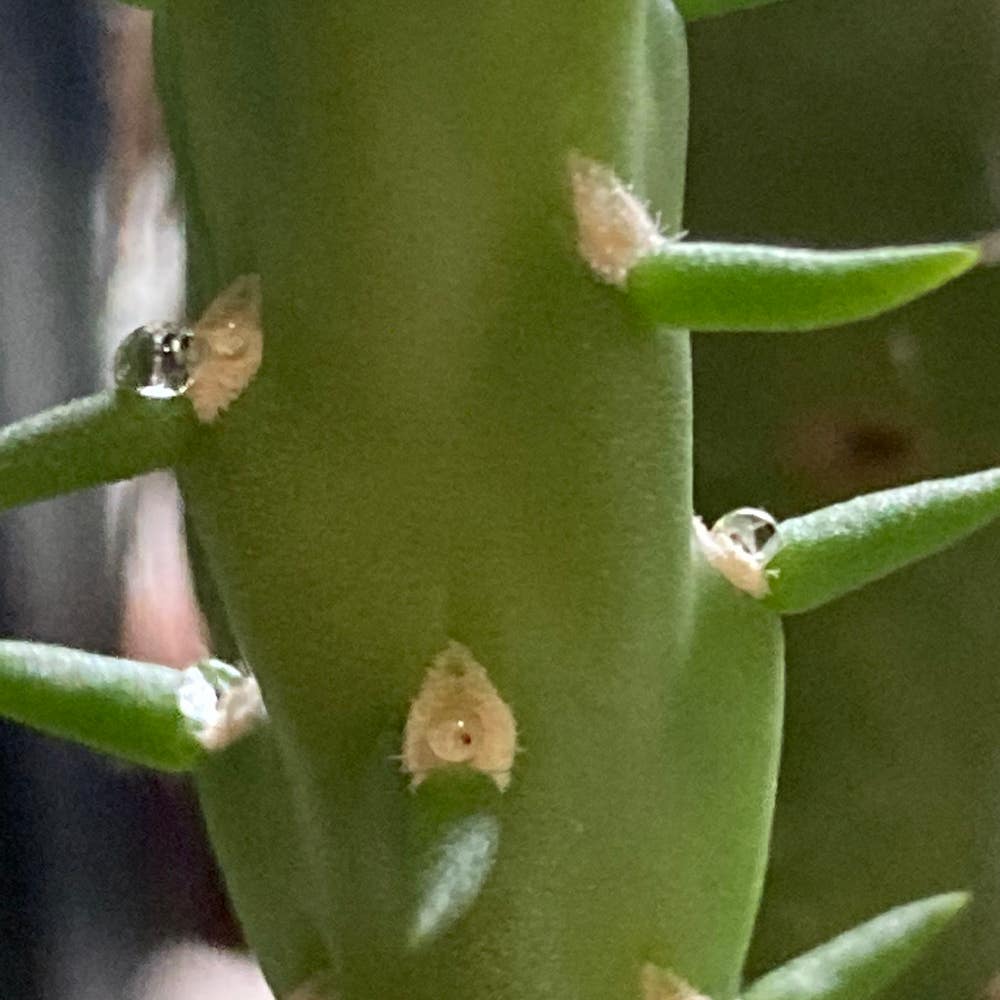
🌵 Cane Cholla Wilting? Here's What to Do
Cylindropuntia imbricata
By the Greg Editorial Team
Oct 02, 2024•4 min read
This article was created with the help of AI so we can cover more plants for you. May contain errors. See one? Report it here.
Transform your wilting Cane Cholla 🌵 into a thriving beauty with these essential care tips and tricks!
- 💧 Wilting starts with water stress; drooping segments indicate it's time to water.
- ☀️ Heat stress causes wilting; provide shade during peak sunlight hours to protect.
- 🦠 Disease can cause wilting; look for yellowing segments and mushy textures.
Common Causes of Wilting Leaves
💧 Water Stress
Wilting in Cane Cholla often starts with water stress. Symptoms include drooping segments and a shriveled appearance, signaling that your plant may be thirsty.
Infrequent watering or excessive drought conditions are the usual culprits. Make sure to establish a consistent watering routine to keep your plant hydrated.
🔥 Heat Stress
Heat stress can also lead to wilting. Look for faded color and sunburned patches on segments, which indicate your plant is struggling under extreme temperatures.
Prolonged exposure to direct sunlight can exacerbate this issue. Providing some shade during peak sunlight hours can help mitigate the effects.
🦠 Disease-Related Wilting
While less common, disease-related wilting is another possibility. Signs include yellowing segments and a mushy texture, which may indicate potential rot.
However, pathogenic wilt is rare in Cane Cholla. It's best to focus on environmental factors before jumping to conclusions about disease.
Understanding these causes is crucial for diagnosing and treating wilting in your Cane Cholla. Next, we'll explore how to effectively diagnose the issue.
Diagnosing Wilting in Cane Cholla
Step-by-Step Guide 🌱
Diagnosing wilting in your Cane Cholla starts with a thorough assessment.
- Assess the watering schedule: Check if the plant has been underwatered or overwatered.
- Evaluate environmental conditions: Measure temperature and sunlight exposure to ensure they are within the ideal range.
- Inspect the plant: Look for signs of pests or disease that could be affecting its health.
- Check soil moisture: Use a moisture meter or your finger to test the soil's dryness.
Signs to Look For 👀
Keep an eye out for visual indicators that can signal trouble.
- Visual indicators: Look for color changes, texture alterations, and drooping segments.
- Environmental indicators: Monitor changes in humidity and temperature around the plant, as these can also impact its well-being.
By following these steps and observing these signs, you can effectively diagnose the cause of wilting in your Cane Cholla. This proactive approach will set the stage for implementing the right solutions to restore your plant's health.
Next, let’s explore practical solutions for addressing wilting leaves.
Solutions for Wilting Leaves
💧 Addressing Water Stress
Water stress is a common issue for Cane Cholla. To combat this, adjust your watering frequency based on the season and humidity levels.
Implementing a bottom watering technique can also help. This method ensures deep soil hydration, allowing the roots to absorb moisture effectively.
☀️ Addressing Heat Stress
Heat stress can lead to significant wilting. To alleviate this, provide shade during peak sunlight hours to protect your plant from harsh rays.
If temperatures soar beyond optimal levels, consider relocating your Cane Cholla to a cooler area. This simple move can make a world of difference.
🦠 Addressing Disease-Related Wilting
While disease-related wilting is less common, it requires immediate attention. Start by removing any affected segments to prevent the spread of potential rot.
Additionally, ensure proper air circulation around your plant. This can help reduce humidity levels and create a healthier environment for your Cane Cholla.
By addressing these issues promptly, you can restore your Cane Cholla to its vibrant self. Next, let’s explore preventive measures to minimize future wilting episodes.
Preventive Measures
Tips to Minimize Future Wilting Episodes 🌱
Regularly monitoring soil moisture is crucial for your Cane Cholla's health. Adjust your watering schedule based on the season and humidity levels to keep your plant thriving.
Using well-draining soil is another essential step. This prevents water accumulation, which can lead to root rot and other issues.
Environmental Adjustments 🌞
Positioning your Cane Cholla correctly can make a significant difference. Ensure it receives adequate sunlight while avoiding extreme heat that could stress the plant.
Humidity control is also vital. Maintaining a stable environment helps reduce stress and promotes healthy growth, keeping your Cane Cholla vibrant and resilient.
By implementing these preventive measures, you can significantly reduce the chances of wilting in your Cane Cholla. Next, let’s explore when it might be time to seek expert assistance for your plant.
When to Seek Help
🚨 Signs That Require Expert Assistance
If your Cane Cholla continues to wilt despite your best efforts, it may be time to call in the experts. Persistent wilting can indicate underlying issues that simple adjustments can't fix.
Look out for severe pest infestations or signs of disease. If you notice unusual spots, excessive drooping, or any mushy textures, these could be red flags that need professional attention.
📚 Resources for Support
Finding the right help can make all the difference. Local plant experts can provide tailored advice specific to your region and conditions.
Additionally, consider joining Greg, the online cactus care community. It's a fantastic resource for sharing experiences and getting advice from fellow cactus enthusiasts. Don't hesitate to reach out; your Cane Cholla deserves the best care possible!
⚠️ Safety First
This content is for general information and may contain errors, omissions, or outdated details. It is not medical, veterinary advice, or an endorsement of therapeutic claims.
Always consult a qualified healthcare professional before using any plant as food, medicine, or supplement.
Never eat any plant (or feed one to pets) without confirming its identity with at least two trusted sources.
If you suspect poisoning, call Poison Control (800) 222-1222, the Pet Poison Helpline (800) 213-6680, or your local emergency service immediately.
Spotted an error? Please report it here.
Keep your Cane Cholla thriving 🌵 by using Greg's tailored watering reminders and community insights to prevent wilting and ensure optimal care!