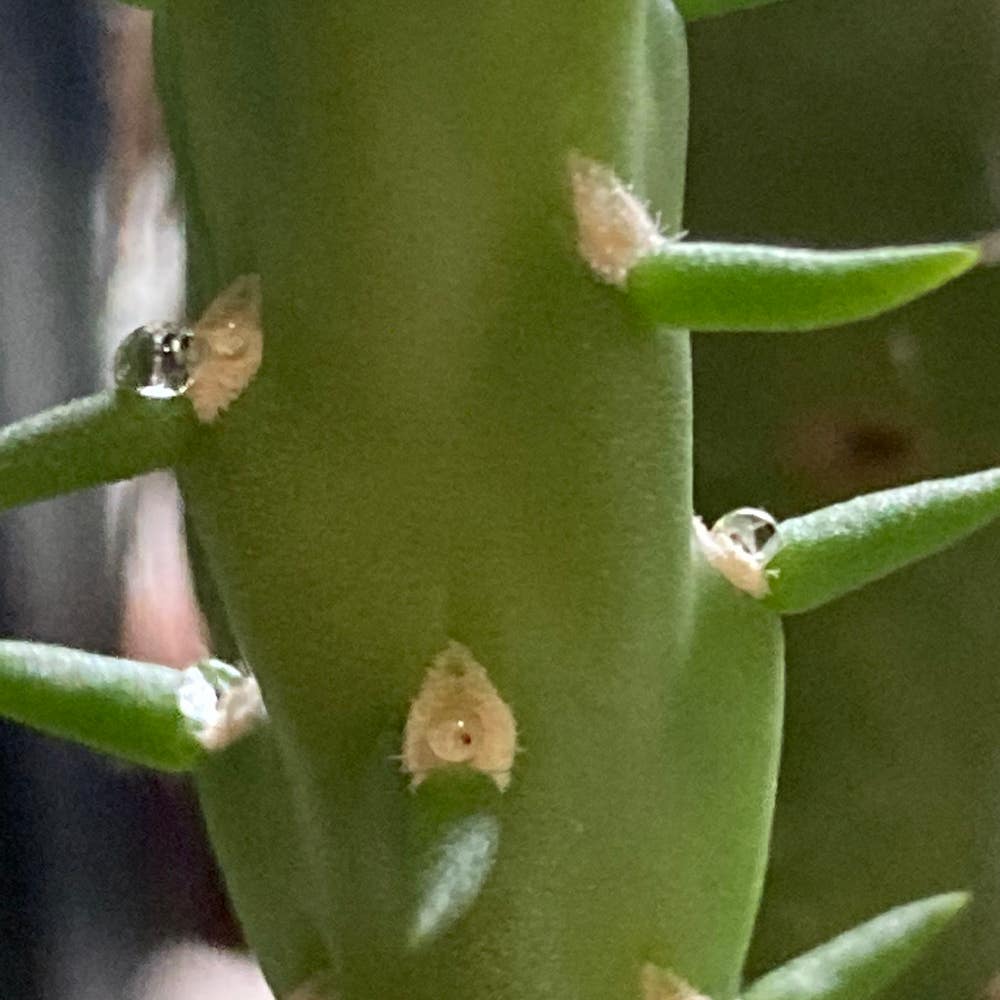
Why Are My Cane Cholla Leaves Dropping?
Cylindropuntia imbricata
By the Greg Editorial Team
Jun 18, 2024•4 min read
This article was created with the help of AI so we can cover more plants for you. May contain errors. See one? Report it here.
Stop your Cane Cholla's leaf drop 🍂 and nurture a resilient, lush plant with these essential care tips.
- Water wisely to prevent wrinkled or soggy, yellow leaves.
- Protect from extreme temps; heat and cold stress cause wilting and mushiness.
- Combat pests and fungus with regular inspections and proper air circulation.
When Thirsty Spines Drop Leaves: Dehydration and Overhydration
🚰 Spotting the Signs of Thirst
Underwatering your Cane Cholla can leave it looking more deflated than a day-old party balloon. You'll notice the plant's once plump leaves have turned wrinkled and lackluster. The soil? As dry as a bone. If the leaves have gone full crispy critter, turning brown and brittle, it's a clear SOS for hydration.
🌊 Too Much Love Can Drown: Overwatering Woes
Conversely, overwatering is like throwing your Cane Cholla an unwanted pool party. Leaves may deceive with a vibrant green, but if they snap like fragile twigs, you're drowning the poor thing. Yellow leaves with a limp, soggy feel are tattletales of excess moisture. And if you spot a moldy takeover on the soil's surface, it's time to dial back on the H2O.

Feeling Hot, Hot, Hot: Temperature and Environmental Stress
🌵 When the Heat is Just Too Much
Cane Cholla cacti are sun worshippers, but there's a fine line between basking and baking. Heat stress manifests as wilting, scorched leaf edges, and a general look of a plant that's had too much of a good thing. To mitigate damage, provide some shade during the hottest part of the day—think of it as applying sunscreen to your spiky friend.
❄️ Chilly Cholla: Cold Stress and Drafts
Conversely, Cane Cholla can't deal with the cold shoulder. Symptoms of cold stress include dark, mushy leaves and a droopy demeanor. Protect your cactus by keeping it away from drafty windows and doors. Remember, rapid temperature changes are more jarring than a cold plunge after a sauna. Keep the environment stable to avoid shocking your desert dweller.

Bugs and Fungus Among Us: Pests and Diseases
🐜 Unwelcome Guests: Tackling Pest Infestations
Cane Cholla cacti aren't immune to the sneaky critters that love to feast on plant juices. Aphids, spider mites, and scale insects are the usual suspects. These pests can be spotted as tiny bumps or webs, often on the undersides of leaves. They suck the life out of your plants and excrete sticky honeydew, which can lead to sooty mold.
Immediate action is crucial. Introduce insecticidal soap or neem oil to your plant care routine. These are the bouncers that show pests the door. Regular inspections are key; catch those bugs before they throw a full-blown party on your plant.
🍄 Fungal Foes: Preventing and Treating Diseases
Fungal diseases come uninvited, with symptoms like black spots and wilted shoots. If your Cane Cholla smells like last week's compost, you might be dealing with a bacterial infection. These issues can escalate from an eyesore to a plant health crisis in no time.
Preventive measures include promoting good air circulation and avoiding overwatering. If fungus crashes the party, consider fungicides your cleanup crew. Apply them thoroughly, as if painting a masterpiece, and always follow the label—it's your plant's lifeline.
Remember, cleanliness is next to godliness in plant care. Sterilize your tools and pots to keep diseases at bay. Regular inspections are the stakeouts for spotting trouble early, and if all else fails, an all-purpose fungicide might just save the day.

A Balanced Diet for Your Cane Cholla: Nutrient Management
💡 The Telltale Signs of Nutritional Deficiencies
Yellowing stems in your Cane Cholla could be shouting for nutrients. This plant's subtle signs of distress, like pale growth, are its way of whispering for help. Underfeeding can lead to leaf drop, a cry for a balanced meal.
🍽️ Feeding Your Cane Cholla Right
Moderation is key when feeding your Cane Cholla. A low-nitrogen fertilizer during the growing season should suffice. Overzealous feeding risks weak stems and excessive growth. For a calcium boost, consider adding lime or crushed eggshells. Magnesium needs? Epsom salts have got you covered. Remember, it's about precision, not just pouring in nutrients.
Turning Over a New Leaf: Remedial and Preventative Care
🍂 First Aid for Fallen Leaves
When your Cane Cholla drops leaves, spring into action. First, assess the soil moisture; if it's too dry or soggy, correct it immediately. Prune any damaged leaves to prevent disease spread and encourage new growth. If pests are party-crashing, show them the door with appropriate treatments.
🌿 Keeping Leaves Lush: Long-Term Prevention Strategies
Consistency is your plant's best friend. Establish a care routine that includes regular watering, balanced fertilization, and vigilant pest control. Ensure the plant gets adequate sunlight and air circulation. If you spot any trouble, don't play the guessing game; adjust your care or seek professional advice. Remember, a healthy Cane Cholla is less likely to lose leaves, so keep up the good work.
⚠️ Safety First
This content is for general information and may contain errors, omissions, or outdated details. It is not medical, veterinary advice, or an endorsement of therapeutic claims.
Always consult a qualified healthcare professional before using any plant as food, medicine, or supplement.
Never eat any plant (or feed one to pets) without confirming its identity with at least two trusted sources.
If you suspect poisoning, call Poison Control (800) 222-1222, the Pet Poison Helpline (800) 213-6680, or your local emergency service immediately.
Spotted an error? Please report it here.
Ensure your Cane Cholla avoids the dreaded leaf drop and stays resilient 🌵 with Greg's reminders for the perfect watering schedule and pest check-ins!