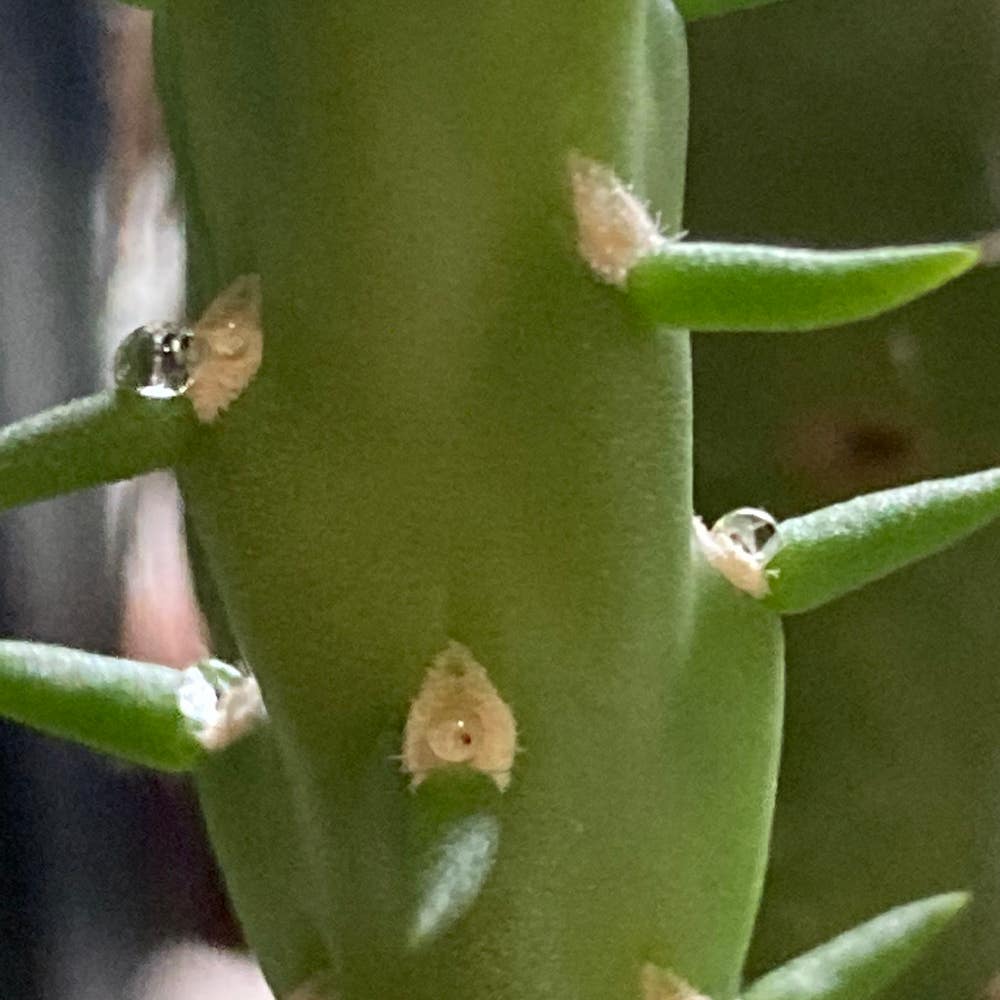
What Are The Bugs on My Cane Cholla? 🐛
Cylindropuntia imbricata
By the Greg Editorial Team
Jun 18, 2024•5 min read
This article was created with the help of AI so we can cover more plants for you. May contain errors. See one? Report it here.
Banish pesky bugs 🐛 from your Cane Cholla and restore its desert glory with these proven tactics! 🌵
- Spider mites and mealybugs suck sap, causing speckles, drooping, and stunted growth.
- Scale insects and flying pests drain nutrients and can introduce pathogens.
- Prevent infestations with cleanliness, proper watering, and regular inspections.
Spotting the Culprits: Identifying Pests on Your Cane Cholla
🕷️ Spider Mites
Spotting the signs: How to tell if spider mites have invaded
Look for webbing and yellow speckling on your Cane Cholla; these are the calling cards of spider mites. They're tiny, so don't expect to see the critters without a magnifying glass. Instead, check for the damage they leave behind, especially on new growth.
The damage done: Understanding their impact on Cane Cholla
Spider mites are like vampires for your Cane Cholla, sucking the life out of it. Their feeding results in pale speckles on the leaves. Over time, this can lead to serious damage, stunting growth and vitality.
🛡️ Scale Insects
Unwanted armor: Identifying scale insects on your plant
Scale insects are masters of disguise, appearing as small, brown bumps on your Cane Cholla. They cling to the plant like tiny, stubborn knights in dull armor, often blending in with the cactus itself.
Weighing down growth: The effects of scale on Cane Cholla
These pests are sap-suckers, literally. They latch onto your plant, draining its nutrients and sapping its strength. Left unchecked, scale can severely impact your Cane Cholla's health and growth.
🦟 Fungus Gnats and Fruit Flies
Tiny fliers: Distinguishing between fungus gnats and fruit flies
Fungus gnats and fruit flies are the party crashers of the insect world. Fungus gnats love moist soil, while fruit flies are the ones buzzing around your Cane Cholla like it's a ripe banana.
Buzzing to damage: How these pests affect Cane Cholla
Though tiny, these fliers can lead to big problems. Fungus gnats' larvae feast on plant roots, while fruit flies are more of a nuisance than a direct threat. Still, they can carry pathogens that harm your plant.
🐛 Mealybugs
Cotton-like invaders: Recognizing mealybugs on Cane Cholla
Mealybugs look like someone dropped tiny bits of cotton in the nooks of your Cane Cholla. These pests are easy to spot with their distinctive white fluff.
Sap-sucking problems: The threat mealybugs pose
Like their scale insect cousins, mealybugs are sap-suckers. They can quickly turn your Cane Cholla into a sad, droopy shadow of its former self. Vigilance is key to catching these pests early.

Bug Off: Effective Remedies for Each Pest
🕷️ Spider Mites
Wiping out webs: Eradication techniques for spider mites
Spider mites are tiny terrorists that wreak havoc on Cane Cholla. To combat them, start by blasting them with water to dislodge their webs. Introduce natural predators like ladybugs or lacewings to your garden; they're like mini assassins for these pests. For a more direct approach, mix 1 part 70% isopropyl alcohol with 4 parts water and spray liberally. Repeat applications may be necessary because these critters breed faster than rabbits at a disco.
🦟 Scale Insects
Scraping off scales: Control measures for scale insects
Scale insects can turn your Cane Cholla into their personal diners. Physically remove them with a tool or your fingernails – it's oddly satisfying. Follow up with a neem oil solution or insecticidal soap to prevent a second round. If you're feeling adventurous, concoct a spray with cinnamon or eucalyptus oil (10-20 drops should do the trick) and show those scales the door.
🦟 Fungus Gnats and Fruit Flies
Trapping and treating: Solutions for flying pests
Fungus gnats and fruit flies are the uninvited guests at your plant party. Sticky traps work like a charm, ensnaring these pests mid-flight. For a more proactive stance, a neem oil drench can make the soil less appealing for laying eggs. If you're dealing with a full-blown invasion, insecticidal soap is your go-to – it's like sending in the SWAT team.
🐞 Mealybugs
Alcohol to the rescue: Mealybug eradication methods
Mealybugs are the vampires of the plant world, but instead of garlic, you'll need rubbing alcohol. Dip a Q-tip in alcohol and apply it to these cottony creeps – it's like holy water to them. If you're up for it, release beneficial insects like ladybugs; they find mealybugs delicious. For larger infestations, insecticidal soap or a neem oil spray can help you regain control. Remember, persistence is key; these bugs are stubborn.

Prevention is Better Than Cure: Keeping Pests at Bay
🛡️ General Preventative Tips
Creating a hostile environment for pests means being a bit of a neat freak with your Cane Cholla. Debris? Evict it. Overwatering? That's a pest party invitation—decline it. Good plant hygiene is like a bouncer at the club door; it keeps the riff-raff out.
🕵️ Regular checks: The key to early detection and prevention
Inspect your Cane Cholla like you're looking for Waldo—meticulously and often. Early detection is your secret weapon, turning a potential pest apocalypse into a minor skirmish.
🐜 Pest-Specific Preventative Measures
Spider Mites
Keep the air moving around your Cane Cholla. Spider mites despise a breezy environment—it messes with their webs and their vibe.
Scale Insects
Scale insects are like squatters; they hate it when you disrupt their living space. Pruning and physically removing them can discourage others from moving in.
Fungus Gnats and Fruit Flies
Dry soil is kryptonite to fungus gnats and fruit flies. Water your Cane Cholla with the precision of a bomb defusal expert—only when necessary.
Mealybugs
Embrace your inner clean freak. Mealybugs thrive in clutter, so keep your plant's area spick-and-span to send these pests packing.

⚠️ Safety First
This content is for general information and may contain errors, omissions, or outdated details. It is not medical, veterinary advice, or an endorsement of therapeutic claims.
Always consult a qualified healthcare professional before using any plant as food, medicine, or supplement.
Never eat any plant (or feed one to pets) without confirming its identity with at least two trusted sources.
If you suspect poisoning, call Poison Control (800) 222-1222, the Pet Poison Helpline (800) 213-6680, or your local emergency service immediately.
Spotted an error? Please report it here.
Banish pests from your Cane Cholla and prevent future invasions with proactive alerts 🛡 from Greg, ensuring your plant thrives in a bug-free zone!