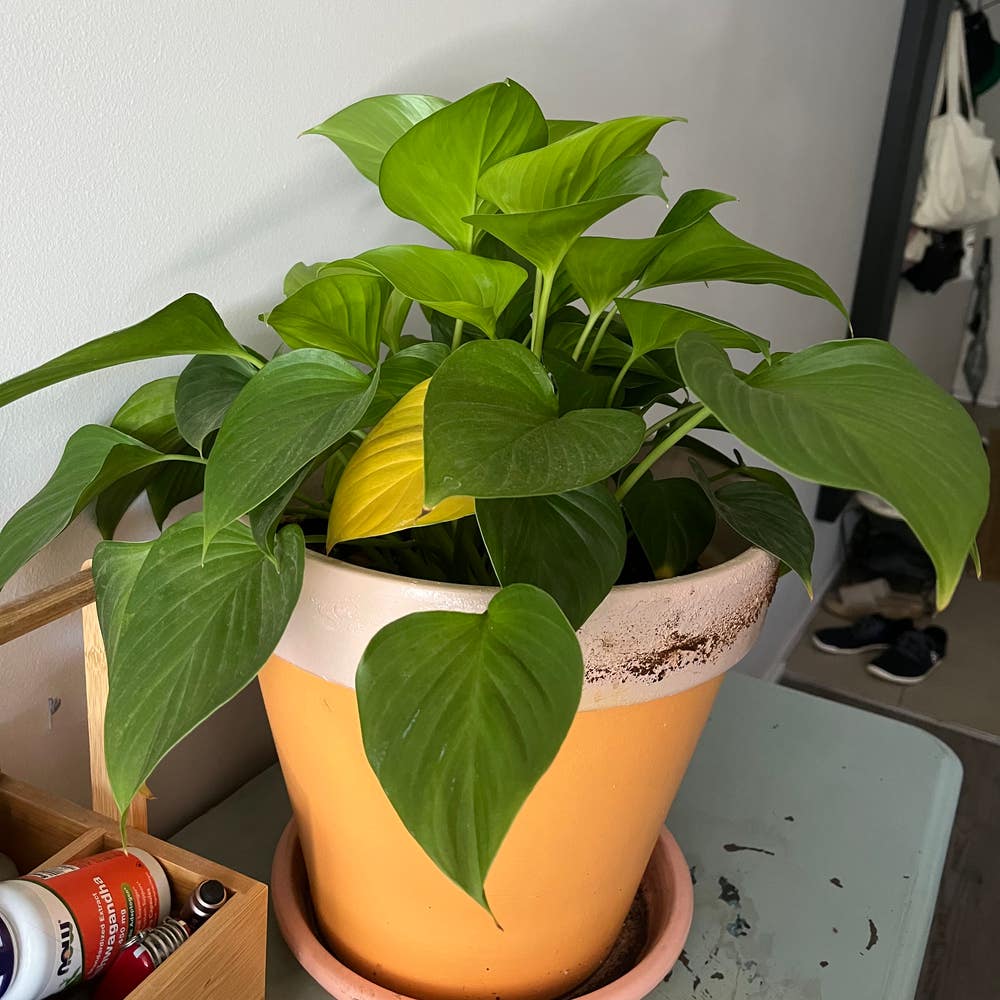
🍃 Why Your Homalomena Has Yellow Leaves
Homalomena Selby
By the Greg Editorial Team
Oct 21, 2024•5 min read
This article was created with the help of AI so we can cover more plants for you. May contain errors. See one? Report it here.
- 🌱 Yellow leaves indicate overwatering, nutrient deficiency, or underwatering. Assess your care routine!
- 💧 Use the finger test to check soil moisture and maintain optimal hydration.
- 🌞 Bright, indirect light is essential; avoid direct sunlight to prevent leaf burn.
Diagnosing Yellow Leaves
🌼 Identifying the Type of Yellowing
Understanding the type of yellowing your Homalomena is experiencing is crucial for effective treatment. There are two primary types: whole leaf yellowing and tip yellowing.
Whole Leaf Yellowing
Whole leaf yellowing typically indicates overwatering or a nutrient deficiency. If the entire leaf turns yellow, it’s a sign that your plant may be sitting in soggy soil or lacking essential nutrients.
Tip Yellowing
Tip yellowing, on the other hand, often results from underwatering or salt buildup from fertilizers. If only the tips of the leaves are yellowing, it’s time to reassess your watering habits and check for excess salts in the soil.
💧 Assessing Soil Moisture Levels
To maintain a healthy Homalomena, consistent moisture is key. You can easily assess soil moisture using two techniques: the finger test and a moisture meter.
- Finger Test: Stick your finger about an inch into the soil. If it feels dry, it’s time to water.
- Moisture Meter: This handy tool provides a more precise reading of soil moisture levels.
Keeping the soil consistently moist, but not soggy, will help prevent yellowing leaves.
🐛 Checking for Pests and Diseases
Pests and diseases can also contribute to yellow leaves. Conduct a visual inspection by looking under the leaves and at the soil surface.
Early detection is vital for effective treatment. If you spot any pests, act quickly to prevent further damage to your plant.
☀️ Evaluating Light Exposure and Placement
Light exposure plays a significant role in your Homalomena's health. Assess the current light conditions by checking the proximity to windows and any artificial light sources.
If your plant isn’t getting the right amount of light, consider adjusting its placement. Moving it closer to a light source or away from harsh direct sunlight can make a world of difference.
By diagnosing the cause of yellow leaves, you can take the necessary steps to restore your Homalomena's health. Next, let’s explore effective solutions to address these yellowing leaves.
Solutions for Yellow Leaves
🌊 Adjusting Watering Practices
Establishing a consistent watering schedule is crucial for your Homalomena's health. Aim to water when the top inch of soil feels dry, ensuring you don’t overwater, which can lead to root rot.
Allowing the soil to dry slightly between waterings helps maintain the right moisture balance. This practice encourages healthy root development and prevents yellowing leaves.
🌱 Fertilizing Appropriately
Using balanced NPK fertilizers can significantly improve your plant’s vitality. These fertilizers provide essential nutrients that support growth and leaf health.
Timing is key; fertilize during the growing season—spring and summer—when your Homalomena is actively growing. This ensures your plant receives the nutrients it needs to thrive.
🐛 Treating Pest Infestations
Identifying and treating pest infestations is essential for maintaining plant health. Follow these steps for effective pest management:
- Identify pest type: Look for signs like webbing or sticky residue.
- Choose appropriate treatment method: Options include insecticidal soap or neem oil.
- Monitor plant health post-treatment: Check for improvements and reapply if necessary.
🌞 Modifying Environmental Conditions
☀️ Light Adjustments
Adjusting your plant's light exposure can make a world of difference. If your Homalomena is getting too much direct sunlight, consider moving it to a brighter, shadier spot.
Using sheer curtains can help diffuse harsh sunlight while still providing adequate light. This simple change can prevent leaf burn and yellowing.
💧 Humidity Adjustments
Increasing humidity is vital for your Homalomena's well-being. Misting the leaves or grouping plants together can create a more humid microenvironment.
You can also use humidity trays or humidifiers to maintain optimal moisture levels. This is especially important in dry indoor conditions, as higher humidity promotes lush, green foliage.
By implementing these solutions, you can effectively address yellow leaves and foster a thriving Homalomena. Next, let’s explore some preventative measures to keep your plant healthy in the long run.
Preventative Measures
🌱 Best Practices for Homalomena Care
To keep your Homalomena thriving, establish a regular watering and fertilization schedule. Consistency is key; it helps prevent stress and promotes healthy growth.
Well-draining soil is crucial for your plant's health. Choose pots that allow excess water to escape, preventing root rot and other moisture-related issues.
🔍 Regular Monitoring and Maintenance
Make it a habit to check your plant weekly for moisture levels, pests, and overall health. Early intervention can save your plant from more significant problems down the line.
Regular monitoring helps you catch issues before they escalate. A little attention goes a long way in maintaining a vibrant Homalomena.
🪴 Choosing the Right Soil and Potting Conditions
Opt for peat-based or aroid mixes for optimal growth. These soil types provide the right balance of moisture retention and drainage.
The size of your pot matters too. Ensure it has adequate drainage holes to prevent water buildup, which can lead to yellow leaves.
🌦️ Seasonal Care Adjustments
As the seasons change, so should your care practices. Adjust your watering and fertilization based on the plant's needs during different times of the year.
Keep an eye on temperature and humidity fluctuations. Your Homalomena will appreciate the extra attention, helping it thrive year-round.
By implementing these preventative measures, you can enjoy a healthy, vibrant Homalomena. Next, let's explore common misconceptions about yellow leaves in houseplants.
Common Misconceptions
Myths About Yellow Leaves in Houseplants 🌼
Yellow leaves can be alarming, but they aren't always a sign of poor care. Sometimes, a little yellowing is just part of the plant's natural life cycle.
Clarifying the Role of Light in Leaf Health 💡
Many people believe that houseplants thrive in direct sunlight, but this isn't true for all species. Homalomena, for instance, prefers bright, indirect light to flourish.
Understanding the Difference Between Natural Leaf Aging and Stress 🧐
It's essential to differentiate between normal leaf drop and stress-induced yellowing. Recognizing healthy plant behavior helps you respond appropriately to your Homalomena's needs.
Understanding these misconceptions can empower you to care for your plants more effectively. Next, let’s explore preventative measures to keep your Homalomena thriving.
⚠️ Safety First
This content is for general information and may contain errors, omissions, or outdated details. It is not medical, veterinary advice, or an endorsement of therapeutic claims.
Always consult a qualified healthcare professional before using any plant as food, medicine, or supplement.
Never eat any plant (or feed one to pets) without confirming its identity with at least two trusted sources.
If you suspect poisoning, call Poison Control (800) 222-1222, the Pet Poison Helpline (800) 213-6680, or your local emergency service immediately.
Spotted an error? Please report it here.
Revive your Homalomena's health by tackling yellow leaves with Greg's custom watering alerts and moisture checks 🌱, ensuring your plant thrives in no time!