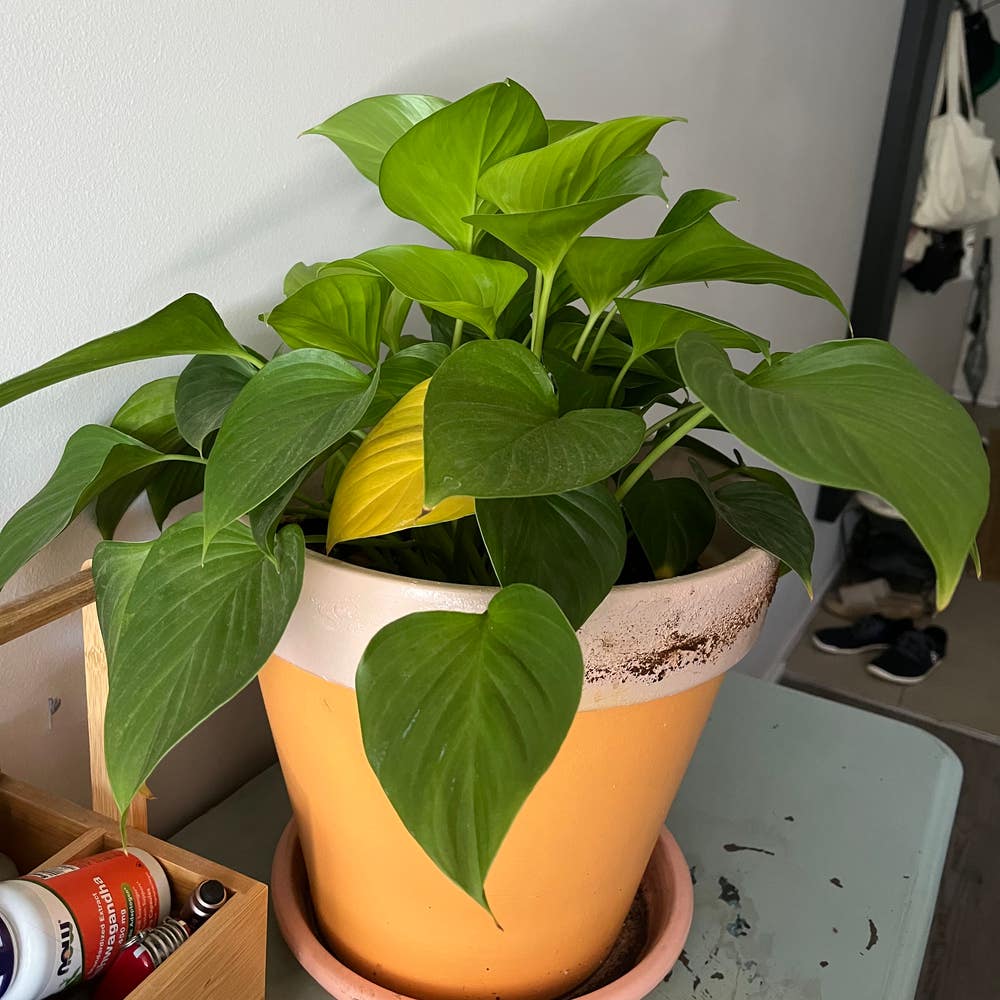
🔍 Why Your Emerald Gem Has Yellow Leaves
Homalomena Selby
By the Greg Editorial Team
Nov 06, 2024•7 min read
This article was created with the help of AI so we can cover more plants for you. May contain errors. See one? Report it here.
- 🌱 Yellow leaves indicate issues like overwatering, underwatering, or nutrient deficiencies.
- 💧 Adjust watering frequency based on soil moisture to prevent yellowing leaves.
- 🌞 Provide bright indirect light for at least six hours to keep your emerald gem healthy.
Causes of Yellow Leaves
💧 Overwatering
Overwatering is a common culprit behind yellow leaves on your emerald gem. Symptoms include yellowing leaves, particularly older ones, wilting despite wet soil, and root rot, which presents as dark, mushy roots when inspected.
To remedy overwatering, allow the soil to dry out before the next watering. Using well-draining soil can prevent water retention, and adjusting your watering frequency based on the season and humidity levels is crucial.
🚰 Underwatering
Underwatering can also lead to yellow leaves, especially in younger foliage. Signs include yellowing leaves, dry and crispy leaf edges, and premature leaf drop.
To combat underwatering, increase your watering frequency, ensuring that the soil is thoroughly soaked. Regularly monitor soil moisture levels and consider using a moisture meter for accurate readings.
🥦 Nutrient Deficiencies
Nutrient deficiencies can manifest as yellow leaves, with specific signs indicating different issues. For instance, yellowing leaves with green veins suggest a nitrogen deficiency, while pale leaves and stunted growth may indicate iron deficiency.
To correct these deficiencies, use a balanced, water-soluble fertilizer during the growing season. Following a fertilization schedule of every 4-6 weeks in spring and summer, along with conducting soil tests, can help determine specific nutrient needs.
🌞 Light Conditions
Proper lighting is essential for healthy plant growth. Your emerald gem thrives in moderate to bright indirect light for at least six hours daily. Inadequate light can lead to yellowing leaves and leggy growth.
To adjust light exposure, move the plant closer to a window or provide supplemental grow lights. Be cautious to avoid direct sunlight, as it can scorch the leaves.
🐛 Pest Infestations
Pest infestations can severely impact your plant's health, leading to yellow leaves. Common pests include spider mites, which leave webbing and stippled leaves, and mealybugs, identifiable by their white, cotton-like masses on leaves and stems.
The effects of pests include yellowing leaves, reduced vigor, and potential leaf drop. Regularly inspect your plants for signs of infestation and treat them with insecticidal soap or neem oil as necessary.
Understanding these causes can help you maintain the vibrant health of your emerald gem. Next, we’ll explore how to diagnose yellow leaves effectively.
Diagnosing Yellow Leaves
🌿 How to Assess Leaf Health
To determine the health of your emerald gem, start by examining the leaves closely. Healthy leaves should exhibit a deep green color and a firm texture, while yellowing leaves often indicate stress or nutrient deficiencies.
🌡️ Signs of Environmental Stress
Environmental factors play a crucial role in plant health. Temperature fluctuations can cause stress; ideally, keep your plant in a range of 60°F to 75°F (15°C to 24°C). Additionally, low humidity levels can exacerbate issues, so aim for a humidity level between 40-60%.
📝 Differentiating Between Causes of Yellowing
Creating a checklist can simplify the diagnosis of yellowing leaves. Start by assessing your watering habits—are you over or underwatering? Next, check if the light exposure is adequate and inspect for any visible signs of pests that could be affecting your plant's health.
By systematically evaluating these factors, you can pinpoint the cause of yellowing leaves and take appropriate action. This proactive approach not only helps in treating the current issue but also sets the stage for healthier growth in the future.
Preventing Yellow Leaves
💧 Best Watering Practices
Establishing a consistent watering schedule is crucial for your emerald gem's health. Water when the top inch of soil feels dry, ensuring you don’t drown your plant.
Utilize the finger test or a moisture meter for accuracy. This simple practice helps you avoid the pitfalls of both overwatering and underwatering.
🪴 Soil Selection and Drainage Tips
Choosing the right potting mix is essential for preventing yellow leaves. Opt for a well-draining mix, such as a peat-based blend with perlite or orchid bark.
Ensure your pots have drainage holes to prevent waterlogging. This allows excess moisture to escape, keeping roots healthy and happy.
🌱 Fertilization Schedule and Nutrient Balance
Maintaining a balanced nutrient supply is key to vibrant foliage. Use slow-release fertilizers for steady nutrient availability throughout the growing season.
Adjust your fertilization schedule based on the plant's growth stage and the season. This ensures your emerald gem gets the nutrients it needs when it needs them.
☀️ Optimal Light Conditions for Growth
Positioning your plant for ideal light exposure can make a significant difference. Aim for moderate to bright indirect light for at least six hours daily.
Rotate the plant periodically for even light distribution. Keep an eye out for signs of light stress, and adjust its location as necessary to promote healthy growth.
By following these preventive measures, you can help your emerald gem thrive and keep those yellow leaves at bay. Next, let’s explore how to treat yellowing leaves effectively.
Treating Yellow Leaves
🌿 Step-by-Step Guide to Remedy Yellowing Leaves
Identifying the cause of yellowing leaves is your first step. Whether it's overwatering, underwatering, or another issue, pinpointing the problem is crucial.
Next, adjust your care routines based on your diagnosis. This could mean changing your watering schedule or modifying light exposure.
Finally, remove any severely affected leaves to encourage new growth. This not only improves the plant's appearance but also helps redirect energy to healthier parts.
🔧 Adjusting Care Routines Based on Diagnosis
Once you've identified the issue, tailor your watering, light, and nutrient practices accordingly. For instance, if overwatering is the culprit, reduce the frequency of watering.
Keep a close eye on your plant's response to these changes over the following weeks. This monitoring will help you fine-tune your approach and ensure your emerald gem thrives.
✂️ When to Prune Yellow Leaves
Timing is key when it comes to pruning yellow leaves. It's best to prune them as soon as they appear to prevent further stress on the plant.
Use clean, sharp scissors for this task. This simple step helps avoid introducing pathogens that could harm your plant's health.
By following these steps, you can effectively treat yellowing leaves and promote a healthier, more vibrant plant. Now, let's explore how to maintain overall plant health for long-term success.
Maintaining Overall Plant Health
Regular Monitoring and Care Routines 🌱
To keep your emerald gem thriving, establish a routine for checking soil moisture, light exposure, and pest presence. Regular monitoring helps catch issues early, ensuring your plant remains healthy and vibrant.
Consider keeping a care journal to document changes and adjustments. This practice not only tracks your plant's progress but also helps you identify patterns in its care needs.
Seasonal Considerations ❄️
As the seasons change, so should your plant care practices. In winter, reduce watering since growth typically slows down, allowing the soil to dry out more between waterings.
During dry winter months, increasing humidity is crucial. You can achieve this by misting the leaves or placing a humidifier nearby to create a more favorable environment.
Importance of Repotting and Soil Health 🌿
Repotting your emerald gem every 1-2 years is essential for refreshing the soil and promoting healthy growth. Fresh soil provides new nutrients and improves drainage, which is vital for root health.
While repotting, take the opportunity to check the roots. Look for signs of rot or crowding, as these can hinder your plant's growth and overall health. Addressing these issues promptly will help your plant flourish.
Maintaining overall plant health is a continuous journey. By regularly monitoring your plant's needs and adjusting care routines, you can ensure it remains a stunning addition to your space. Next, let's explore how to treat yellow leaves effectively.
⚠️ Safety First
This content is for general information and may contain errors, omissions, or outdated details. It is not medical, veterinary advice, or an endorsement of therapeutic claims.
Always consult a qualified healthcare professional before using any plant as food, medicine, or supplement.
Never eat any plant (or feed one to pets) without confirming its identity with at least two trusted sources.
If you suspect poisoning, call Poison Control (800) 222-1222, the Pet Poison Helpline (800) 213-6680, or your local emergency service immediately.
Spotted an error? Please report it here.
Keep your emerald gem thriving 🌱 by using Greg's tailored care reminders to tackle yellow leaves caused by watering, light, or nutrients!