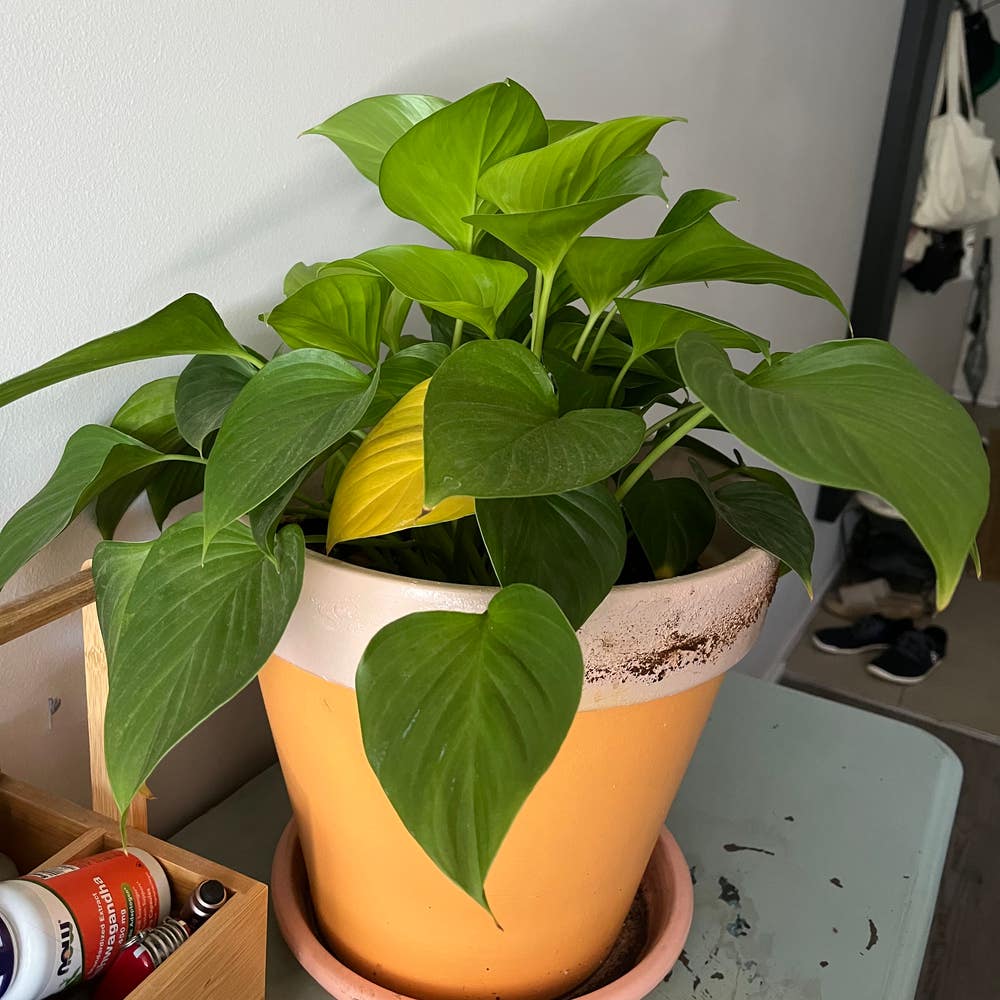
4 Tips for Healing Leaves Falling Over on Your Emerald Gem 🩹
Homalomena Selby
By the Greg Editorial Team
Nov 06, 2024•7 min read
This article was created with the help of AI so we can cover more plants for you. May contain errors. See one? Report it here.
- 💧 Overwatering and underwatering cause drooping leaves; maintain balanced moisture levels.
- 🌞 Bright, indirect light is essential; adjust exposure seasonally for optimal growth.
- 🌡️ Humidity and temperature matter; keep 60°F to 75°F and provide moderate to high humidity.
Causes of Leaves Falling Over
💧 Overwatering and Its Effects
Overwatering is a common issue that can lead to significant problems for your Emerald Gem. Symptoms include yellowing leaves and mushy stems, which indicate that the plant is struggling to cope with excess moisture.
Root rot is a serious consequence of overwatering. It manifests as blackened, mushy roots and can severely impair the plant's ability to absorb nutrients, ultimately leading to leaf drop.
🚰 Underwatering and Its Effects
On the flip side, underwatering can also cause leaves to fall over. Symptoms include wilting leaves and dry soil, which signal that your plant is not receiving enough moisture.
When underwatered, leaves may curl and brown at the edges. This lack of sufficient moisture affects leaf turgidity, making them more prone to drooping and dropping.
🌱 Environmental Stress Factors
Light Conditions
Light plays a crucial role in the health of your Emerald Gem. Ideally, it thrives in bright, indirect light but can tolerate low light conditions.
Inadequate light can lead to etiolation, where the plant stretches towards the light source, resulting in weak growth and leaf drop. Ensuring your plant receives the right amount of light is essential for its overall vitality.
🌡️ Temperature and Humidity
Temperature and humidity are also key factors in maintaining your plant's health. The optimal temperature range for your Emerald Gem is between 60°F to 75°F (15°C to 24°C).
This plant prefers moderate to high humidity levels. Low humidity and temperature fluctuations can cause leaf drooping and stress responses, making it vital to create a stable environment for your plant.
Understanding these causes will help you take proactive steps to prevent leaves from falling over, ensuring your Emerald Gem remains healthy and vibrant.
Symptoms to Look For
🌿 Signs of Drooping Leaves
Drooping leaves are often the first visual indicators of stress in your Emerald Gem. If you notice the leaves bending downwards and losing their firmness, it's time to take action.
Timing is crucial; address drooping as soon as you see it. Early intervention can prevent further damage and help your plant bounce back.
🎨 Color Changes in Leaves
Color changes in leaves can signal different care issues. Yellowing leaves typically indicate overwatering or nutrient deficiencies, while browning leaves often result from underwatering or environmental stress.
Monitoring leaf health is essential for early intervention. By keeping an eye on these color changes, you can adjust your care routine before the situation worsens.
Diagnosis and Treatment
🌊 Assessing Watering Habits
How to Check Soil Moisture
Understanding your plant's watering needs is crucial for its health. Use the finger test by inserting your finger into the soil; if it feels dry up to your second knuckle, it’s time to water.
Alternatively, moisture meters provide a more precise reading. Aim for soil moisture levels that are consistently moist but not soggy, ensuring your Emerald Gem thrives.
Signs of Root Rot
Root rot can be a devastating issue for your plant. Look for symptoms like a foul smell emanating from the soil and blackened, mushy roots.
If you suspect root rot, act quickly. Remove the plant from its pot, trim away the affected roots, and repot it in fresh, well-draining soil to promote recovery.
🌤️ Adjusting Environmental Conditions
Ideal Light Conditions
Light plays a vital role in your plant's overall health. Place your Emerald Gem in a spot with bright, indirect light for optimal growth, avoiding harsh direct sunlight that can scorch its leaves.
As seasons change, adjust light exposure accordingly. Move your plant closer to a window during winter months to ensure it receives adequate light.
Maintaining Proper Humidity Levels
Humidity is another key factor in keeping your plant happy. To increase humidity, consider using a humidifier, setting up pebble trays filled with water, or grouping your plants together to create a microclimate.
Regularly monitor humidity levels with a hygrometer. Aim for moderate to high humidity to prevent leaf drooping and maintain vibrant foliage.
🌱 Soil and Potting Considerations
Importance of Well-Draining Soil
The right soil mix is essential for your plant's health. A well-draining potting mix, typically containing components like peat moss, perlite, and pine bark, helps prevent waterlogging.
Watch for signs of poor drainage, such as yellowing leaves or water pooling on the surface. These can indicate that your plant's roots are struggling to breathe.
Repotting Tips for Recovery
Repotting can be a game-changer for a struggling plant. Signs that it’s time to repot include roots growing out of the drainage holes or stunted growth.
Follow these steps for a successful repotting:
- Choose a pot that’s one size larger.
- Prepare fresh potting mix.
- Carefully remove the plant and inspect the roots for any damage.
- Place the plant in the new pot and water thoroughly to settle the soil.
With these diagnosis and treatment strategies, you can help your Emerald Gem bounce back and flourish. Next, let’s explore effective prevention strategies to keep your plant healthy in the long run.
Prevention Strategies
🌱 Regular Care Routines
Watering Schedule
Establishing a consistent watering schedule is crucial for your Emerald Gem's health. Adjust your watering frequency based on the season and environmental conditions to avoid over or underwatering.
- Spring and Summer: Water more frequently as the plant actively grows.
- Fall and Winter: Reduce watering as growth slows down.
Consistency is key. Regularly check the soil moisture to ensure your plant receives the right amount of water.
Fertilization Tips
Fertilizing your Emerald Gem during the growing season helps maintain its vibrant health. Use balanced fertilizers that provide essential nutrients.
- Types of Fertilizers: Opt for liquid or slow-release fertilizers.
- Frequency: Fertilize every 4-6 weeks during the growing season.
Watch for signs of nutrient deficiencies, such as yellowing leaves or stunted growth, to adjust your fertilization routine accordingly.
👀 Monitoring Plant Health
How to Observe for Early Signs of Stress
Regular inspections can help you catch issues before they escalate. Check your plant's leaves, stems, and soil moisture regularly.
- Leaf Inspection: Look for drooping, discoloration, or spots.
- Stem Check: Ensure stems are firm and upright.
Timely intervention can prevent leaf drop and keep your plant thriving.
Importance of Seasonal Adjustments
As seasons change, so should your care routines. Adjust light exposure, watering frequency, and humidity levels to match the needs of your Emerald Gem.
- Light Exposure: Move your plant to brighter spots in spring and summer.
- Watering Frequency: Increase or decrease based on temperature and humidity.
Adapting your care to seasonal changes ensures your plant remains healthy year-round.
With these prevention strategies in place, you can foster a thriving environment for your Emerald Gem, setting the stage for effective recovery techniques if needed.
Recovery Techniques
🌱 Step-by-Step Recovery Process
Immediate Actions to Take When Leaves Start Drooping
When you notice your Emerald Gem's leaves drooping, it's crucial to act quickly. Start by adjusting the watering schedule; ensure the soil is neither too dry nor overly saturated.
Next, evaluate the light conditions. If the plant is in direct sunlight, consider moving it to a spot with bright, indirect light to prevent further stress.
Long-Term Care Adjustments for Recovery
Developing a recovery plan is essential for your plant's health. Gradually reintroduce your Emerald Gem to optimal conditions, allowing it to acclimate without overwhelming it.
Monitor the plant's progress closely. Adjust care routines based on its response, ensuring you remain attentive to any signs of stress or improvement.
🆘 When to Seek Professional Help
Identifying Severe Issues
Sometimes, despite your best efforts, the situation may require expert intervention. Look for persistent leaf drop or other alarming symptoms that don't improve with care adjustments.
If you find yourself in this predicament, don't hesitate to seek help. Resources like local plant care professionals or online plant care services can provide the expertise needed to revive your Emerald Gem.
⚠️ Safety First
This content is for general information and may contain errors, omissions, or outdated details. It is not medical, veterinary advice, or an endorsement of therapeutic claims.
Always consult a qualified healthcare professional before using any plant as food, medicine, or supplement.
Never eat any plant (or feed one to pets) without confirming its identity with at least two trusted sources.
If you suspect poisoning, call Poison Control (800) 222-1222, the Pet Poison Helpline (800) 213-6680, or your local emergency service immediately.
Spotted an error? Please report it here.
Revive your drooping Emerald Gem with consistent care 🌿—let Greg guide you with tailored reminders and tips to ensure your plant thrives beautifully!