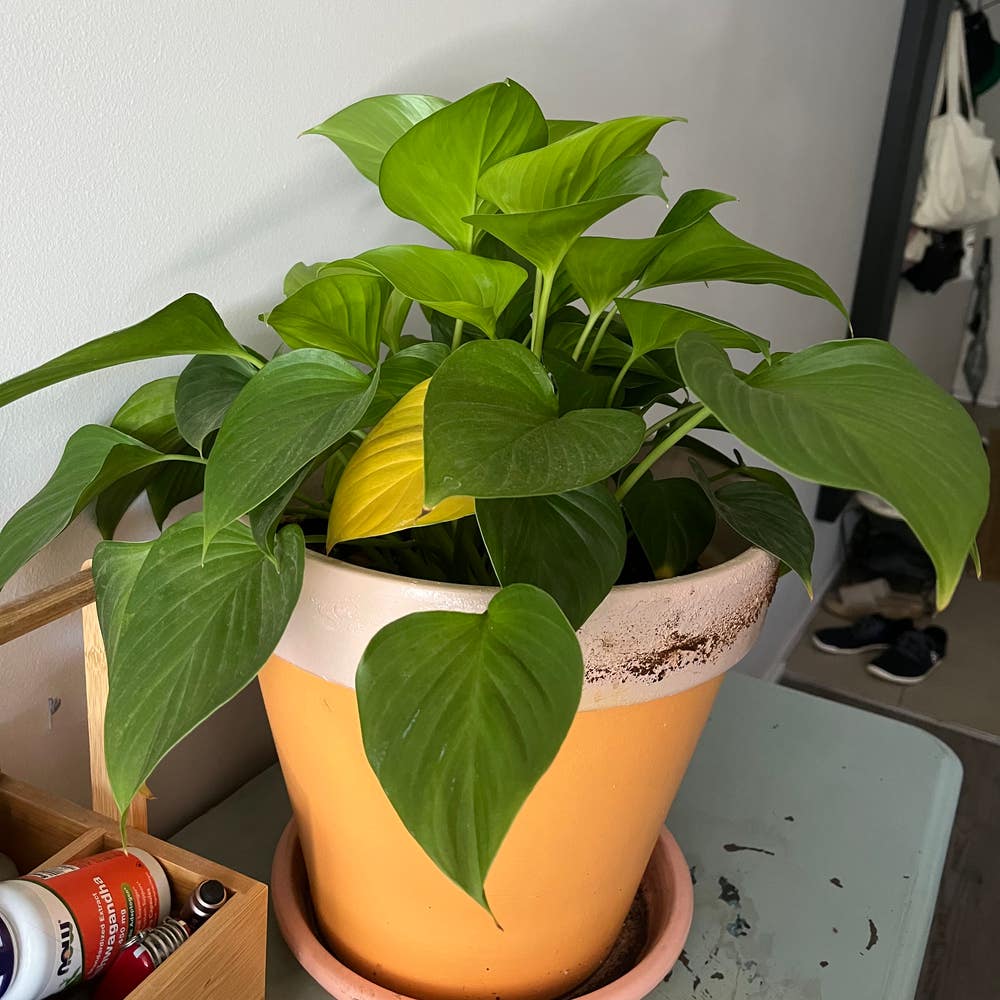
4 Tips for Healing Curling Leaves on Your Emerald Gem 🩹
Homalomena Selby
By the Greg Editorial Team
Nov 06, 2024•5 min read
This article was created with the help of AI so we can cover more plants for you. May contain errors. See one? Report it here.
- 🌱 Leaf curling in Emerald Gems results from overwatering, underwatering, pests, or nutrient issues.
- 💧 Proper watering and drainage prevent root rot and curling leaves. Check soil moisture!
- 🌬️ Humidity and temperature control are crucial for healthy Emerald Gems. Aim for 40-60% humidity!
Causes of Leaf Curling
💧 Overwatering and Its Effects
Overwatering is a common issue that can lead to significant leaf curling. Symptoms include leaves curling downward or inward, wilting despite wet soil, and dark, mushy roots when inspected.
Proper drainage is crucial to prevent waterlogged soil, which can suffocate roots and lead to root rot. Always ensure your pots have drainage holes to allow excess water to escape.
🚰 Underwatering and Its Effects
On the flip side, underwatering can also cause leaf curling. In this case, leaves may curl upward or outward, and you might notice dry, crispy edges along with soil pulling away from the pot edges.
To maintain a healthy moisture balance, aim to water your plant when the top inch of soil feels dry. This practice helps keep your plant hydrated without overdoing it.
🐜 Pest Infestations
Common Pests
Pests can wreak havoc on your Emerald Gem, leading to leaf curling. Spider mites are notorious for leaving fine webbing and stippled leaves, which can exacerbate the curling and overall health of the plant.
Aphids are another culprit, often leaving a sticky residue on leaves and causing distorted growth. Their sap-sucking habits weaken the plant and contribute to leaf curling.
🌱 Nutrient Deficiencies
Key Nutrients
Nutrient deficiencies can also manifest as leaf curling. A nitrogen deficiency typically shows up as yellowing leaves and stunted growth, which is detrimental to leaf development and overall vigor.
Potassium deficiency, on the other hand, leads to curling leaves with browning edges. This nutrient is vital for water regulation and helps plants withstand stress.
🌡️ Environmental Stress
Contributing Factors
Environmental factors play a significant role in leaf health. Temperature fluctuations can be particularly harmful; the ideal range for your Emerald Gem is between 60°F to 75°F (15°C to 24°C).
Low humidity levels can also stress your plant, with an ideal range of 40% to 60%. Dry air can lead to curling leaves, so maintaining proper humidity is essential for your plant's well-being.
Diagnosis and Treatment of Leaf Curling
🌱 Step-by-Step Diagnosis Process
Diagnosing leaf curling in your Emerald Gem is crucial for effective treatment. Start by assessing your watering habits.
Assessing watering habits: Check soil moisture using a moisture meter or your finger. Adjust your watering frequency based on the plant's needs to avoid over or underwatering.
Checking for pests: Inspect the leaves and stems for visible pests or webbing. A magnifying glass can help you spot tiny invaders that might be causing trouble.
Evaluating soil and nutrients: Ensure your soil is well-draining. Consider using a soil test kit to check for nutrient deficiencies that could be affecting your plant's health.
Monitoring environmental conditions: Measure the temperature and humidity with a thermometer and hygrometer. Adjust your plant's placement to ensure it gets the right amount of light and air circulation.
🛠️ Treatment Options
Once you've diagnosed the issue, it's time to implement treatment options to restore your plant's health.
💧 Adjusting Watering Practices
Establishing a consistent watering schedule is key. Water your Emerald Gem when the top inch of soil feels dry, and always ensure your pots have drainage holes to prevent waterlogging.
🐞 Pest Control Methods
For pest infestations, consider these effective methods:
- Insecticidal soap: Spray directly on affected areas every 7-14 days until pests are controlled.
- Neem oil: Dilute and spray on leaves. This natural pesticide disrupts pest life cycles and is gentle on your plant.
🌿 Fertilization Techniques
Choosing the right fertilizer can make a significant difference. Opt for a balanced, water-soluble fertilizer and apply it every 4-6 weeks during the growing season to support healthy growth.
🌡️ Humidity and Temperature Adjustments
Creating the right environment is essential for your plant's recovery.
- Increasing humidity: Use a humidifier or place pebble trays filled with water near your plant. Aim to maintain humidity levels between 40% and 60%.
- Temperature control: Avoid placing your plant near drafts or heat sources. Keep temperatures stable, ideally between 60°F and 75°F.
By following these diagnosis and treatment steps, you can effectively address leaf curling in your Emerald Gem. This proactive approach not only helps your plant recover but also enhances its overall health and vitality. Next, let’s explore some prevention strategies to keep your plant thriving.
Prevention Strategies for Leaf Curling
🌊 Best Practices for Watering
Maintaining proper moisture levels is crucial for your Emerald Gem. The soil should feel moist but never soggy, while the leaves should appear firm and healthy.
To achieve this balance, establish a watering schedule that suits your plant's needs. Typically, watering every 2-3 weeks works well, but be ready to adjust based on seasonal changes and environmental conditions.
🐞 Regular Pest Monitoring
Pests can sneak up on your plants, so regular inspections are key. Make it a habit to check the undersides of leaves and stems for any signs of sticky residue or webbing.
As a preventative measure, consider applying neem oil as a spray every month. This natural solution can help keep pests at bay before they become a problem.
🌱 Soil and Nutrient Management
Choosing the right soil mix is essential for healthy growth. Opt for a well-draining potting mix that includes perlite or sand to prevent waterlogging.
In addition to soil, a balanced fertilization schedule is vital. Use a balanced fertilizer during the growing season and think about incorporating slow-release fertilizers for a consistent nutrient supply.
🌬️ Environmental Control
Creating the right environment for your plant can make all the difference. Aim to maintain humidity levels between 40% and 60%, which helps prevent stress and curling leaves.
Temperature stability is equally important. Keep your plant in a range between 60°F and 75°F, avoiding direct sunlight and ensuring it receives bright, indirect light. Good air circulation around the plant will also contribute to its overall health.
By implementing these prevention strategies, you can keep your Emerald Gem thriving and free from leaf curling issues. Next, let’s explore how to diagnose and treat any curling leaves that may arise despite your best efforts.
⚠️ Safety First
This content is for general information and may contain errors, omissions, or outdated details. It is not medical, veterinary advice, or an endorsement of therapeutic claims.
Always consult a qualified healthcare professional before using any plant as food, medicine, or supplement.
Never eat any plant (or feed one to pets) without confirming its identity with at least two trusted sources.
If you suspect poisoning, call Poison Control (800) 222-1222, the Pet Poison Helpline (800) 213-6680, or your local emergency service immediately.
Spotted an error? Please report it here.
Keep your Emerald Gem thriving 🌿 by using Greg's tailored care reminders to master watering, pest control, and environmental conditions for lush, curling-free leaves!