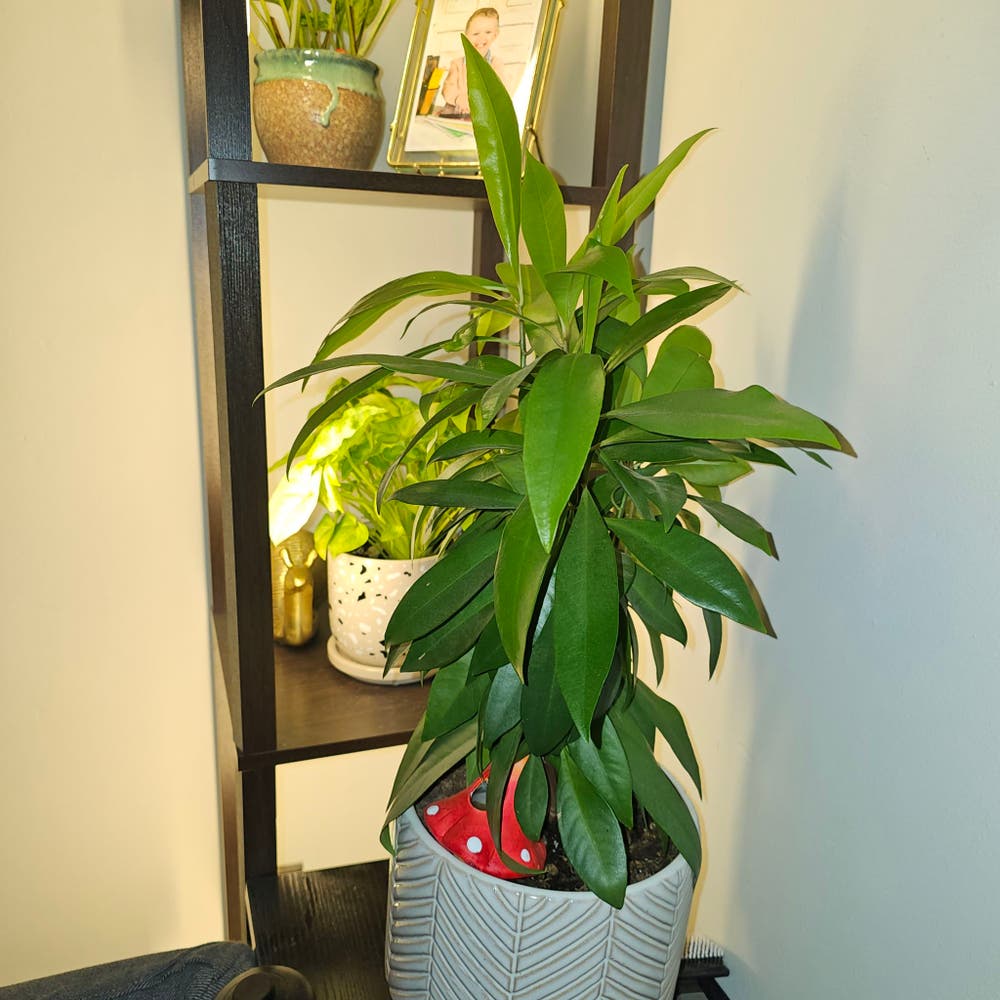
Why Are My Christmas Berry Leaves Droopy? 🥀
Ardisia crenata
By the Greg Editorial Team
Jun 18, 2024•3 min read
This article was created with the help of AI so we can cover more plants for you. May contain errors. See one? Report it here.
Rescue your Christmas Berry's droopy leaves 🍂 and unlock the secret to perpetual perkiness with our guide!
- Over/underwatering causes droopiness, check soil dampness before watering.
- Stable temps and light prevent droops, avoid drafts and direct sun.
- Inspect and treat for pests regularly to keep leaves perky.
Pinpointing the Culprits Behind Droopy Leaves
🚰 Thirsty or Drowning Roots?
🌊 Over or Underwatering?
Droopy leaves on your Christmas Berry might scream thirst or drowning. Check the soil's top inch; if it's dry, water time. Damp, not drenched, should be your watering mantra.
🎯 The Goldilocks Zone
Find the watering sweet spot. It's a balance—too much, and roots rot; too little, and leaves wither. Adjust with the seasons: more in growth, less when dormant.
🌡️ Too Hot, Too Cold, Just Right
🌡️ Temperature and Environmental Stress
Leaves dropping like flies? Might be a temperature tantrum. Too hot, and they crisp up; too cold, and they turn mushy. Your plant's begging for stability.
🌿 Adjusting Surroundings
Create a leaf-perking environment. Steer clear of drafts and scorching sun. Think stable temperatures and indirect light—like a cozy nook for your green friend.
🐜 Uninvited Guests: Pests
👀 Spotting Common Pests
Pests can turn your Christmas Berry's leaves droopy. Regular inspections are key—look for the telltale signs of tiny invaders.
🚪 Quick Eviction Moves
Find pests? Time to show them the door. Quick action is crucial—remove them manually or use eco-friendly pesticides. Remember, prevention beats cure.

The Revival Guide: Perking Up Your Christmas Berry
🚰 First Aid for Over/Underwatered Plants
Overwatering can leave your Christmas Berry's roots gasping for air. If you've been heavy-handed with the H2O, here's the drill:
- Cease all watering immediately.
- Yank the plant from its pot to check for root rot.
- Snip off any rotten roots and consider a fungicide if things look grim.
- Repot in fresh, well-draining soil and resume watering with restraint.
For underwatered plants, it's a tad simpler:
- Increase watering frequency, but don't turn your plant into a swamp creature. Let the soil dry out a bit between drinks.
🌞 Creating a Stress-Free Zone
Your plant's environment should be more spa than Spartan race. Ensure the temperature is consistent and that your plant isn't sitting in a draft or directly under an air conditioner. Humidity is also a friend, but don't overdo it; think tropical breeze, not rainforest.
🛡️ Pest Eradication and Defense
Pests are the party crashers of the plant world. To give them the boot:
- Inspect leaves and soil regularly for signs of infestation.
- Use insecticidal soap or neem oil for a non-toxic eviction notice.
- Keep your plant clean and quarantine new plants to prevent future uninvited guests.

Keeping Droopiness at Bay: Prevention is Key
💧 Consistency is Your Best Friend
Routine checks and balances are crucial for your Christmas Berry's health. Like clockwork, establish a care schedule that includes regular watering, balanced light exposure, and stable environmental conditions. This isn't just about ticking boxes; it's about understanding your plant's language and responding accordingly.
🌿 Tailoring the Perfect Environment
Adaptability is key when ensuring your Christmas Berry thrives. Monitor temperature and humidity, adjusting as needed to mimic the plant's natural habitat. Keep the soil consistently moist but not waterlogged, and provide bright, indirect light. It's like being a plant's personal meteorologist, predicting and adapting to the ever-changing indoor weather.

⚠️ Safety First
This content is for general information and may contain errors, omissions, or outdated details. It is not medical, veterinary advice, or an endorsement of therapeutic claims.
Always consult a qualified healthcare professional before using any plant as food, medicine, or supplement.
Never eat any plant (or feed one to pets) without confirming its identity with at least two trusted sources.
If you suspect poisoning, call Poison Control (800) 222-1222, the Pet Poison Helpline (800) 213-6680, or your local emergency service immediately.
Spotted an error? Please report it here.
Keep your Christmas Berry's leaves perky and healthy 🎄 with Greg's personalized care plans that adjust watering and monitor your home's environment for plant success.