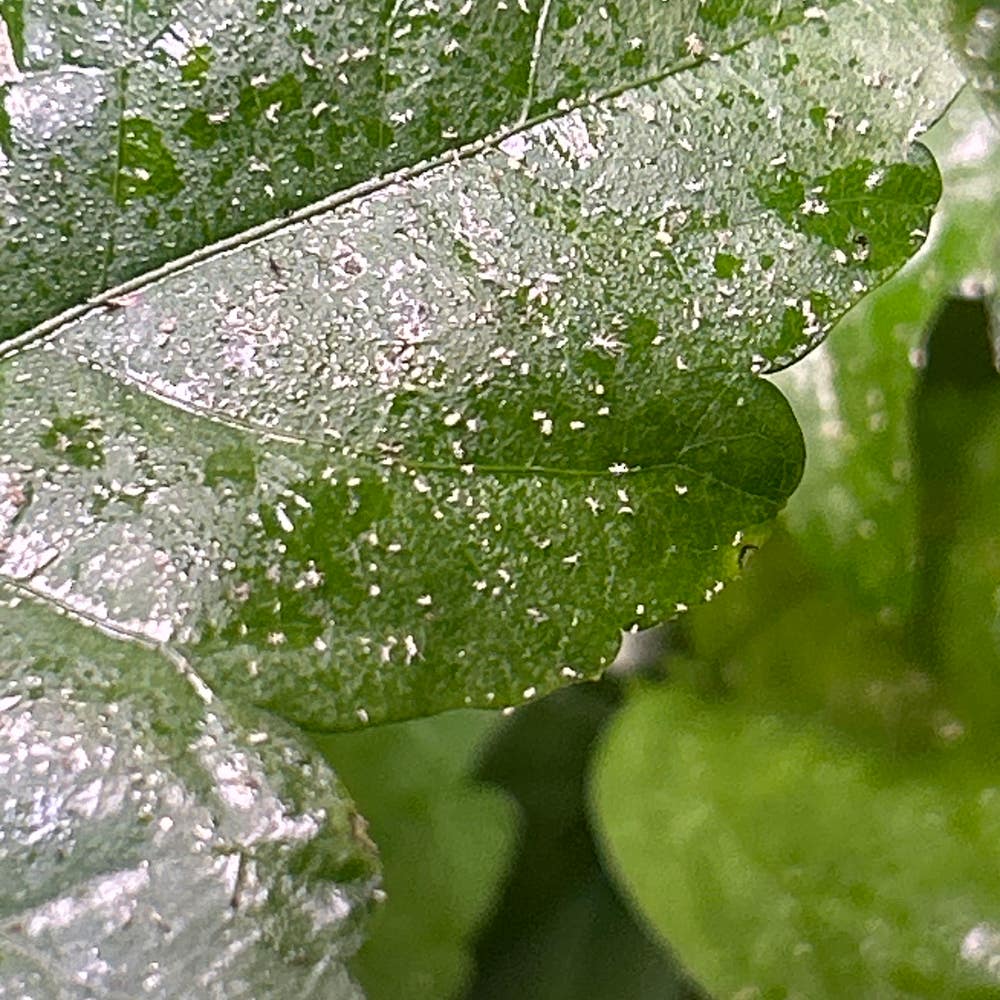
Black Spots on My Korean Hibiscus Leaves
Hibiscus syriacus
By the Greg Editorial Team
Jun 18, 2024•5 min read
This article was created with the help of AI so we can cover more plants for you. May contain errors. See one? Report it here.
Banish black spots 🌑 on your Korean Hibiscus with this essential treatment guide! 🌺
- 🍃 Fungal and bacterial causes: Identify by spot patterns and plant symptoms.
- 💦 Prevent with smart watering: Soil-focused watering and good drainage are key.
- ☀️🌬️ Airflow and sunlight: Essential for keeping your Korean Hibiscus healthy.
Spotting the Culprit: What Black Spots Look Like
🕵️ The Tell-Tale Signs
The first hint something's amiss with your Korean Hibiscus is the appearance of unsightly black spots. These blemishes mar the beauty of the leaves, but don't hit the panic button just yet. They're not a death sentence for your plant.
🧐 A Closer Look: Size, Shape, and Patterns
Size matters when it comes to black spots. Initially, they may be as tiny as pinheads, but left unchecked, they can grow or merge into larger lesions. Shape-wise, expect anything from circular to irregular blotches. Patterns can vary, with some spots sporting concentric rings or feathery edges. If you spot a yellow halo around the black spot, it's likely a fungal fiesta rather than a simple smudge.

Unearthing the Causes: Fungal vs. Bacterial
🍄 Common Fungal Foes: Anthracnose and Cercospora Leaf Spot
Anthracnose and Cercospora leaf spot are the usual suspects when it comes to fungal infections in Korean Hibiscus. Anthracnose is notorious for its large, sunken spots, while Cercospora starts off with light green spots that darken and may have a purple border. These spots can merge into larger areas of dead tissue, making your plant look like it's been through a plant apocalypse.
🕵️ Spotting the Difference: Symptoms of Fungal Infections
Fungal infections often present with tan or brown spots that are sometimes raised or have a concentric ring pattern. They love to crash the leafy party, especially when the conditions are akin to a tropical rainforest inside your living room.
🌪 The Perfect Storm: Conditions that Invite Fungal Invaders
High humidity and poor air circulation are like a VIP pass for fungi. They thrive in these conditions, spreading their spores with the help of water splash from overzealous watering. It's like they're doing the wave at a sports event, except it's your plant's health on the line.
🦠 Bacterial Bad Guys: Tackling Bacterial Leaf Spot
Bacterial leaf spot is the other villain in this story, often showing up as black or dark brown spots. These spots can give leaves a water-soaked appearance, and if you're unlucky, a sniff of the leaves might reveal a foul odor. It's the plant equivalent of finding spoiled milk in the fridge.
🚨 Beyond the Spots: Additional Symptoms of Bacterial Infections
Bacterial infections can lead to a whole host of problems, including blight and a general look of despair on your plant. These bacteria are like the uninvited guests who not only crash your party but also steal your silverware.
💦 Wet Woes: How Overwatering and Humidity Contribute to Bacteria
Overwatering and high humidity are the enablers of bacterial infections. They create the perfect spa-like environment for bacteria to multiply and spread their joy. It's essential to strike the right balance with watering – think of it as making a good pour-over coffee, not flooding a rice paddy.

Crafting the Cure: Treatment Strategies
🍄 Fungicide to the Rescue: Choosing and Using the Right Product
Timing is critical with fungicides. Apply them as preventive measures, ideally when new growth appears. Options range from copper-based products to biocontrol agents like neem oil. Adherence to the label is non-negotiable; more does not mean better.
💦 Application Know-How: Frequency and Safety for Fungicidal Treatments
Consistency wins the race; apply fungicides at the first sign of trouble and maintain the schedule. Safety first—protective gear is a must, and never treat plants in a whimsical, freestyle manner.
🦠 Battling Bacteria: When and How to Use Antibacterial Agents
When bacteria barge in, copper compounds and specific bactericides are your go-to. Remember, they're not universal fixes. Antibiotics like streptomycin are the heavy artillery, but overuse could lead to resistant strains—use them sparingly.
💧 Watering Wisdom: Adjusting Your Routine to Keep Bacteria at Bay
Overwatering is like sending an open invitation to bacteria. Keep your watering in check—moist, not drenched. Ensure proper drainage; soggy soil is a bacteria's paradise.

Prevention is Key: Keeping Black Spots at Bay
💨 Airflow and Sunlight: The Dynamic Duo
Airflow isn't just a nice-to-have; it's a must for keeping those black spots in check. Think of it as your plant's personal bubble—no cramped spaces. Sunlight, too, is non-negotiable. It's the ultimate sanitizer, zapping away the conditions that let fungi thrive. Make sure your Korean Hibiscus is basking in enough light without getting scorched.
💧 Smart Watering: The Art of Hydration
When it comes to watering, it's all about technique. Water the soil, not the leaves, and definitely not from above like some kind of rain god. Early morning is the golden hour, letting the sun dry things out before any fungal freeloaders get ideas. And remember, well-draining soil isn't just a preference; it's a necessity.
🧼 Cleanliness Counts: The Hygiene Factor
Keep your tools spotless—literally. Dirty shears can spread disease faster than a sneeze in an elevator. Regularly cleaning your gardening gear is like washing your hands; it's a simple step but a giant leap for plant health. And don't let dead leaves hang around; they're not decorations, they're disease magnets. Snip them off and dispose of them like last year's fashion.
⚠️ Safety First
This content is for general information and may contain errors, omissions, or outdated details. It is not medical, veterinary advice, or an endorsement of therapeutic claims.
Always consult a qualified healthcare professional before using any plant as food, medicine, or supplement.
Never eat any plant (or feed one to pets) without confirming its identity with at least two trusted sources.
If you suspect poisoning, call Poison Control (800) 222-1222, the Pet Poison Helpline (800) 213-6680, or your local emergency service immediately.
Spotted an error? Please report it here.
Prevent black spots on your Korean Hibiscus 🌺 by letting Greg monitor humidity and provide custom watering reminders to keep your blooms spotless and healthy.