Black Spots on My Anthurium crystallinum x magnificum Leaves
Anthurium crystallinum x magnificum
By the Greg Editorial Team
Jun 18, 2024•3 min read
This article was created with the help of AI so we can cover more plants for you. May contain errors. See one? Report it here.
Banish black spots 🕵️♂️ and keep your Anthurium's leaves pristine with our expert care guide.
- Fungal infections are the main black spot culprits; bacteria also possible.
- Prevent with care: Optimal light, humidity, watering, and clean tools.
- Immediate action: Isolate, remove affected leaves, and avoid wetting foliage.
Spotting the Culprits: Identifying and Diagnosing Black Spots
🔍 Spot Check: Recognizing Black Spots
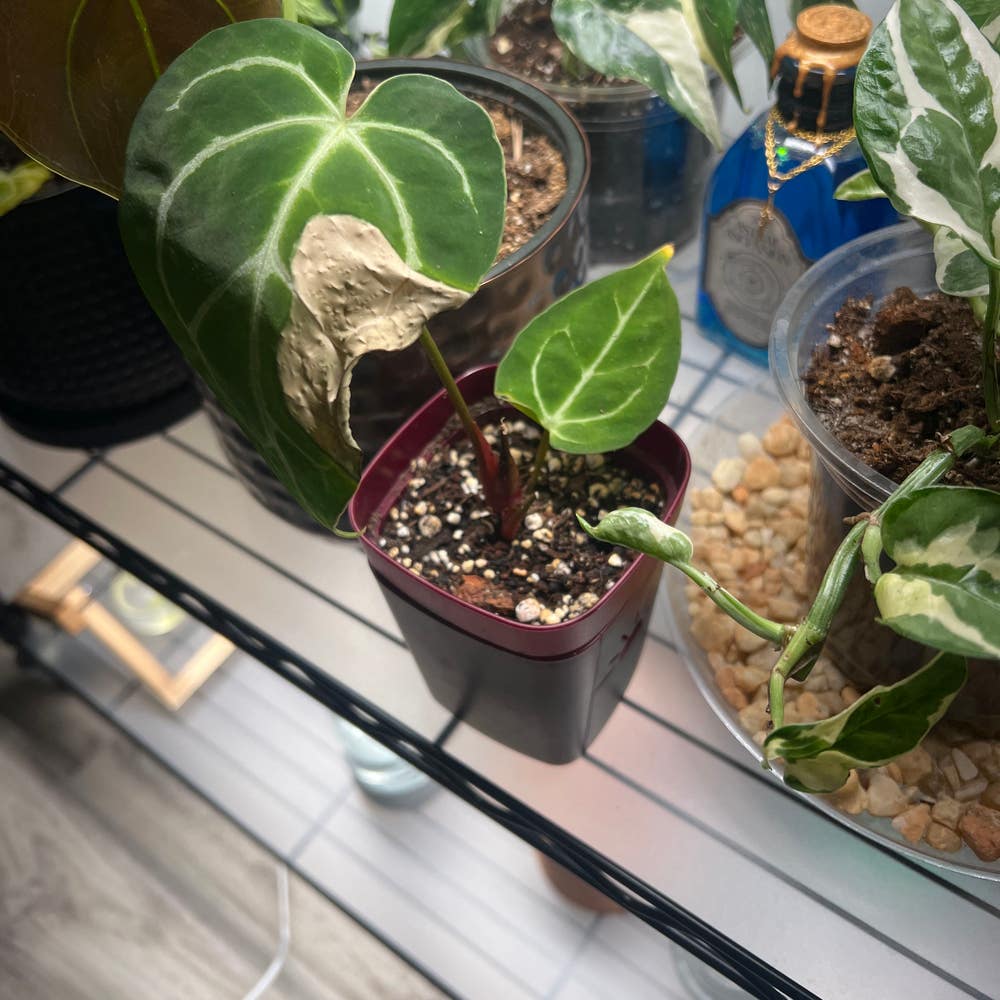
Black spots on Anthurium crystallinum x magnificum leaves are alarm bells. They're small, dark, and could be mistaken for soil or a shadow. But don't be fooled—these spots can expand, merging into larger patches that signal trouble.
👮 The Usual Suspects: Fungal or Bacterial?
Fungal infections are the primary suspects in the case of black spots. They thrive in the moist, humid conditions that Anthuriums love. Bacterial infections are also possible perpetrators, often presenting with a slimy texture.
🕵️ Sherlock Holmes Your Plant: Visual and Environmental Clues
To crack the case, examine the spots. Are they raised, sunken, or flat? Fungal spots may look powdery, while bacterial spots might be slick. Check the undersides of leaves; that's where these criminals like to start their dirty work. Environmental factors, like too much moisture or poor air circulation, are often accomplices in the crime.

Crafting the Cure: Treatment Strategies
🛡️ Going on the Offensive: Fungicides and Bactericides
When your Anthurium crystallinum x magnificum starts to look like a Dalmatian, it's time to choose your weapons. Fungicides and bactericides are your allies, but they're not to be trifled with. Copper-based fungicides are a go-to, but remember, it's not a one-size-fits-all battle. Check compatibility with your plant before going all in. And always, always follow the label like it's a treasure map—more is not better.
💡 The Best Defense: Preventative Measures
Prevention is like the quiet bodyguard you didn't know you needed. Start clean; use only sterile potting media and pots. Keep your tools as clean as a surgeon's scalpel to avoid spreading any funk. Separate the sickly from the healthy to prevent an outbreak. And if you see a leaf that's more zombie than plant, show no mercy—prune it. Remember, good air circulation is like social distancing for plants; it keeps the pathogens away.

Adjusting the Environment: Prevention Through Care
💡 The Perfect Environment: Light, Humidity, and Water
Creating an optimal environment is crucial for preventing black spots on your Anthurium crystallinum x magnificum. Bright, indirect light is the sweet spot; it's like a cozy nook that keeps your plant happy without the harsh glare of direct sunlight. East or west-facing windows are your allies here.
Humidity is a bit of a Goldilocks scenario; aim for a consistent 50-70%. Too much and you're hosting a fungal fiesta, too little and your Anthurium throws a dry-leaf tantrum. Use a humidifier or a pebble tray, but keep it classy—no misting, as wet leaves can spell trouble.
Watering is a delicate dance. Keep the soil moist but not soggy—think of it as making the perfect latte, with just the right amount of milk. Overhead watering is a no-go; water at the base to avoid drama on the leaves.
🛡️ Clean and Quarantine: Immediate Actions
When black spots crash the party, it's time for some tough love. Isolate your Anthurium faster than a social media detox. This plant quarantine is non-negotiable.
Next, remove the affected leaves with sterilized precision—think of it as surgical strike against the spread of disease. And remember, always water at the base, like a stealthy plant ninja avoiding any leaf contact.
Keep your tools clean and your plant's company selective. New plants should prove their health before mingling with your green gang. It's like a bouncer checking IDs at the club—no exceptions.
Remember, prevention is a proactive gig. Stay vigilant, and your Anthurium will reward you with its stunning, spot-free foliage.

⚠️ Safety First
This content is for general information and may contain errors, omissions, or outdated details. It is not medical, veterinary advice, or an endorsement of therapeutic claims.
Always consult a qualified healthcare professional before using any plant as food, medicine, or supplement.
Never eat any plant (or feed one to pets) without confirming its identity with at least two trusted sources.
If you suspect poisoning, call Poison Control (800) 222-1222, the Pet Poison Helpline (800) 213-6680, or your local emergency service immediately.
Spotted an error? Please report it here.
Keep your Anthurium's leaves spotless 🍃 with Greg's personalized care reminders that ensure optimal humidity and light for disease prevention.