How to Fertilize Your Anthurium crystallinum x magnificum
Anthurium crystallinum x magnificum
By the Greg Editorial Team
Jun 18, 2024•4 min read
This article was created with the help of AI so we can cover more plants for you. May contain errors. See one? Report it here.
Boost your Anthurium's splendor with tailored fertilization secrets for lush growth and blooms. 🌿✨
- NPK ratios matter: Tailor fertilizer to Anthurium's needs for lush growth.
- Monthly during growth, bimonthly in dormancy: Adjust fertilization schedule seasonally.
- Over-fertilization signs: Yellow leaves, brown tips. If spotted, pause and flush soil.
Choosing the Right Fertilizer
💡 What's in the Mix: Understanding NPK Ratios
For your Anthurium crystallinum x magnificum, NPK ratios are like a secret code to unlocking potential. Nitrogen fuels lush leaves, phosphorus encourages roots and blooms, and potassium keeps the plant's functions running smoothly. A balanced ratio such as 10-10-10 is a good starting point, but don't overlook micronutrients—they're the unsung heroes for plant health.
🌱 Organic vs. Synthetic: Making the Best Choice for Your Plant
When it comes to organic versus synthetic fertilizers, it's a classic tortoise and hare scenario. Organic options are the slow and steady, enriching the soil ecosystem and supporting your plant's long-term health. Synthetics offer a quick fix with fast results, but with great power comes great responsibility—overuse can lead to a nutrient overdose. Whichever route you choose, remember the golden rule: moderation is key. Over-fertilization is the equivalent of a plant hangover, and nobody wants that.

Timing is Everything: When to Fertilize
🌱 Growing Season Guidelines
In the growing season, your Anthurium crystallinum x magnificum is a hungry beast. Spring and summer are its playground, with new leaves unfurling like flags of victory. During this time, a monthly feast of fertilizer will keep it conquering new heights. Stick to a balanced mix, and always after a good watering to avoid shocking its delicate roots.
❄️ Dormancy Period Dos and Don'ts
Come winter, it's time for your Anthurium to chill. This is the plant's version of kicking back in a hammock, so ease up on the nutrients. Think of it as a diet; just enough to keep it content, but not so much that it gets bloated. During this rest period, a light snack of fertilizer every two months should suffice. Remember, overdoing it is as welcome as a blizzard in the Bahamas.

How to Fertilize Like a Pro
💧 Mixing it Up: Dilution Ratios and Solutions
Crafting the perfect nutrient cocktail for your Anthurium crystallinum x magnificum is more art than science. Start with a balanced, water-soluble fertilizer—think a 20-20-20 mix, the plant equivalent of a well-rounded diet.
Dilute to half strength; your plant's roots are delicate, not steel cables. Mix this into your watering can, ensuring a homogenous solution. It's like being a barista for your plants, where precision leads to the perfect brew.
🌿 Root to Leaf: Application Techniques for Total Nutrition
Now, let's get down to the nitty-gritty of application. Root feeding is your bread and butter; pour your diluted concoction directly onto the soil, avoiding the leaves like an awkward hug.
For that extra oomph, consider a foliar spray. It's like a multivitamin mist for your plant's leaves, but remember to keep it light to avoid the dreaded fertilizer burn. Balance is key—too much of a good thing is still too much.

Recognizing and Rescuing from Over-Fertilization
🚩 Spotting Trouble: Symptoms of Nutrient Overload
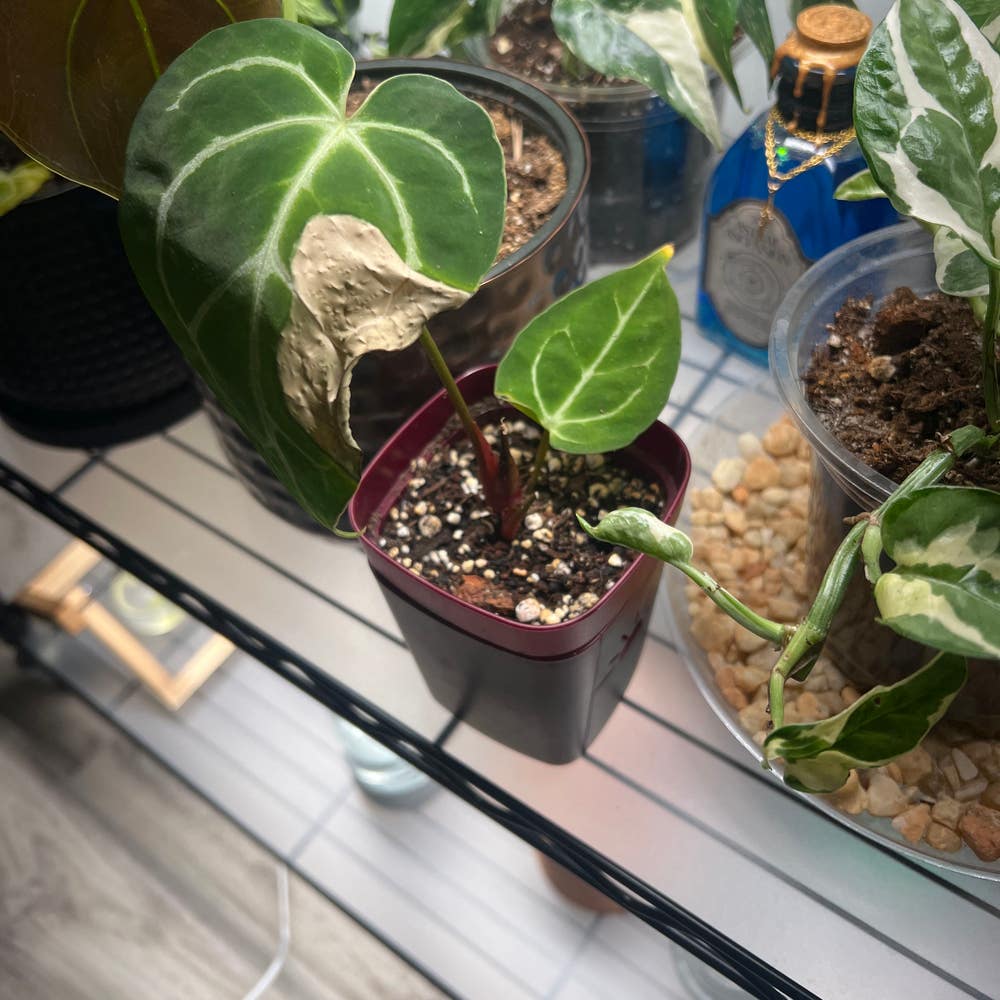
Yellow leaves waving a white flag, brown tips like burnt toast—these are the SOS signals of your Anthurium crystallinum x magnificum crying out from nutrient overload. Stunted growth? It's practically shouting, "I'm stuffed!" And if the roots look like they've been through a chemical apocalypse, you've definitely crossed the line.
🛠️ The Recovery Plan: Restoring Balance to Your Plant's Soil
Caught in the act of overzealous feeding? Stop the fertilizer flow immediately—it's like cutting off an all-you-can-eat buffet when you're already full. Next, evict any visible fertilizer from the soil's surface; think of it as removing the temptation. Now, it's time for a detox: flush the soil with water, and don't skimp—drench it several times to wash away the excess nutrients. Remember, patience is key; give your plant a fertilizer vacation for at least a month to recover from the indulgence.
⚠️ Safety First
This content is for general information and may contain errors, omissions, or outdated details. It is not medical, veterinary advice, or an endorsement of therapeutic claims.
Always consult a qualified healthcare professional before using any plant as food, medicine, or supplement.
Never eat any plant (or feed one to pets) without confirming its identity with at least two trusted sources.
If you suspect poisoning, call Poison Control (800) 222-1222, the Pet Poison Helpline (800) 213-6680, or your local emergency service immediately.
Spotted an error? Please report it here.
Ensure your Anthurium's growth 🌱 is as magnificent as its leaves by using Greg's tailored reminders to get the NPK ratio just right, avoiding over-fertilization and ensuring long-term health.