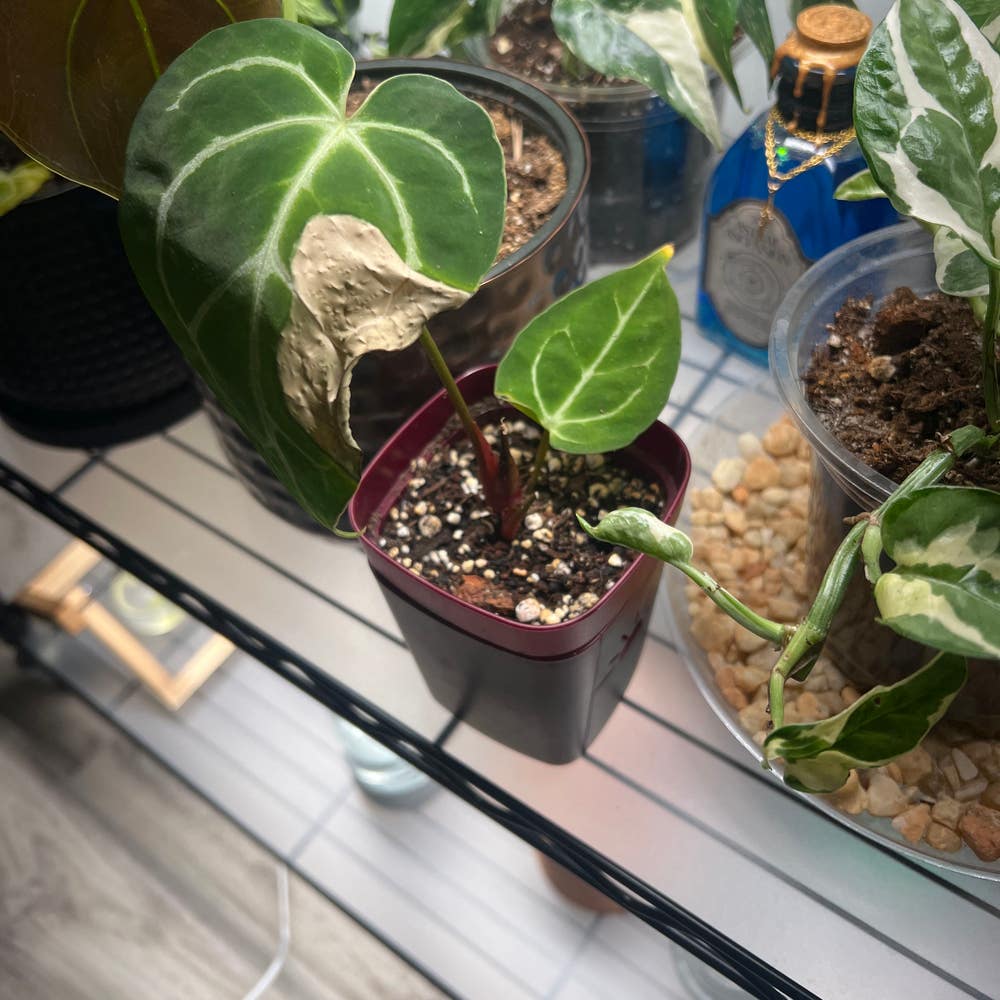
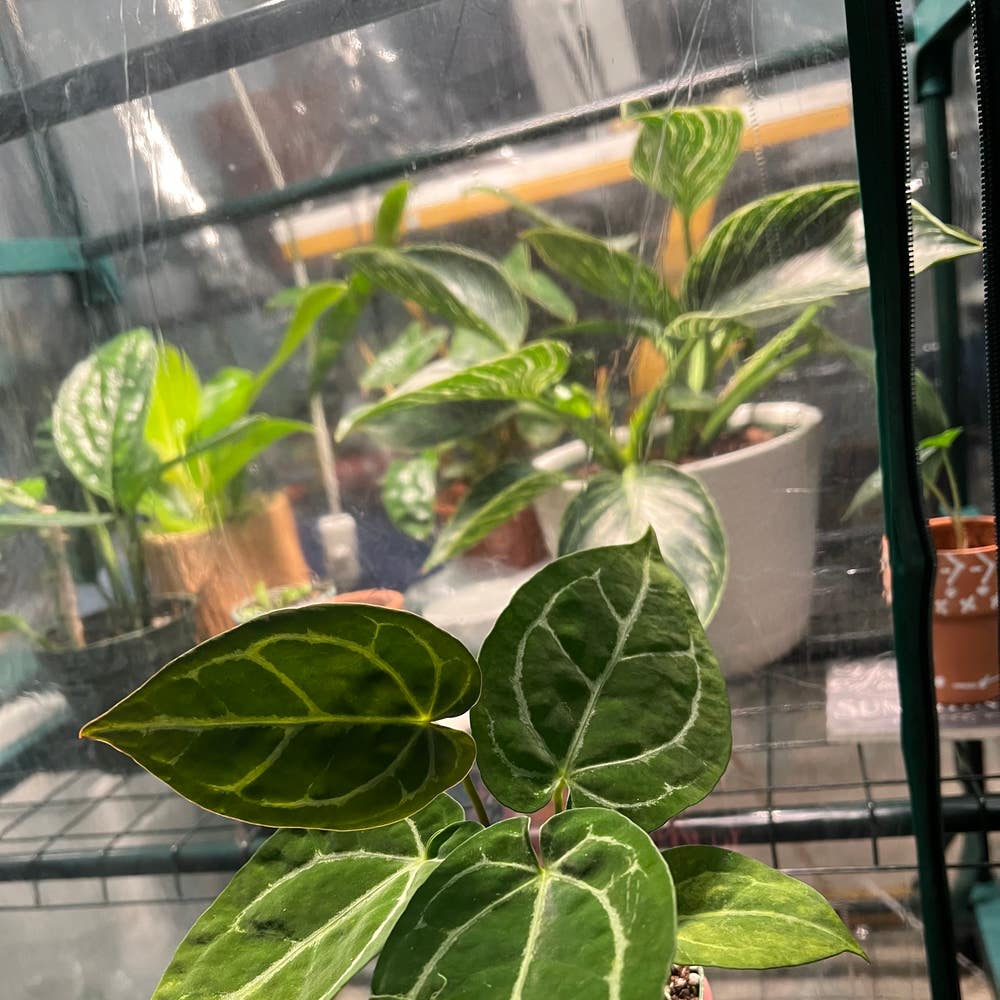
Anthurium Crystallinum X Magnificum Leaves Curling
Anthurium crystallinum x magnificum
By the Greg Editorial Team
Jun 18, 2024•5 min read
This article was created with the help of AI so we can cover more plants for you. May contain errors. See one? Report it here.
Unravel the mystery behind your Anthurium's curling leaves for lush, happy foliage 🌿 at home.
- 💧 Overwatering and underwatering both lead to leaf curl; adjust watering accordingly.
- 🌤️ Bright, indirect light and stable temperatures above 18°C keep leaves uncurled.
- 🌱 Proper soil, pot size, and humidity are crucial for preventing curled leaves.
Why Are My Anthurium's Leaves Curling?
💧 Overwatering Woes
Damp soil is a no-go for Anthuriums. Overwatering can lead to root rot, and your plant's leaves curl up as an SOS. To fix this, let the soil dry out until it's just moist, like a well-wrung sponge.
🏜️ Underwatering Symptoms
Crispy tips are your Anthurium's way of crying out for water. If the soil feels like a desert, it's time to hydrate. Increase watering gradually, and consider boosting humidity to keep those leaves lush.
🌞 Light Exposure: Finding the Sweet Spot
Anthuriums need their Goldilocks zone of light—not too much, not too little. Leaves curling outward? Too much sun. Adjust the plant's position to avoid direct rays that could scorch its delicate leaves.
🌡️ Temperature Tantrums
If your Anthurium's leaves are curling, it might be reacting to temperature swings. These tropical beauties prefer a steady climate, so avoid placing them near drafty windows or heat sources.
💦 Humidity: Creating a Tropical Haven
Low humidity makes leaves curl tighter than a rolled yoga mat. Aim for 40-60% humidity to mimic their native environment. Use a humidifier or a pebble tray, but skip the misting to prevent leaf blight. Keep air circulating with a gentle fan, but don't turn your living room into a wind tunnel.

Turning Over a New Leaf: Solutions and Adjustments
💧 Syncing Watering Rhythms with Your Anthurium
Listen to your plant. It's not about watering on a schedule, but when your Anthurium asks for it. The pot's weight is a telltale sign; light as a feather means it's thirsty. If you're a visual person, clear pots are your best friend, revealing the soil's moisture level at a glance. Remember, morning watering allows for efficient transpiration throughout the day.
🌞 Lighting Up Your Anthurium's Life
Your Anthurium doesn't need a sunburn to thrive. Aim for bright, indirect light to keep those leaves perky. Too much sun and you'll have a crispy critter; too little, and it's lethargy city. Adjust your plant's position like you're tuning a radio, searching for that sweet spot of perfect reception.
🌡️ Balancing the Thermometer
Think of your Anthurium as a temperature diva. It craves warmth, with a sweet spot above 18 degrees Celsius. Avoid drafts like you'd avoid the in-laws—necessary for peace. If your plant's leaves are curling, it might be time to move it away from that chilly window or cranky air vent.
💨 Humidity Harmony
Anthuriums come from the land of eternal mist. Your home? Not so much. Humidifiers are the go-to for bumping up the moisture. Pebble trays? They're the low-tech backup singers that still hit the right notes. Keep the air moist, and you'll have a plant that's less drama queen and more serene green.

Pro Tips for Preventing Pouty Plants
Perfect soil is non-negotiable. Think of it as your plant's foundation; without it, you're building on quicksand. Opt for a well-draining mix that's just right for your Anthurium hybrid, avoiding the extremes of waterlogged or desert-dry.
🌱 The Right Pot
Choosing the Goldilocks pot—not too big, not too small—is crucial. It should be just the right size for your plant's roots to have space to grow but not so much that the soil stays wet for too long. And remember, drainage holes are your best friends; they're like escape routes for excess water.
🏡 Plant Placement
Location, location, location! Your Anthurium's spot in your home can make or break its mood. Avoid direct sunlight that can scorch its leaves, and steer clear of drafty windows that could send it into a cold shock. Find that sweet spot with bright, indirect light, and you're golden.
👀 Routine Checks
Be vigilant. Regularly inspect your plant for signs of distress. Check the soil's moisture with a finger or a moisture meter—no guesswork needed. Keep an eye out for pests, and ensure the leaves aren't collecting dust like forgotten attic treasures.
💧 Watering Wisdom
Water wisely. When the soil is almost dry, it's time to quench your plant's thirst. Use room temperature water to avoid shocking the roots—it's like serving a fine wine at the right temperature; anything else would be uncivilized.
🌱 Repotting Rites
When roots peek out like nosy neighbors, it's time for a pot switcheroo. Fresh soil and a new pot can be like a spa day for your Anthurium—refreshing and rejuvenating. Just don't overdo it; a pot too large can lead to soggy soil and sad leaves.
💦 Humidity Hacks
Humidifiers or pebble trays can be a tropical plant's best friend. They mimic the misty homelands of your Anthurium, keeping it from throwing a dry-leaf tantrum. Choose the method that best fits your home and lifestyle.
🌿 Fertilizer Finesse
Feed your plant, but think of fertilizer like a potent spice—a little goes a long way. Overfeeding can lead to nutrient burn, which is as unpleasant for your plant as it sounds. Dilute your fertilizer and follow a less-is-more approach.
By sticking to these pro tips, you'll be well on your way to ensuring your Anthurium's leaves stay as unwavering as a guard outside Buckingham Palace.

⚠️ Safety First
This content is for general information and may contain errors, omissions, or outdated details. It is not medical, veterinary advice, or an endorsement of therapeutic claims.
Always consult a qualified healthcare professional before using any plant as food, medicine, or supplement.
Never eat any plant (or feed one to pets) without confirming its identity with at least two trusted sources.
If you suspect poisoning, call Poison Control (800) 222-1222, the Pet Poison Helpline (800) 213-6680, or your local emergency service immediately.
Spotted an error? Please report it here.
Ensure your Anthurium's leaves stay perfectly poised 🌿 with Greg's reminders to balance watering, lighting, and humidity, tailored just for your plant's needs.