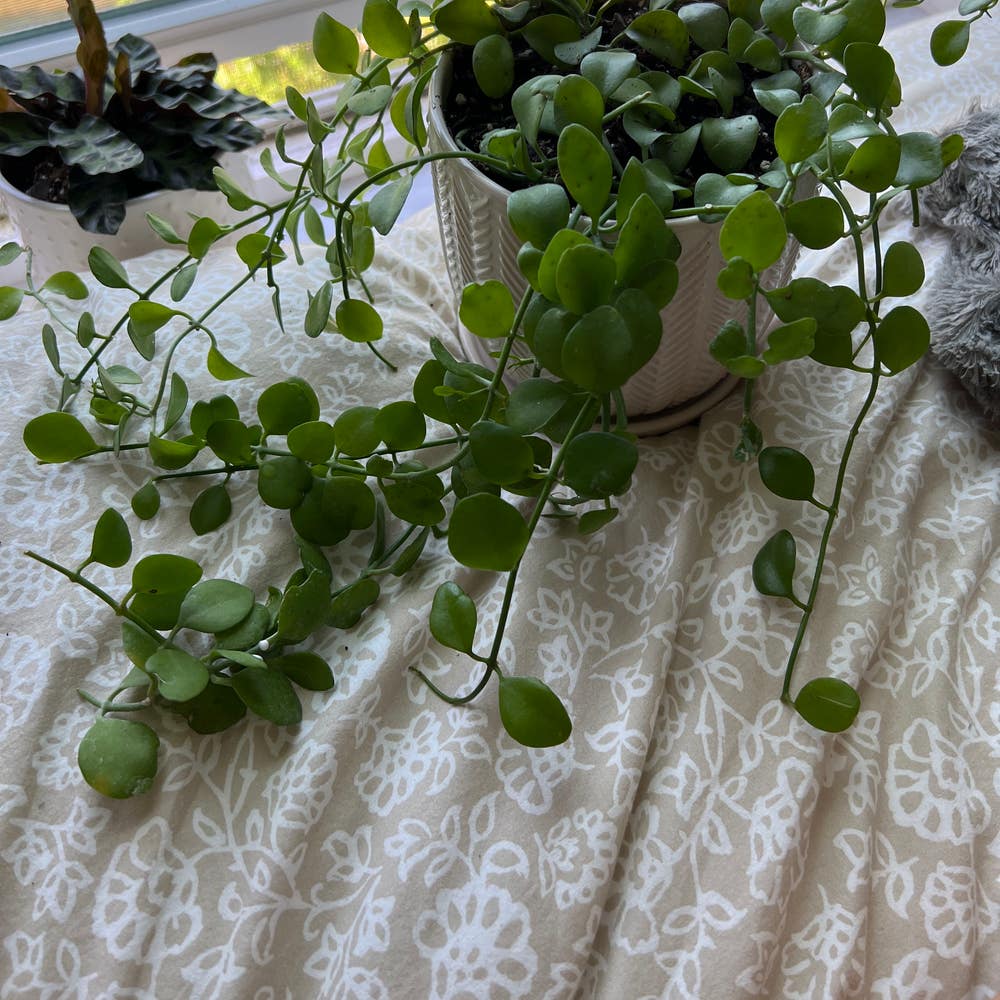
Common String of Nickels Problems
Dischidia nummularia
By the Greg Editorial Team
Jun 18, 2024•4 min read
This article was created with the help of AI so we can cover more plants for you. May contain errors. See one? Report it here.
Safeguard your String of Nickels 🌿 from root rot to pests with these essential plant care solutions!
- 💧 Over-watering and under-watering cause yellowing and wilting; adjust watering habits.
- ☀️🌡️ Bright, indirect light and stable temperatures between 15-23ºC are ideal.
- 🕵️♂️ Watch for pests, fungus, and root rot; act fast with appropriate treatments.
Water Woes: Too Much or Too Little
💦 Over-watering
Yellowing leaves and mushy stems are the tell-tale signs of over-watering your String of Nickels. It's like giving your plant a bath when it just needs a shower.
- Drying out: To rescue an over-watered plant, first stop watering and let the soil dry out. If the pot lacks drainage, consider repotting with a well-draining mix. Trim any rotten roots to prevent further decay.
🏜️ Under-watering
On the flip side, wilting and dry leaves signal your String of Nickels is parched and begging for a drink.
- Quenching the need: Properly hydrate by soaking the soil until water runs free from the drainage holes. Then, let it dry out slightly between waterings. Regular misting can also help, giving your plant a little humidity boost without overdoing it.

Light and Temperature Tangles
🌞 Getting the Light Right
Leaf scorching and discoloration are tell-tale signs your String of Nickels might be throwing a silent tantrum due to too much sun. It's not trying to get a tan; it's in distress.
To find the sweet spot, aim for bright, indirect light. Think of it as the plant's preferred spa lighting—soothing yet rejuvenating. Direct sunlight is a no-go unless you're aiming for a crispy, leafy snack, which I assume you're not.
Temperature Fluctuations
When your String of Nickels starts sporting discolored leaves or seems to have hit the growth brakes, it's likely feeling the sting of temperature swings.
Consistency is key. Keep it cozy within a stable range, ideally between 15-23ºC. Sudden temperature changes are as welcome as a snowstorm at a beach party, so avoid placing your plant near drafty windows or next to that unpredictable radiator.

The Attack of Pests and Pathogens
🐜 Pests on the Prowl
Spider mites and mealybugs are the bane of the String of Nickels. These critters are like the uninvited plus-ones at a wedding—hard to ignore and capable of causing a scene. Spider mites are tiny, but their presence is betrayed by fine webs on your plant. Mealybugs, on the other hand, look like tiny cotton swabs clinging to the nooks and crannies.
🛡️ Pest control is about acting fast. For spider mites, a shower can be a quick fix, literally washing the pests away. Mealybugs may require a more targeted approach; dabbing them with alcohol can be effective. Insecticidal soaps and neem oil are the go-to for a more thorough cleansing. Remember, it's a war of attrition—regular inspections are your best defense.
🍄 Fungal Foes
Fungus among us? It's no joke when mold and mildew crash the party. Black spots and a musty smell are the tell-tale signs of fungal invasion. These are not just cosmetic issues; they're red flags for the health of your plant.
🛡️ Fungus fight strategies include pruning affected areas and applying fungicides. But don't just drench your plant in chemicals—precision is key. Follow the label's instructions like it's the law of the land. Prevention is also critical; ensure good air circulation and avoid overwatering to keep the fungus at bay.

Root Rot: The Silent Killer
🕵️♂️ Early Warning Signals
Detecting root rot is like playing plant detective; you're looking for clues that something's amiss underground. Yellowing leaves and a sparse canopy might be the first hints that your String of Nickels is in distress. But the real evidence is in the roots. If they're mushy or discolored, you've got a problem. A foul odor from the soil is another red flag—it's the stench of decay, and it's telling you that your plant is in trouble.
🚑 Saving the Roots
When root rot hits, it's time for emergency care. Act fast—remove the plant from its pot and inspect the roots. Healthy roots should be firm and white, not black, mushy, or smelling like last week's compost. If you find the latter, it's time to play surgeon. Prune the affected roots, ensuring you remove all the rot. Then, repot your plant in fresh, well-draining soil and a clean pot. Going forward, water judiciously and make sure your plant has proper drainage to prevent a relapse. Remember, root rot is a stealthy adversary, but with quick and decisive action, you can turn the tide in favor of your String of Nickels.
⚠️ Safety First
This content is for general information and may contain errors, omissions, or outdated details. It is not medical, veterinary advice, or an endorsement of therapeutic claims.
Always consult a qualified healthcare professional before using any plant as food, medicine, or supplement.
Never eat any plant (or feed one to pets) without confirming its identity with at least two trusted sources.
If you suspect poisoning, call Poison Control (800) 222-1222, the Pet Poison Helpline (800) 213-6680, or your local emergency service immediately.
Spotted an error? Please report it here.
Avoid the pitfalls of String of Nickels care and keep your plant thriving 🍃 with Greg's tailored reminders for watering, light, and pest control.