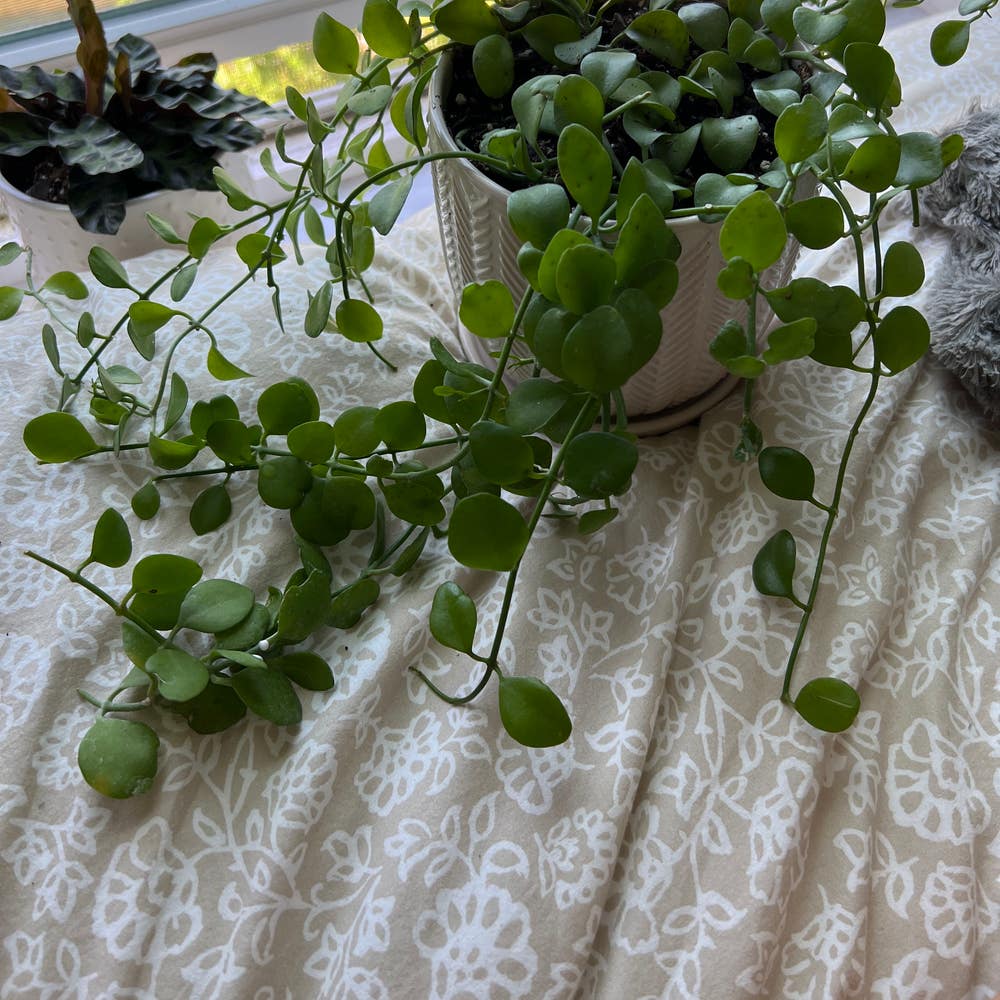
Why Are There Brown Spots on My String of Nickels?
Dischidia nummularia
By the Greg Editorial Team
Jun 18, 2024•3 min read
This article was created with the help of AI so we can cover more plants for you. May contain errors. See one? Report it here.
Solve the mystery of your String of Nickels' brown spots for lush, spot-free foliage! 🌿🔍
- 🚱 Overwatering and underwatering both lead to brown spots; check soil moisture.
- ☀️ Protect from sunburn with the right amount of indirect light.
- 🍄 Prevent fungal infections with good airflow and careful watering.
Spotting the Trouble: Common Causes of Brown Spots
🌊 Too Much Love: The Perils of Overwatering
Yellowing leaves that feel mushy to the touch? You might be loving your String of Nickels to death with water. Soggy soil is a no-go; it's the botanical equivalent of wet socks, and nobody likes that.
🏜️ Thirsty for Attention: When Underwatering Takes a Toll
Crisp, brown edges on your plant's leaves are a silent scream for hydration. Underwatering can leave your String of Nickels looking more like a string of jerky. It's a tough love approach that's a bit too tough.
🌞 Feeling the Burn: Sunburn and Your String of Nickels
Sunburnt leaves sport a crispy tan, and not the good kind. If your plant's leaves look like they've had a day too long at the beach, it's time to dial back on the solar love.
🍄 Uninvited Guests: Fungal Foes
Spotted a patterned party of brown on your plant's leaves? Fungi might be crashing the chlorophyll-filled bash. These uninvited guests thrive in the damp, so it's time to turn the party down a notch.

Tailored Treatments: Addressing Each Cause
💧 Balancing the Watering Act
Watering your String of Nickels is like being a DJ at a club; you've got to read the room and adjust the volume accordingly. Check the soil before you water—dry? Crank up the tunes. Moist? Let the track play out. Remember, overwatering is the fast track to Soggy Soil City, population: brown spots.
🌿 Creating a Shady Retreat
Your plant's leaves are like solar panels, but they don't need to be in the Sahara to do their job. Move your String of Nickels to a spot with bright, indirect light. Think of it as setting up a VIP lounge for your plant—exclusive access to the sun without the burn.
🍄 Fungus Among Us: Getting the Upper Hand
Fungus on your String of Nickels is like an uninvited guest at a party—it just shows up. Start with the mild stuff, like a baking soda and soap mix. If that doesn't crash the fungal fiesta, bring out the big guns: copper-based fungicides or an all-purpose hitman. Always follow the label; it's the bouncer that keeps you from going overboard.

Preventative Measures: Keeping Brown Spots at Bay
💧 The Perfect Sip: Watering Wisdom
Watering your String of Nickels isn't a splash-and-dash affair. Check the soil's moisture before you water—stick a finger in; if it's dry a couple of inches down, it's time to hydrate. Use pots with drainage holes to avoid waterlogged roots, because nobody wants their plant's feet soaking in a puddle.
🌞 Safe Sunning: Protecting Leaves from Harsh Rays
Your String of Nickels doesn't need a tan. Indirect light is the sweet spot—bright enough to thrive, but shielded from the midday sun that could scorch its delicate leaves. If you catch your plant in a sunbeam, consider it a sign to move it to a shadier nook.
🍃 Clean and Pristine: Fungal Prevention Tactics
Fungi are the party crashers of the plant world. Good airflow is your bouncer, keeping the atmosphere around your String of Nickels fresh. Avoid wetting the leaves during watering; it's like telling fungi their invitation got lost in the mail. Regularly clean up dead leaves and debris, because cleanliness is next to, well, less fungal-ness.

⚠️ Safety First
This content is for general information and may contain errors, omissions, or outdated details. It is not medical, veterinary advice, or an endorsement of therapeutic claims.
Always consult a qualified healthcare professional before using any plant as food, medicine, or supplement.
Never eat any plant (or feed one to pets) without confirming its identity with at least two trusted sources.
If you suspect poisoning, call Poison Control (800) 222-1222, the Pet Poison Helpline (800) 213-6680, or your local emergency service immediately.
Spotted an error? Please report it here.
Keep your String of Nickels thriving 🌿 by letting Greg tailor your watering schedule and light conditions, ensuring you dodge those pesky brown spots with confidence.