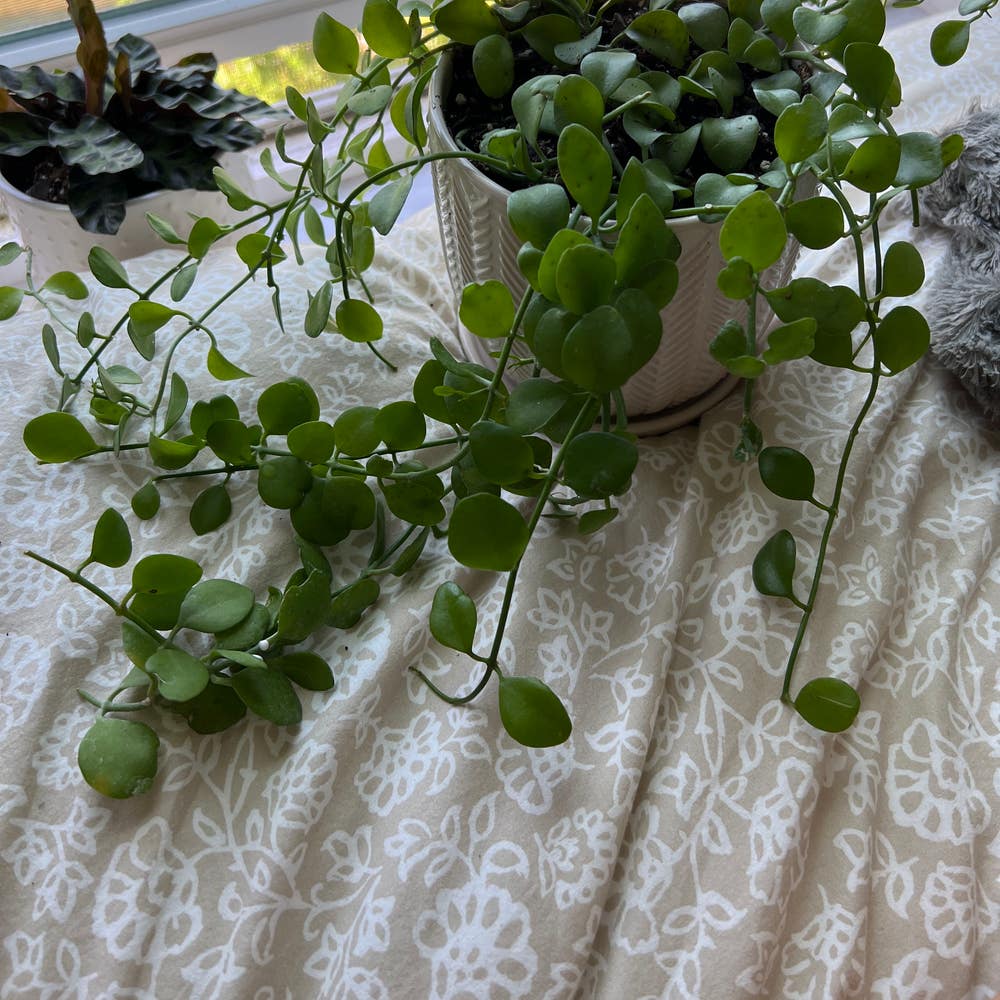
Is My String of Nickels Getting Too Much Direct Sunlight? ☀️
Dischidia nummularia
By the Greg Editorial Team
Jun 18, 2024•6 min read
This article was created with the help of AI so we can cover more plants for you. May contain errors. See one? Report it here.
Shield your String of Nickels from sunburn by mastering the art of perfect sunlight balance. 🛡️🌿
- 🌞 Identify sunburn signs: Faded, crispy leaves with yellow or white spots.
- 🌱 Morning light is best: Avoid midday sun, use sheer curtains for protection.
- 🔄 Rotate and acclimate: Ensure even growth and adapt to new light conditions.
Spotting the Signs: Is Your String of Nickels Sunburned?
Identifying symptoms of too much direct sunlight on your String of Nickels is crucial. Look for leaves that have faded or turned crispy. These are clear distress signals from your plant, indicating it's time to rethink its sunbathing habits.
🌞 Recognizing Sunburn
Sunburned leaves may exhibit yellow or white spots that can progress to brown. The most affected leaves are typically those at the top, directly under the sun's harsh gaze. If the leaves are dry and brittle to the touch, they've likely been sunburned beyond repair.
🚨 Distinguishing Stress from Sunburn
While sun-stressed plants might display a change in leaf color, sunburned leaves are often crispy and show signs of irreversible damage. Sun-stressed plants can recover with proper care, but sunburned leaves will not revert to their original state.
🐜 Sunburn vs. Pests and Disease
Don't confuse sunburn with pests or diseases. Regular inspections for bugs and unusual leaf patterns are necessary. Sunburn is characterized by a scorched appearance, while pests or diseases often leave distinct marks or cause widespread plant deterioration.
🌱 Acclimating to Sunlight
Gradually acclimate your String of Nickels to brighter conditions to avoid sunburn. If you've been keeping it in a low-light area, increase its sun exposure slowly over several weeks. This can prevent the shock that leads to leaf discoloration and damage.
📈 Monitoring for Recovery
If your plant has already suffered from sunburn, continue with regular care and monitor for new growth. While the damaged leaves won't recover, healthy new growth is a sign that your plant is bouncing back.

The Perfect Spot: Where to Place Your String of Nickels
🧭 Window Direction: A Compass for Plant Happiness
North- or east-facing windows are your String of Nickels' best pals. They offer a cozy spot with just enough morning or late afternoon sun to keep your plant basking without baking. Remember, direct sunlight is a no-go; think of it as the plant equivalent of a vampire—thriving in the shadows, withering in the blaze.
🌍 Hemisphere Hacks: Flipping the Script on Sunlight
In the southern hemisphere, the rules get reversed. South-facing windows become the new north, offering a gentler kiss of sunlight. It's all about the angle of the sun's rays, which can turn a south window from a plant's dream into a nightmare depending on where you're standing on the globe. Keep this in mind, and you'll avoid turning your String of Nickels into a string of regrets.
🗺️ Real-World Placement: It's All About Location
Get this: your plant doesn't need a front-row seat to the sun-show. A few feet away from the window, and you've hit the sweet spot. It's like finding that perfect parking space—not too close to the entrance, but not a hike either. And when the seasons change, be ready to shuffle your plant around. It's less of a hassle than it sounds, and your String of Nickels will thank you with luscious growth.

Sunlight Schedule: Timing Matters for String of Nickels
🌅 When to Let the Sun Shine In
Morning light is your String of Nickels' best friend. It's like a gentle pat on the back, telling your plant it's going to be a great day. This soft light is perfect for easing your plant into photosynthesis without the harshness of midday rays.
☀️ The Midday Sun: A No-Go Zone
Midday sunlight is the equivalent of a drill sergeant—it's intense and not afraid to do some damage. Your String of Nickels might start to feel the burn if left in this unforgiving light. Keep it shielded during these peak hours to avoid sunburn.
🌆 Evening Glow: Safe Zone or Danger Zone?
As the day winds down, the sun's rays mellow out. This evening light can be a safe bet, but it's not as beneficial as the morning's golden hour. It's like the cool side of the pillow—nice, but not necessary.
⏱ Duration Matters
How long is too long? Think of your String of Nickels like a guest at a beach party—it enjoys the vibe but doesn't want to overstay its welcome in the sun. Aim for a few hours of morning light, and then let it chill in indirect light for the rest of the day.
📅 Seasonal Adjustments
Remember, the sun's a moving target with the seasons. Your plant's happy place in June could be a sun-scorched desert by July. Stay vigilant and shift your plant as needed to maintain that sweet spot of sunlight exposure.

Shielding Your String of Nickels from Too Much Sun
🌞 DIY Sun Protection: Sheer Curtains and Other Hacks
Sheer curtains aren't just for decor; they're a lifeline for your String of Nickels when the sun's rays turn from warm to scorching. Think of them as sunglasses for your plant—chic yet functional. No curtains? No problem. A translucent shower curtain or a piece of shade cloth can be a makeshift shield against the solar onslaught.
For the DIY enthusiasts, a dash of white paint on nearby walls can reflect light without the burn, or aluminum foil can direct light away from sensitive leaves. It's a bit MacGyver, but your plant will thank you. And if you're feeling crafty, a lightweight cloth or a shade screen can act as a parasol, casting a protective barrier during peak sunlight hours.
🌅 Acclimating Your Plant to New Light Conditions Safely
When it comes to acclimating your String of Nickels to new lighting, patience is key. Start by placing it in a shaded area and gradually introduce it to more light. It's like helping a friend get used to a cold pool—one toe at a time. This slow introduction helps prevent the stress that can lead to droopy leaves or worse.
Don't forget to give your plant a twirl every now and then. Regular rotation ensures each side gets its fair share of light, preventing the dreaded "Quasimodo stance." And if you're battling against the dark arts of a cave-like room, consider supplementing with artificial lighting—just make sure it's not too intense.
Remember, it's not about avoiding sunlight entirely; it's about finding that Goldilocks zone—enough to encourage growth but not so much that you end up with a crispy critter.
⚠️ Safety First
This content is for general information and may contain errors, omissions, or outdated details. It is not medical, veterinary advice, or an endorsement of therapeutic claims.
Always consult a qualified healthcare professional before using any plant as food, medicine, or supplement.
Never eat any plant (or feed one to pets) without confirming its identity with at least two trusted sources.
If you suspect poisoning, call Poison Control (800) 222-1222, the Pet Poison Helpline (800) 213-6680, or your local emergency service immediately.
Spotted an error? Please report it here.
Avoid sunburn and position your String of Nickels just right with Greg's spot-on 📍 sunlight analysis and reminders.