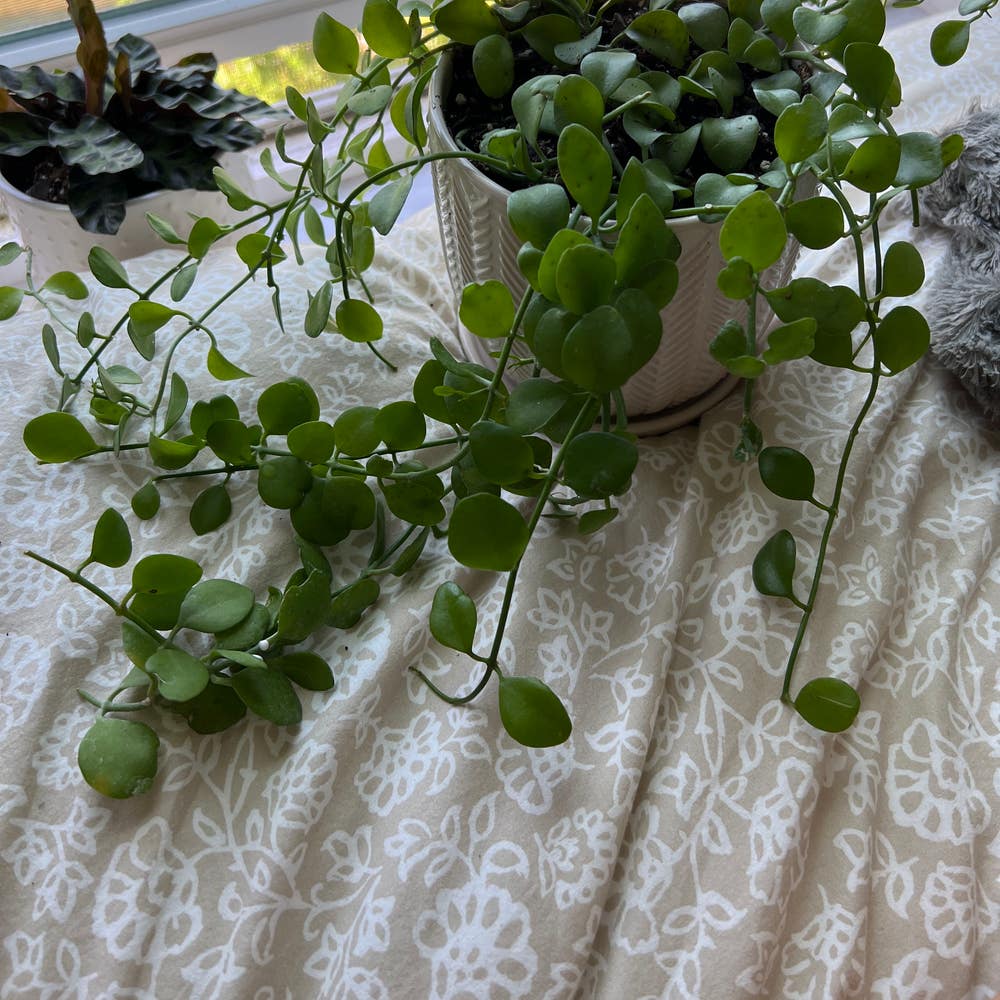
🌤 Light Requirements For Your String of Nickels
Dischidia nummularia
By the Greg Editorial Team
Jun 18, 2024•5 min read
This article was created with the help of AI so we can cover more plants for you. May contain errors. See one? Report it here.
Ensure lush growth for your String of Nickels by mastering its light needs—transform your space into a plant paradise! 🌿✨
- Bright, indirect light is key for String of Nickels' growth and flowering.
- 🌅 Morning light with afternoon shade prevents midday sun damage.
- 💡 Use LED grow lights if natural sunlight is inadequate.
Basking in the Right Rays: Outdoor Light Mastery
🌞 Finding the Sweet Spot
Identifying the perfect outdoor locations for your String of Nickels is a bit like real estate – it's all about location. This succulent thrives in bright, indirect light. Think of the dappled sunlight under a tree or the gentle rays of a morning sun.
🛡️ Shielding from the Scorch
Midday sun can be a brute to your String of Nickels. To protect your plant, position it to bask in the morning light but shaded during the harsh afternoon. Use structures like pergolas or shade cloth as your first line of defense against leaf burn.
🛡️ Strategies to Protect Your String of Nickels
Rotate your plant regularly to ensure even light exposure and prevent the "leaning tower of Pisa" effect. If you're not keen on playing musical chairs with your plants, reflective materials can be a sneaky way to spread the sunlight love without moving an inch.
🌞 Using Shade and Sun Timing to Your Advantage
Timing is everything. Aim for a spot that revels in the cool morning sun but slips into the shade when the sun gets too hot to handle. If you're dealing with a static spot that's too sunny, consider a sheer curtain or a shade cloth to diffuse those intense rays.

Indoor Light Oasis: Crafting the Perfect Environment
⛅️ Window Wisdom
East-facing windows are prime real estate for your String of Nickels. They offer the bright indirect light this plant adores, without the harshness of the afternoon sun. If your windows face north, don't fret—they provide low light conditions that can still satisfy your succulent's needs, especially if placed close to the glass.
Keep an eye out for signs of contentment: new growth and vibrant coloration mean you've nailed it. If your String of Nickels starts reaching for the light or its leaves lose luster, it's time to reassess its spot in your home.
💡 Artificial Sun: Grow Lights
When your domicile's daylight is more dungeon than sunroom, grow lights come to the rescue. Consider them if your String of Nickels seems perpetually sleepy, even by the brightest window.
LED lights are your go-to for energy efficiency and longevity. Fluorescent bulbs are the old-school, budget-friendly option. Either way, you're looking to recreate a slice of the great outdoors, minus the bugs.
Set up your artificial sun to follow the natural arc of daylight—think 12 to 14-hour cycles, with a timer to keep things consistent. Your String of Nickels won't know the difference between this and a beach vacation. Well, almost.

The Blooming Connection: Light and Flowering
💃 The Light-Bloom Dance
In the dance of growth, light is the lead partner for the String of Nickels. This succulent, known scientifically as Dischidia nummularia, has a penchant for bright, indirect light to fuel its flowering journey.
Direct sunlight? A no-go. It's like inviting a bull into a china shop; it'll likely cause more harm than good. However, a touch of morning or late afternoon sun can be the gentle nudge your plant needs to start blooming.
🌱 Tips to Encourage Your String of Nickels to Flower
- Bright, indirect light is your best bet. Think of it as the plant's preferred coffee blend—just the right kick to start the day.
- Consider the window direction. North or east-facing windows are the plant's jam, offering the soft light it craves without the harshness.
- Grow lights can be the understudy when natural light isn't enough. LED or fluorescent, they're the supporting cast ready to step in.
- Rotate your plant regularly, like a slow dance, ensuring each side gets its moment in the spotlight.
- Monitor light intensity. Too much and your plant might get sunburned; too little and it might sulk in the shadows.
- Fertilize judiciously. A low-strength balanced fertilizer, applied annually, can be the secret sauce to encourage flowering. Just don't overdo it—think of it as seasoning, not the main course.
Remember, patience is key. Like waiting for a kettle to whistle, flowering won't be rushed. But with the right light, your String of Nickels might just surprise you with a bloom.

Troubleshooting Light Issues: Signs and Solutions
🍃 Reading the Leaves
Spotting Signs of Too Much or Too Little Light
When your String of Nickels starts to look faded or its growth seems stunted, it's signaling a light issue. Leaves losing their lush green hue or becoming discolored might mean too much direct sun. Conversely, leggy growth and pale leaves suggest a craving for more light.
Quick Fixes to Light-Related Problems
To address too much light, relocate your plant to a spot with bright, indirect sunlight. If it's too little light causing trouble, consider moving your plant closer to a window or introducing a grow light. Rotate your plant periodically to ensure even light distribution. Remember, the goal is to mimic the dappled sunlight of its natural habitat.
⚠️ Safety First
This content is for general information and may contain errors, omissions, or outdated details. It is not medical, veterinary advice, or an endorsement of therapeutic claims.
Always consult a qualified healthcare professional before using any plant as food, medicine, or supplement.
Never eat any plant (or feed one to pets) without confirming its identity with at least two trusted sources.
If you suspect poisoning, call Poison Control (800) 222-1222, the Pet Poison Helpline (800) 213-6680, or your local emergency service immediately.
Spotted an error? Please report it here.
Ensure your String of Nickels flourishes 🌞 with Greg's PlantVision, which helps you pinpoint the perfect light conditions and reminds you when to rotate for even growth.