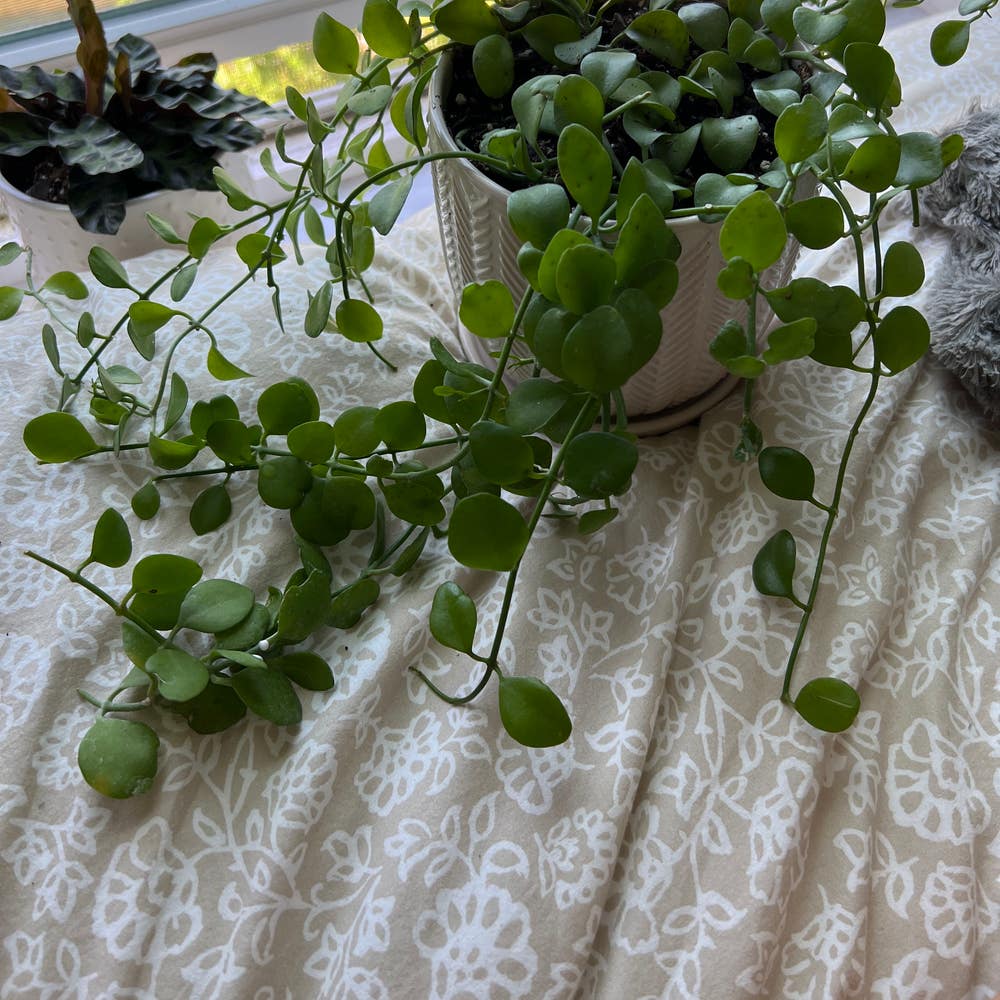
4 Secrets to Thriving Indoor String of Nickels 🪙
Dischidia nummularia
By the Greg Editorial Team
Oct 02, 2024•5 min read
This article was created with the help of AI so we can cover more plants for you. May contain errors. See one? Report it here.
Unlock the secret to a thriving String of Nickels with essential care tips for light, water, and humidity! 🌱
- 🌞 String of Nickels thrives in bright, indirect sunlight for vibrant growth.
- 💧 Water every 2-3 weeks, ensuring soil dries out to prevent root rot.
- 🌱 Use well-draining soil and monitor humidity for optimal health and growth.
Light Requirements
Ideal Conditions for Growth 🌞
String of Nickels thrives in bright, indirect sunlight. While it can tolerate lower light levels, expect slower growth and less vibrant foliage.
Role of Grow Lights 💡
Grow lights are a game changer for those with dimly lit spaces. They help maintain healthy growth, especially during winter months when natural light is scarce.
Choosing the Best Grow Light 🛠️
When selecting grow lights, consider the types available: LED, fluorescent, and incandescent. Full-spectrum LED lights are recommended for balanced growth, and placing them 12-18 inches above your plant ensures optimal light exposure.
With the right light conditions, your String of Nickels will flourish beautifully. Next, let’s dive into its watering needs to keep your plant thriving.
Watering Needs
Frequency and Method 🌊
Watering your String of Nickels is all about balance. Allow the top 1-2 inches of soil to dry out between waterings, ensuring the roots don’t sit in moisture.
Aim to water every 2-3 weeks, but adjust based on your indoor conditions. Factors like humidity and temperature can influence how quickly the soil dries out.
Signs of Overwatering and Underwatering 🚨
Recognizing the signs of overwatering is crucial for your plant’s health. Look for yellowing leaves, mushy stems, and root rot as telltale indicators.
On the flip side, underwatering can lead to wrinkled leaves, drooping, and dry leaf edges. Keeping an eye on these symptoms will help you maintain a thriving plant.
By mastering the watering needs of your String of Nickels, you set the stage for vibrant growth and lush foliage. Next, let’s explore how humidity and temperature play a role in your plant’s overall well-being.
Humidity and Temperature
Optimal Levels 🌬️
String of Nickels thrives in moderate humidity levels, ideally between 40-60%. While it can adapt to lower humidity, a little misting now and then can work wonders for its health.
Temperature Preferences 🌡️
The ideal temperature range for this plant is between 20°C to 25°C (68°F to 77°F). Be cautious, as temperatures below 10°C (50°F) can stress your plant and hinder its growth.
Maintaining the right humidity and temperature is crucial for a healthy String of Nickels. With these conditions in check, your plant will flourish, setting the stage for vibrant growth and lush foliage.
Next, let’s explore the best soil types and fertilization practices to keep your plant thriving.
Soil and Fertilization
Best Soil Types 🌱
For your String of Nickels, a well-draining soil mix is essential. Opt for cactus or succulent potting mix to ensure proper drainage and aeration.
You can also enhance drainage by adding perlite or sand. This will help prevent root rot, which is a common issue for indoor plants.
Fertilization Schedule 🗓️
Fertilizing your plant is crucial for its growth. Aim to fertilize every 4-6 weeks during the growing season, which spans spring and summer.
Use a balanced, water-soluble fertilizer diluted to half strength. This approach provides the nutrients your plant needs without overwhelming it.
By following these soil and fertilization tips, you’ll set your String of Nickels up for thriving growth. Next, let’s explore how to maintain optimal humidity and temperature for your plant’s well-being.
Common Issues and Maintenance
🐛 Pests and Diseases
Common Pests
Indoor String of Nickels can attract a few pesky intruders. Mealybugs are white, cotton-like pests that suck sap from leaves, weakening your plant. Spider mites, on the other hand, are tiny and web-spinning, causing stippling on leaves that can lead to further damage.
Prevention and Treatment
Regular inspections are key to keeping your plant healthy. Check for pests weekly to catch any infestations early. If you spot any, treatment options include neem oil, insecticidal soap, or simply manual removal.
🌪️ Environmental Stress
Signs of Stress
Your plant will communicate its discomfort through various signs. Leaf drop often indicates too much direct sunlight or extreme temperature changes. Additionally, leaf discoloration, such as yellowing, can result from overwatering or insufficient light.
Solutions for Ideal Conditions
To help your plant thrive, adjust its light exposure as needed. Moving it to a brighter or shadier spot can make a significant difference. Also, keep an eye on temperature; avoid drafts and heat sources to minimize stress.
🏡 Placement and Maintenance
Best Locations
Finding the right spot for your String of Nickels is crucial. Ideally, place it near east or west-facing windows for bright, indirect light. Avoid direct sunlight and areas with extreme temperature fluctuations to ensure optimal growth.
Maintaining Appearance
Pruning and Grooming
Regular maintenance can keep your plant looking its best. Trim leggy growth to encourage bushier growth and remove any dead or yellowing leaves to maintain its appearance.
Propagation
If you're looking to expand your collection, propagation is a great option. You can use stem cuttings or leaf cuttings. Here’s how to do it:
- Select healthy stems with several leaves.
- Cut stems 4-6 inches long and allow them to callous for 1-2 days.
- Plant in well-draining soil and water lightly until established.
With these tips, you'll ensure your String of Nickels remains healthy and vibrant. Next, let’s explore the best soil types and fertilization strategies to further enhance its growth.
⚠️ Safety First
This content is for general information and may contain errors, omissions, or outdated details. It is not medical, veterinary advice, or an endorsement of therapeutic claims.
Always consult a qualified healthcare professional before using any plant as food, medicine, or supplement.
Never eat any plant (or feed one to pets) without confirming its identity with at least two trusted sources.
If you suspect poisoning, call Poison Control (800) 222-1222, the Pet Poison Helpline (800) 213-6680, or your local emergency service immediately.
Spotted an error? Please report it here.
Unlock the secrets to a thriving String of Nickels 🌿 with Greg's tailored care tips and reminders, ensuring your plant stays vibrant and healthy all year long!