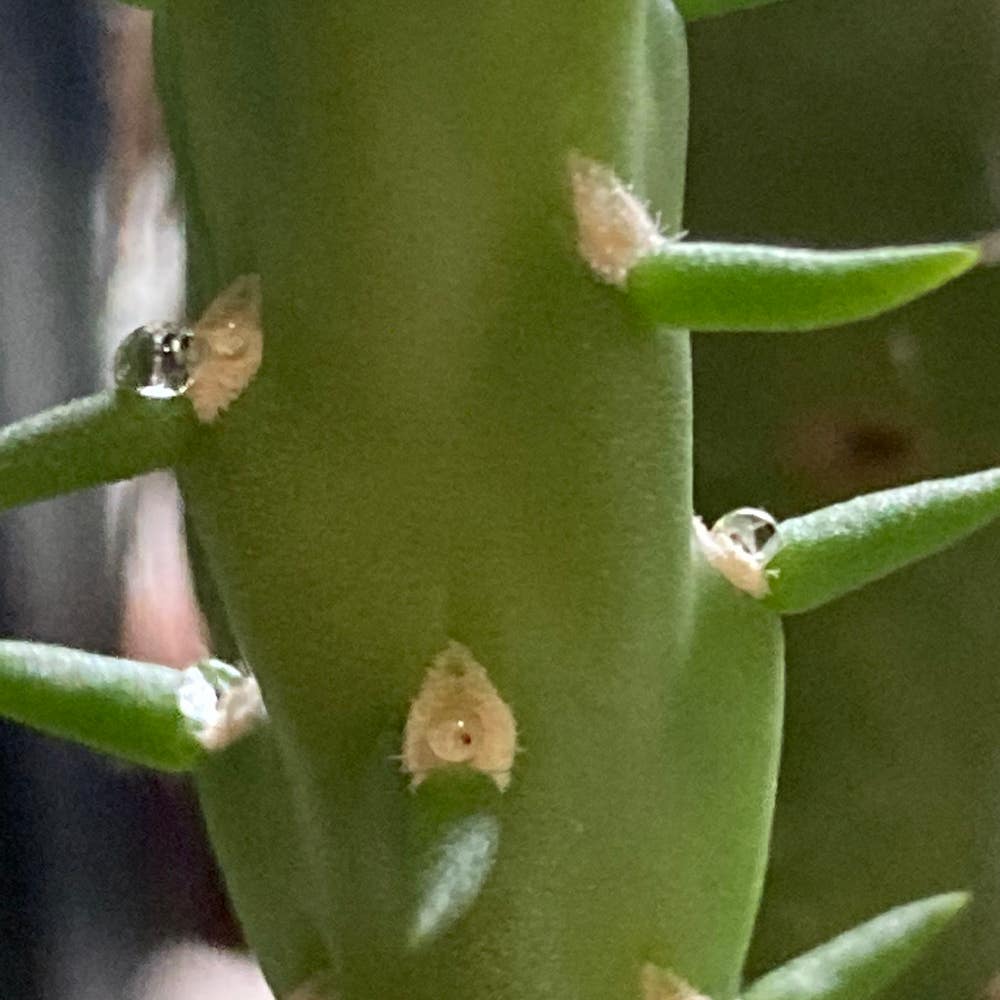
🌵 Why Are My Sonoran Jumping Cholla Leaves Mushy?
Cylindropuntia fulgida
By the Greg Editorial Team
Mar 13, 2024•4 min read
This article was created with the help of AI so we can cover more plants for you. May contain errors. See one? Report it here.
- Mushiness signals distress in Cholla leaves; look for discoloration and wilt.
- Overwatering and fungi are common mushiness culprits; adjust water and airflow.
- Preventive care is key: use fast-draining soil, monitor health, and prune as needed.
Spotting Trouble: Signs Your Cholla Leaves Are Unhappy
🚩 Visual Symptoms
Identifying mushiness and discoloration in your Sonoran Jumping Cholla is akin to catching a red flag in a sprint. If the leaves are more yellow-brown than green, it's time to pay attention. Texture changes are equally telling; leaves should be firm, not cling to your fingers with a desperate grip.
Other warning signs include a general wilted appearance or stems that seem to have lost their backbone. Don't dismiss subtle clues like a slight droop or a less vibrant hue—these could be the early whispers of a plant in trouble.
🌱 Root Check-Up
To safely inspect the roots, gently remove your Cholla from its pot, like disarming a fragile relic. Healthy roots are firm and white, while unhealthy ones are the mushy traitors, often darkened and soft.
If the roots resemble overcooked noodles, it's a clear cry for help. Presence of mold or a foul smell from the soil are additional red flags, indicating that your Cholla's foundation is compromised.
The Usual Suspects: Common Causes of Mushiness
💧 Too Much Love: Overwatering Woes
The Sonoran Jumping Cholla is a desert dweller, meaning excess moisture is its kryptonite. Overwatering leads to a plethora of problems, with mushy leaves being a distress signal. The soil should never feel like a wet sponge; if it does, you're in over your head. A Cholla's pot heavier than your expectations is a telltale sign of waterlogged soil.
🍄 Unwanted Guests: Fungal Infections
Fungi are the freeloaders of the plant world, thriving in the moisture that overwatering provides. Brown spots or a defeated demeanor on your Cholla are red flags. Moldy soil is like a welcome mat for these pests. To avoid turning your Cholla into a fungal feast, ensure good airflow and dry conditions.
🩹 Accidents Happen: Physical Damage
Physical injuries to your Cholla can open the door to mushiness. These wounds are like open invitations for pathogens. To prevent mechanical damage, handle your Cholla with care and keep it in a safe spot, away from roughhousing pets or clumsy humans.
Getting Your Cholla Back on Track: Treatment Strategies
💧 Drying Out: Watering Adjustments
Adjusting your watering routine is critical when dealing with a mushy Sonoran Jumping Cholla. Less is more when it comes to hydrating these desert dwellers. Stick to a schedule that allows the soil to dry out completely between waterings. During cooler months, your Cholla won't be as thirsty, so taper off accordingly.
Soil and drainage are your allies in the fight against mushiness. Ensure your potting mix is fast-draining by incorporating materials like perlite. A snug pot with drainage holes, possibly with a gravel layer at the bottom, will prevent water from overstaying its welcome.
🍄 Fungus Among Us: Battling Infections
When it comes to fungal infections, time is of the essence. Isolate your Cholla and prune any affected areas with sterilized tools. Choose a fungicide that's known to be effective against cacti fungi, and apply it as directed.
Preventing future outbreaks starts with cultural practices. Keep the soil on the drier side and ensure good airflow around your plant. Water carefully to avoid wetting the leaves, as this can invite unwanted fungal guests. Regular monitoring will help you catch any issues early, maintaining the health of your Cholla.
Staying Vigilant: Prevention and Ongoing Care
💧 Smart Watering: Best Practices
Watering your Sonoran Jumping Cholla isn't a set-it-and-forget-it deal. It's a delicate dance of observation and action. Check the soil before watering; if the top inch feels like a dry desert, it's time to hydrate. But if it's damp, hold off. Your Cholla's not thirsty yet. Use room temperature water to avoid shocking the roots, and always allow for proper drainage—no Cholla enjoys wet feet.
👩⚕️ Regular Check-Ups: Monitoring Plant Health
Monitor your Cholla like a hawk. Regular inspections can catch issues before they escalate. Look for signs of distress, such as discoloration or pests. If you spot trouble, don't panic—act swiftly. Adjust your care routine and consider consulting a cactus expert if problems persist. Remember, your Cholla's health is a reflection of your care, so stay sharp and keep learning.
⚠️ Safety First
This content is for general information and may contain errors, omissions, or outdated details. It is not medical, veterinary advice, or an endorsement of therapeutic claims.
Always consult a qualified healthcare professional before using any plant as food, medicine, or supplement.
Never eat any plant (or feed one to pets) without confirming its identity with at least two trusted sources.
If you suspect poisoning, call Poison Control (800) 222-1222, the Pet Poison Helpline (800) 213-6680, or your local emergency service immediately.
Spotted an error? Please report it here.
Revive your Sonoran Jumping Cholla from mushy to magnificent 🌵 by using Greg's smart watering schedules and fungal prevention advice to ensure just the right amount of moisture and care!