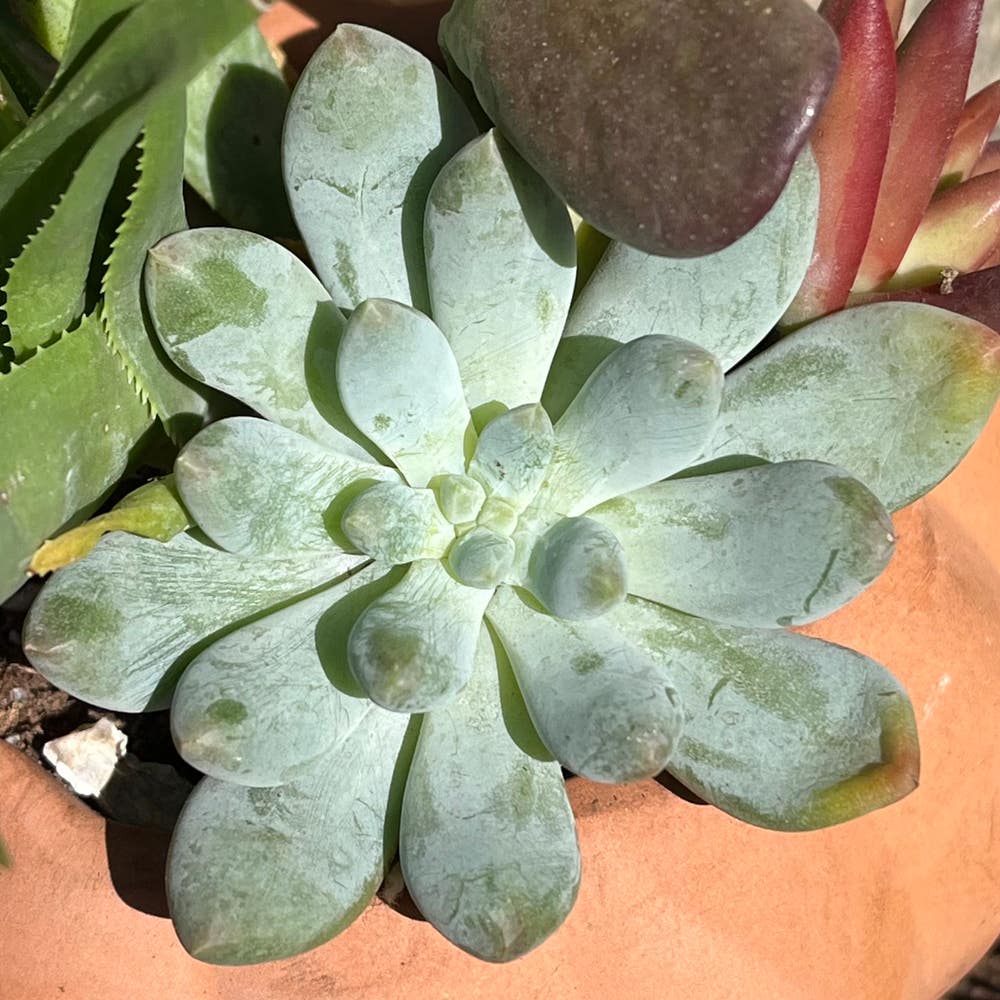
Why Does My Pachyphytum 'Starburst' Have Yellow Leaves?
Pachyphytum 'Starburst'
By the Greg Editorial Team
Jun 18, 2024•5 min read
This article was created with the help of AI so we can cover more plants for you. May contain errors. See one? Report it here.
Solve the mystery of your 'Starburst's yellow leaves and revive its lush green glow! 🌟🍃
- 🌱 Yellow leaves signal distress, not all are worrisome, but widespread yellowing needs action.
- 💧🌞 Balance water and light; over/underwatering and incorrect lighting cause yellowing.
- 🥗 Feed with balanced fertilizer to prevent nutrient deficiencies that lead to yellow leaves.
Spotting Trouble: Signs Your 'Starburst' Isn't Happy
💛 Yellow Leaves as a Red Flag
Yellow leaves on your Pachyphytum 'Starburst' are not the new green. They're a visual alarm bell, indicating your succulent could be in distress. Chlorophyll is on strike, and without it, your plant's energy factory is shutting down. If the leaves are also feeling like yesterday's balloons, it's time to get to the root of the problem. Check for limp stems; they're a telltale sign that the issue is more than skin deep.
When Yellow Means Goodbye
Not every yellow leaf is a cry for help. Some yellowing is just the plant's way of doing some spring cleaning, shedding the old to make way for the new. But if your 'Starburst' is turning into a yellow bouquet, it's time to pay attention. Look for patterns: if it's the lower, older leaves bidding adieu, that's natural. However, if the yellowing is widespread or the new growth is looking pale, it's a signal that your succulent is not just being dramatic—it needs intervention.

Water Woes: Striking the Right Balance
💦 Too Much Love: Overwatering Hazards
Overwatering your Pachyphytum 'Starburst' is like giving it too many hugs – well-intentioned but smothering. Yellow leaves are the SOS signal. To correct this, let the soil dry out before you water again. Think of the soil as a wrung-out sponge; it should feel moist, not wet.
🏜️ Thirsty Roots: The Underwatering Connection
On the flip side, underwatering turns your succulent into a parched desert dweller. Crispy yellow leaves are a cry for help. When the top inch of soil feels like a dry martini, it's time to water. But don't drown it; aim for even moisture throughout the pot.

Light and Leaves: Finding the Sweet Spot
🌞 Sunburn and Shade: Protecting Your 'Starburst'
Navigating the lighting labyrinth for your Pachyphytum 'Starburst' is crucial. Too much sun and you'll witness a leaf sunburn saga; too little and you'll have a pale, light-starved plant on your hands.
💡 Correcting Light Exposure
Bright, indirect sunlight is the mantra here. Think of it as your plant's non-negotiable spa requirement. Direct sun can lead to a crispy, scorched appearance, while insufficient light results in a lackluster, faded look.
🏡 Location, Location, Location
Your 'Starburst' needs a spot that's just right. Avoid the intense midday sun; instead, opt for a location that basks in the gentle morning or late afternoon rays.
🌟 Artificial Sunshine
When the sun plays hard to get, consider grow lights. They're like a personal trainer for your plant, ensuring it gets its daily dose of light, no matter the weather outside.
🕶 Watch for Tan Lines
Tan lines on humans might be a summer trophy, but on plants, they're a red flag. If you see uneven leaf color, it's time to rotate your 'Starburst' for even light exposure.
🍂 Seasonal Shifts
As the seasons change, so should your plant's position. Shorter days in winter might call for a closer spot to the window, while summer might mean pulling back to avoid harsh rays.
Remember, it's not just about survival; it's about helping your 'Starburst' thrive. Keep an eye out for new growth or a rare flower spike as signs you've hit the lighting jackpot.

Feeding Finesse: Nutrients and Yellow Leaves
💧 The Nitrogen Necessity
Nitrogen is crucial for chlorophyll, the green pigment in leaves. When your 'Starburst' lacks nitrogen, older leaves turn a telltale yellow as the plant reallocates nitrogen to new growth. Revitalize your plant with a nitrogen-rich fertilizer, but don't go overboard—think of it as a nutrient nudge rather than a shove.
🥦 A Balanced Diet for Your 'Starburst'
Yellow leaves can also scream deficiencies in iron, magnesium, or potassium. Iron shortage targets young leaves, leaving them pale with dark veins. Magnesium deficiency hits mature leaves with yellow patches. Potassium issues? Look for yellow edges on older leaves.
Prevent these issues with a balanced, water-soluble fertilizer, and adjust based on your plant's response. Remember, your 'Starburst' doesn't need a feast—it needs a well-rounded diet. Keep a close eye on your plant and tweak the feeding schedule as necessary, because even plants get hangry.
Rescue and Recovery: Turning Leaves Green Again
🌱 Adjusting Care to Combat Yellowing
If your Pachyphytum 'Starburst' is sporting yellow leaves, immediate action is needed. Start by evaluating your watering routine; both over and underwatering can lead to yellow leaves. Adjust accordingly: increase watering frequency if the soil is bone dry, or allow it to dry out more between waterings if it's soggy. Next, assess the lighting situation. If your plant is basking in harsh sunlight, move it to a spot with bright, indirect light. Conversely, if it's been lurking in the shadows, introduce it to more light.
📈 Monitoring and Adapting Your Approach
Keep a close watch on your 'Starburst' after making these changes. New growth is a good sign, but continued yellowing means it's time to reassess. Check for pests, and ensure you're not over-fertilizing—too much love can be just as harmful as neglect. Remember, plant care is not set-and-forget; it's a dynamic process that requires ongoing attention and adjustment. Regularly inspect your plant, and be ready to tweak your approach to keep your 'Starburst' thriving.
⚠️ Safety First
This content is for general information and may contain errors, omissions, or outdated details. It is not medical, veterinary advice, or an endorsement of therapeutic claims.
Always consult a qualified healthcare professional before using any plant as food, medicine, or supplement.
Never eat any plant (or feed one to pets) without confirming its identity with at least two trusted sources.
If you suspect poisoning, call Poison Control (800) 222-1222, the Pet Poison Helpline (800) 213-6680, or your local emergency service immediately.
Spotted an error? Please report it here.