⭐ Pachyphytum 'Starburst': Not an Annual
Pachyphytum 'Starburst'
By the Greg Editorial Team
Sep 30, 2024•3 min read
This article was created with the help of AI so we can cover more plants for you. May contain errors. See one? Report it here.
Unlock the beauty of Pachyphytum 'Starburst' 🌟 as a resilient perennial that enhances your garden's sustainability!
- 🌱 Pachyphytum 'Starburst' is a perennial succulent, thriving for years, not just a season.
- 💧 Its fleshy leaves retain moisture, making it highly drought-tolerant and low-maintenance.
- 🌼 Attracts pollinators with unique flowers, enhancing garden biodiversity and beauty.
Pachyphytum 'Starburst' as a Perennial
🌱 Genetic Characteristics
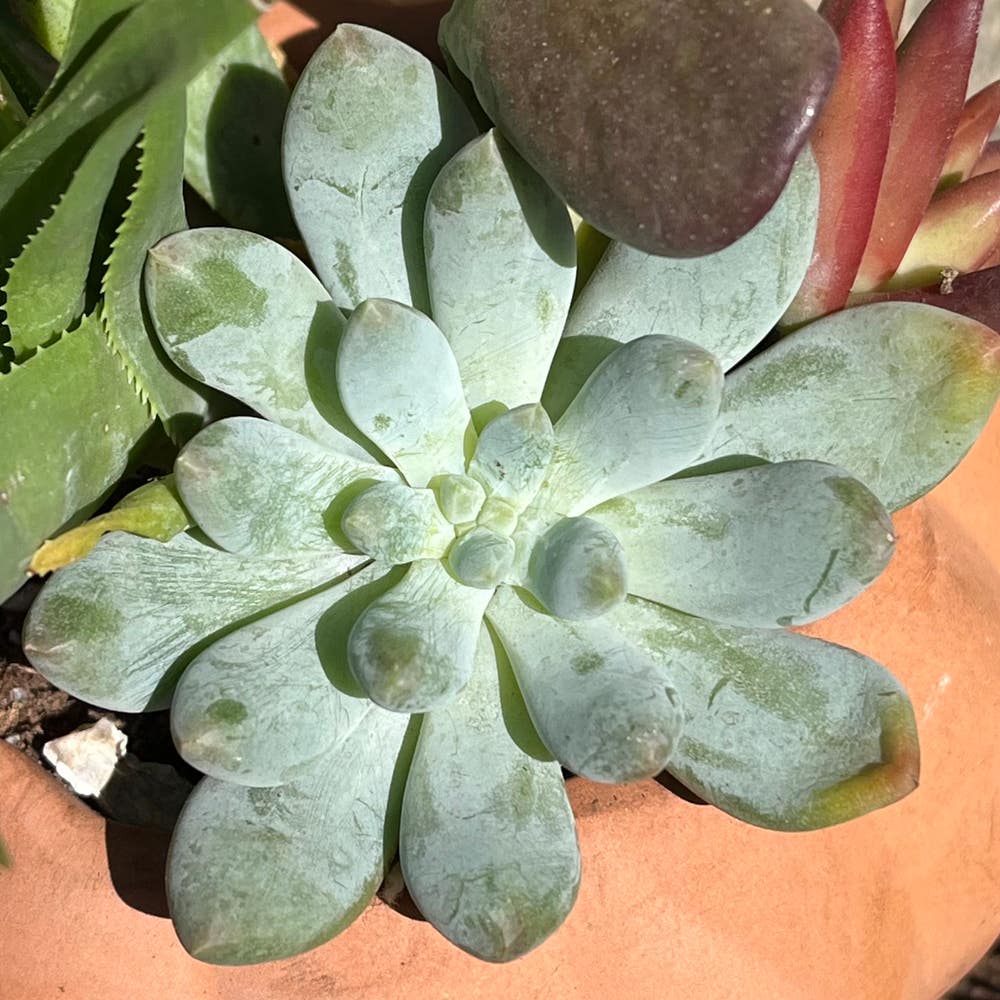
Pachyphytum 'Starburst' belongs to the succulent family, showcasing remarkable adaptations for water storage. Its unique rosette shape is not just visually appealing; it reflects a genetic predisposition for perennial growth.
💧 Physiological Traits Supporting Perennial Classification
The plant features fleshy leaves that excel in retaining moisture, making it well-suited for dry conditions. Additionally, its drought tolerance equips it to thrive in arid environments, reinforcing its classification as a perennial.
📈 Long-Term Lifecycle and Growth Patterns
This succulent can thrive for several years, offering a long-term gardening option. Initially, it may exhibit slow growth, but it eventually develops robustly in subsequent seasons.
🌼 Reproductive Strategies
🌸 Flowering Habits
Pachyphytum 'Starburst' has a seasonal blooming period that attracts various pollinators. Its flower structure is designed to enhance reproductive success, ensuring the continuation of its species.
🌱 Seed Production Compared to Annuals
The seed production timeline for 'Starburst' extends over multiple seasons, unlike many annuals. While it produces seeds less frequently, this approach is more sustainable, allowing for a steady propagation cycle.
❓ Misconceptions and Exceptions
🌧️ Conditions Where It May Be Treated as an Annual
In extreme weather conditions, such as frost or drought, 'Starburst' may be misclassified as an annual. Improper care, like overwatering or using poor soil, can also lead to misconceptions about its perennial nature.
🌍 Regional Variations Affecting Its Classification
Climate plays a significant role in how 'Starburst' grows and is perceived. Local gardening practices can further complicate its classification, leading to misunderstandings about its care and longevity.
🌿 Garden Design Implications
💚 Advantages in Perennial Planting Schemes
Integrating Pachyphytum 'Starburst' into your garden is a long-term investment. Its cost-effectiveness and unique aesthetic appeal make it a valuable addition to perennial planting schemes.
🌼 Tips for Integrating into Garden Design
Consider companion planting with other drought-tolerant species to enhance your garden's resilience. Additionally, pay attention to design considerations, such as optimal sunlight and drainage, to ensure the best growth conditions.
⏳ Maximizing Longevity
🛠️ Best Practices for Management
To maximize the longevity of 'Starburst', prioritize well-draining soil. Implementing effective watering techniques is crucial for maintaining moisture without the risk of overwatering.
🌱 Tips for Enhancing Growth and Flowering
Establish a fertilization schedule to provide essential nutrients throughout the growing season. Adjust your care practices based on seasonal changes to promote optimal health and flowering.
With these insights, you're well-equipped to appreciate and cultivate Pachyphytum 'Starburst' as a perennial treasure in your garden. Next, let’s explore the best practices for integrating this stunning succulent into your landscape design.
⚠️ Safety First
This content is for general information and may contain errors, omissions, or outdated details. It is not medical, veterinary advice, or an endorsement of therapeutic claims.
Always consult a qualified healthcare professional before using any plant as food, medicine, or supplement.
Never eat any plant (or feed one to pets) without confirming its identity with at least two trusted sources.
If you suspect poisoning, call Poison Control (800) 222-1222, the Pet Poison Helpline (800) 213-6680, or your local emergency service immediately.
Spotted an error? Please report it here.
Pachyphytum 'Starburst' is a resilient perennial 🌟 that thrives with the right care, and Greg's personalized watering reminders will help you keep it flourishing for years to come!