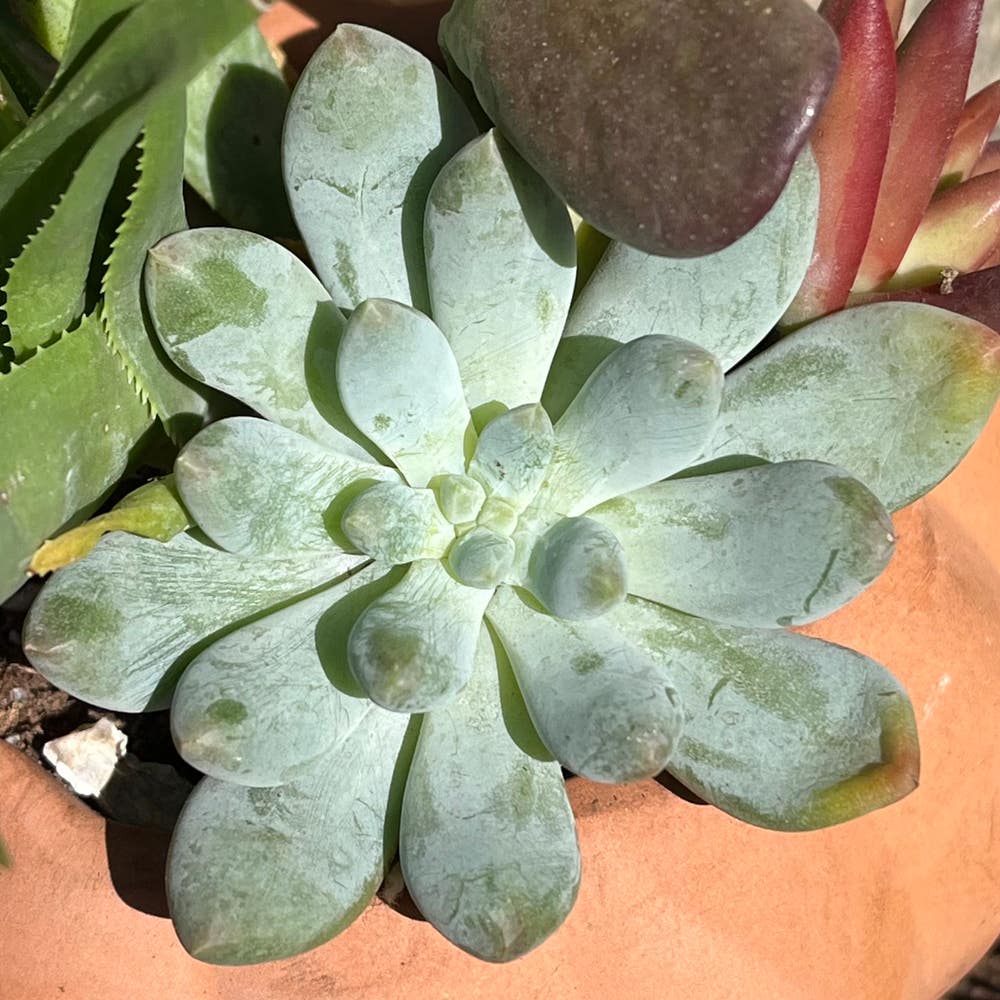
What Are The Bugs on My Pachyphytum 'Starburst'? 🐛
Pachyphytum 'Starburst'
By the Greg Editorial Team
Jun 18, 2024•4 min read
This article was created with the help of AI so we can cover more plants for you. May contain errors. See one? Report it here.
Banish bugs from your Pachyphytum 'Starburst' 🐛 and protect its stellar charm with expert tips! 🌟
- Spider mites and scale - treat with neem oil, soap, or alcohol wipes.
- Fungus gnats, fruit flies, mealybugs, thrips - control with traps, soil treatments, and spacing.
- Prevent pests with dry soil, regular checks, and proper plant care.
Meet the Unwelcome Guests: Common Pests on Pachyphytum 'Starburst'
🕷️ Spider Mites: The Sneaky Sap-Suckers
Spider mites are tiny vampires to your Pachyphytum 'Starburst', draining the life out of it with their sap-sucking habits. Look for white dots or webbing on the leaves as a sign of their presence.
🦟 Kicking them out
Combat these pests with neem oil or insecticidal soap. These are your go-to weapons for sending the mites packing.
🚪 Keeping them away
Misting your plant can deter mites, and regular inspections are crucial. Think of it as your plant's personal bodyguard service.
🦠 Scale: The Sticky Freeloaders
Scale insects are like tiny, sticky barnacles on your plant. They appear as bumps on stems and leaves, often blending in too well.
🧹 Sending them packing
Wipe them out with alcohol wipes or apply horticultural oil. It's like showing up to the party with a megaphone and telling them to leave.
🚷 Making your plant a no-go zone
Prevent scale squatters by performing regular checks and ensuring good airflow around your plant. It's like setting up a neighborhood watch for your Pachyphytum.
🦟 Fungus Gnats and Fruit Flies: The Soil Party Crashers
These pests are the uninvited guests to the soil party, thriving in moist conditions. Spot the larvae or adult flies to confirm they're crashing.
🎉 Party's over
Deploy sticky traps to catch the adults and use soil treatments to stop the larvae. It's the equivalent of flipping on the lights at a rave and turning off the music.
🚱 Prevention is the best cure
Let the soil dry out between waterings and adopt proper watering practices. It's like not giving out your address for the next party.
🐛 Mealybugs: The Fluffy White Menace
Mealybugs look like they're dressed up in fluffy white costumes, but they're no fun. They cluster on the undersides of leaves, sapping your plant's strength.
🚪 Eviction notice
Show them the door with alcohol, soap, and oil treatments. It's like having the bouncers toss them out of the club.
🛡️ Fortifying your defenses
Regular inspections and quarantines for new plants will help keep these pests at bay. Think of it as your plant's personal security system.
🦗 Thrips: The Leaf Disfigurers
Thrips are masters of disguise, causing damage that can look like innocent leaf imperfections. They leave behind a trail of disfigured leaves.
🛡️ Thwarting the invasion
Fight back with soaps, oils, or introduce beneficial bugs to take them down. It's like hiring a team of ninjas for your plant's protection.
🚪 Keeping them at bay
Maintain cleanliness and adequate plant spacing to prevent thrips from getting comfortable. It's like not letting them even get a foot in the door.

The Less Frequent Foes: Tackling Other Pests
🐜 Aphids: The Sticky Situation
Aphids are sap-sucking pests that can appear in various colors. They're notorious for their rapid multiplication and can be spotted in clusters, especially on new growth. Blast them with water or apply insecticidal soap to send them on their way. For a DIY approach, mix dish soap with water and spray directly on the aphids.
🦟 Whiteflies: The Ghostly Swarm
Whiteflies are tiny, white, and flutter away when disturbed, only to return like bad habits. They leave behind sticky honeydew and sooty mold. Combat them using yellow sticky traps or by spraying neem oil and insecticidal soap. If you're outdoors, use nature's own pest control: hummingbirds.
🐛 Root Mealybugs: The Hidden Threat
Root mealybugs are a sneaky bunch, living in the soil and damaging roots. They're harder to spot, but if your plant is wilting or showing signs of distress, it's time to investigate. Treat them with a soil drench of insecticidal soap or neem oil. Prevention includes letting the soil dry out between waterings and ensuring good airflow.
Quick Tips for Prevention
- Inspect new plants thoroughly before introducing them to your collection.
- Keep your plants healthy; stressed plants are more susceptible to pests.
- Isolate any affected plants to prevent the spread of pests.
- Use reflective mulches to deter whiteflies and plant strong-smelling herbs to repel aphids.
- Maintain humidity levels to discourage thrips.
Remember, when it comes to pests, the best offense is a good defense. Stay vigilant and proactive to keep these less frequent, but equally troublesome, foes at bay.


⚠️ Safety First
This content is for general information and may contain errors, omissions, or outdated details. It is not medical, veterinary advice, or an endorsement of therapeutic claims.
Always consult a qualified healthcare professional before using any plant as food, medicine, or supplement.
Never eat any plant (or feed one to pets) without confirming its identity with at least two trusted sources.
If you suspect poisoning, call Poison Control (800) 222-1222, the Pet Poison Helpline (800) 213-6680, or your local emergency service immediately.
Spotted an error? Please report it here.
Keep your Pachyphytum 'Starburst' pest-free 🌱 with Greg's custom reminders for plant health checks and proactive pest control tips!