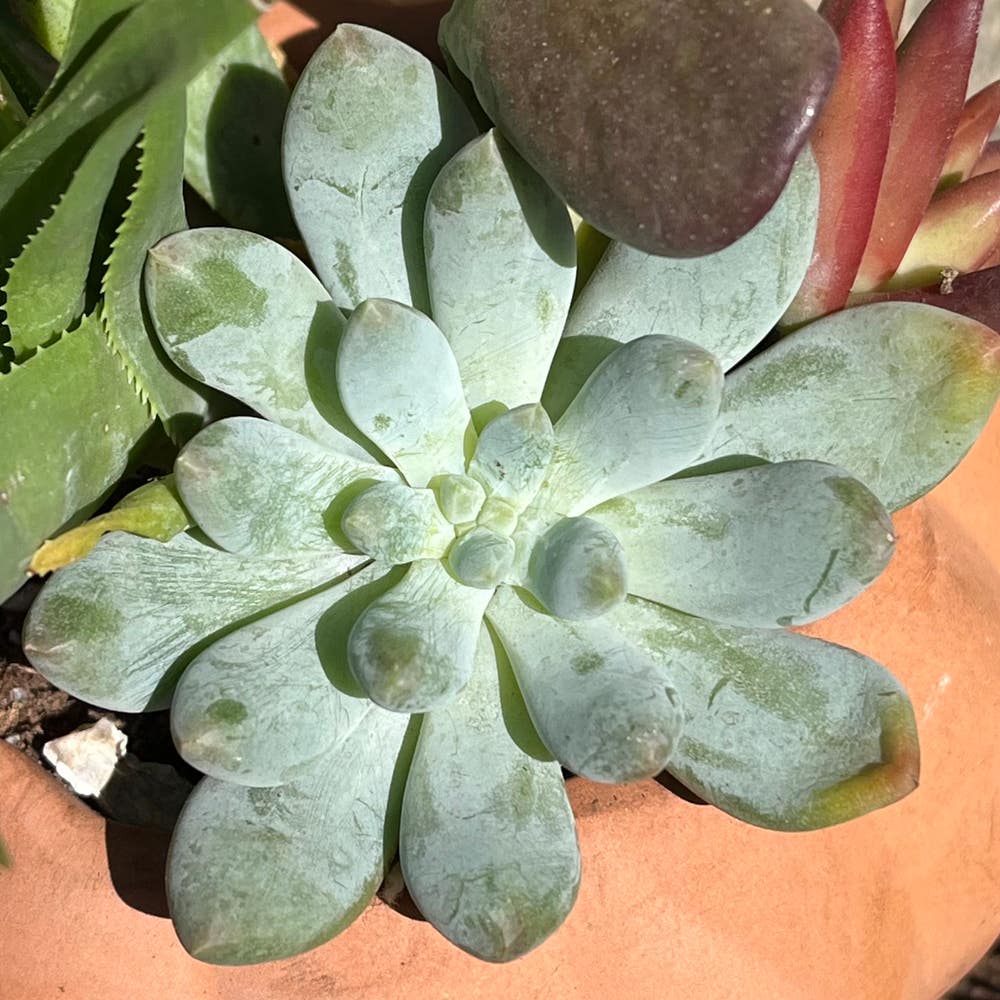
8 Perfect Plant Partners for Pachyphytum 'Starburst' ⭐
Pachyphytum 'Starburst'
By the Greg Editorial Team
Sep 30, 2024•5 min read
This article was created with the help of AI so we can cover more plants for you. May contain errors. See one? Report it here.
Elevate your garden's beauty 🌿 and health with perfect companion plants for Pachyphytum 'Starburst'!
- 🌼 Echeveria and Sedum are perfect companions for vibrant, pest-resistant arrangements with 'Starburst'.
- 🌿 Aloe Vera and Haworthia add visual interest and texture, enhancing 'Starburst' displays.
- 🐞 Companion plants attract beneficial insects, reducing the need for chemical pesticides.
Ideal Companion Plants
🌵 Echeveria Varieties
Echeveria varieties are stunning succulents known for their rosette shapes and vibrant colors. They thrive in well-draining soil and require minimal watering, making them perfect companions for Pachyphytum 'Starburst'.
These plants also serve as natural pest deterrents, effectively repelling common nuisances like aphids. Their contrasting colors and forms enhance the overall aesthetic of any succulent arrangement.
🌿 Sedum Species
Sedum species are low-growing, drought-tolerant succulents with fleshy leaves that add a unique touch to your garden. They share similar sunlight and soil requirements with 'Starburst', ensuring a harmonious growing environment.
Additionally, Sedum attracts beneficial insects that prey on pests, promoting a healthier ecosystem. Their varied textures and colors beautifully complement the vibrant 'Starburst'.
🌱 Aloe Vera
Aloe Vera is not just a household staple for its medicinal properties; it also boasts a unique leaf structure that adds visual interest. This succulent prefers bright, indirect sunlight and well-draining soil, aligning perfectly with the needs of 'Starburst'.
Moreover, Aloe Vera contains compounds that deter pests like mealybugs, making it a practical choice for pest management. Its height and distinct leaf shape create a striking contrast in arrangements.
🌼 Haworthia
Haworthia is a small, rosette-forming succulent known for its striking patterns and textures. It thrives in similar light and soil conditions as 'Starburst', ensuring compatibility in your garden.
These tough-leaved plants can help deter pests, adding another layer of protection. Their unique texture provides an appealing contrast to the smooth forms of 'Starburst'.
🪨 Lithops
Lithops, often referred to as "living stones," are fascinating succulents that mimic the appearance of stones. They require minimal watering and well-draining soil, making them easy to care for alongside 'Starburst'.
Their unique appearance can confuse pests, providing an additional layer of defense. Lithops also serve as an interesting focal point in any arrangement, enhancing visual appeal.
These ideal companion plants not only share care requirements with Pachyphytum 'Starburst' but also contribute to a vibrant and pest-resistant garden. Next, let’s explore which plants to avoid to keep your succulent arrangement thriving.
Plants to Avoid
🚫 Incompatible Plants
When selecting companions for Pachyphytum 'Starburst', it's crucial to consider plant compatibility. Different moisture needs can lead to overwatering risks, which can be detrimental to 'Starburst'.
Additionally, some plants may attract pests that could harm your succulent. Keeping these factors in mind will help maintain a healthy environment for your plants.
❌ Examples of Plants to Avoid
Certain high-water-demand plants, like ferns, should be avoided. Their moisture requirements can lead to root rot in 'Starburst', jeopardizing its health.
Flowering plants with strong scents, such as certain herbs, can also be problematic. These scents may attract pests that are detrimental to succulents, creating unnecessary challenges in your garden.
By steering clear of these incompatible plants, you can create a thriving, harmonious space for your 'Starburst' and its companions. This careful selection will enhance your gardening experience and ensure your plants flourish together.
Pest Management Strategies
Companion Plants and Pest Management 🌱
Companion plants play a crucial role in pest management for your Pachyphytum 'Starburst'. By incorporating natural deterrents, you can significantly reduce your reliance on chemical pesticides.
These plants help create a balanced ecosystem, attracting beneficial insects that keep harmful pests at bay. This approach not only protects your succulents but also promotes a healthier garden environment.
Specific Pests 🐞
Common pests that threaten your 'Starburst' include aphids, mealybugs, and spider mites. Keep an eye out for signs of infestation, such as yellowing leaves or sticky residue on the plant.
Identifying these issues early can save your plants from serious damage. Regular checks will help you maintain a thriving succulent collection.
Companion Plants with Pest-Repellent Properties 🌼
Echeveria and Aloe Vera are excellent companions for pest management. Both have natural pest-repellent properties that deter common invaders.
Sedum species are also beneficial, as they attract insects that prey on pests. By strategically placing these plants alongside 'Starburst', you can enhance both its beauty and resilience against pests.
Incorporating these strategies will not only protect your plants but also enrich your gardening experience. Next, let’s explore how to create visually appealing arrangements that showcase your succulents beautifully.
Visual Appeal and Aesthetic Considerations
Creating Visually Appealing Arrangements 🌿
When arranging your Pachyphytum 'Starburst', consider layering plants based on their height and growth habits. Taller plants can serve as a backdrop, while shorter varieties create a lush foreground.
Grouping plants with contrasting colors and textures adds depth to your arrangement. This not only enhances visual interest but also highlights the unique features of each succulent.
Color and Texture Combinations 🎨
Pairing 'Starburst' with darker or lighter succulents creates striking contrasts. This interplay of colors can make your arrangement pop and draw the eye.
Incorporating varied leaf shapes adds another layer of intrigue. Mixing smooth, rounded leaves with spiky or textured varieties keeps the arrangement dynamic and engaging.
By thoughtfully considering these aesthetic elements, you can create a stunning display that showcases the beauty of your succulents while ensuring they thrive together.
⚠️ Safety First
This content is for general information and may contain errors, omissions, or outdated details. It is not medical, veterinary advice, or an endorsement of therapeutic claims.
Always consult a qualified healthcare professional before using any plant as food, medicine, or supplement.
Never eat any plant (or feed one to pets) without confirming its identity with at least two trusted sources.
If you suspect poisoning, call Poison Control (800) 222-1222, the Pet Poison Helpline (800) 213-6680, or your local emergency service immediately.
Spotted an error? Please report it here.
Enhance your Pachyphytum 'Starburst' with vibrant companions like Echeveria and Aloe Vera 🌿, and let Greg's tailored care reminders ensure your succulent garden thrives beautifully together!