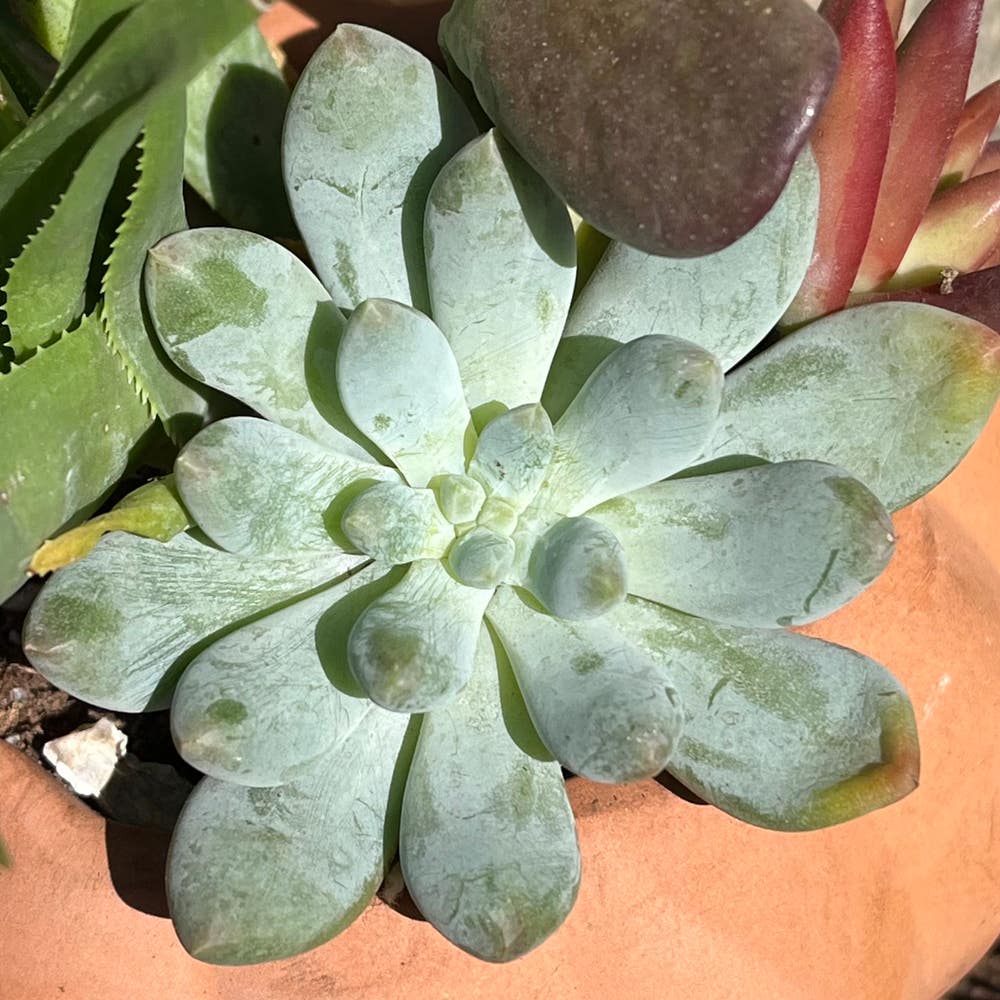
5 Factors Influencing Pachyphytum 'Starburst' Size ⭐
Pachyphytum 'Starburst'
By the Greg Editorial Team
Sep 30, 2024•5 min read
This article was created with the help of AI so we can cover more plants for you. May contain errors. See one? Report it here.
Master the art of growing Pachyphytum 'Starburst' 🌱 to create a stunning, perfectly-sized succulent display in your home!
- 🌱 Pachyphytum 'Starburst' grows 6-12 inches tall; size varies by genetics and care.
- ☀️ Bright, indirect sunlight is crucial; insufficient light leads to smaller, elongated plants.
- 🌿 Well-draining soil and proper watering prevent root rot, supporting healthy growth.
Mature Height and Spread
Typical Mature Dimensions 🌱
Pachyphytum 'Starburst' typically reaches a height of 6 to 12 inches (15 to 30 cm) and spreads about 8 to 12 inches (20 to 30 cm). Its compact rosette formation enhances its overall size perception, making it a charming addition to any succulent collection.
Growth Rate and Time to Full Size ⏳
This plant has a slow to moderate growth rate, usually maturing in 2 to 3 years. Optimal growing conditions can speed up this process, while poor conditions may hinder its development.
Size Variability Among Specimens 🎭
Size variability in 'Starburst' can stem from genetic factors, as individual plants may exhibit different growth patterns. Environmental influences, such as light and soil quality, also play a significant role in determining the size of each specimen.
Understanding these factors can help you cultivate a thriving Pachyphytum 'Starburst' that fits beautifully in your space. Next, we’ll explore the various factors influencing the size of this delightful succulent.
Factors Influencing Size
🌤️ Environmental Conditions
Light Conditions and Growth
Optimal light is crucial for Pachyphytum 'Starburst.' Bright, indirect sunlight encourages robust growth, while insufficient light can lead to elongated stems and reduced overall size.
Temperature and Humidity
The ideal temperature range for this succulent is between 65°F to 80°F (18°C to 27°C). It thrives in low humidity; high humidity levels can actually hinder its growth.
🌱 Soil Type and Its Impact on Growth
Well-draining soil is essential for Pachyphytum 'Starburst.' A sandy or gritty mix prevents root rot and supports healthy growth, ensuring your plant flourishes.
💧 Watering Frequency and Its Effect on Size
Establishing a proper watering schedule is vital. Allow the soil to dry out between waterings to avoid overwatering, which can stunt growth and reduce size.
Overwatering is a common pitfall that can lead to serious issues. Recognizing the signs early can help maintain your plant's health and size.
Understanding these factors will empower you to create the perfect environment for your Pachyphytum 'Starburst.' Next, we’ll explore how you can control its size through effective pruning techniques.
Controlling Size
Pruning Techniques for Size Management 🌿
Pruning is essential for managing the size of your Pachyphytum 'Starburst.' The best time to prune is in spring or early summer when the plant is actively growing.
To encourage new growth, remove any dead or damaged leaves. This not only helps the plant look its best but also allows it to focus energy on healthy growth.
Another effective technique is to pinch back the growing tips. This simple action controls height and promotes a bushier appearance, giving your plant a fuller look.
Tips for Maintaining Desired Dimensions 📏
Regular monitoring of your plant's growth patterns is crucial. Keeping an eye on how your 'Starburst' is developing allows you to adjust care as needed.
Container size plays a significant role in controlling growth. Using smaller pots can limit root expansion, effectively keeping your plant's overall size in check.
By implementing these strategies, you can enjoy a beautifully sized Pachyphytum 'Starburst' that fits perfectly in your space.
Next, let’s explore the fascinating varieties of Pachyphytum and their unique characteristics.
Varieties
Dwarf Varieties and Their Characteristics 🌱
Dwarf varieties of Pachyphytum 'Starburst' are compact gems, typically reaching heights of just 3 to 6 inches (7 to 15 cm). These smaller plants maintain the same care requirements as their larger counterparts but may need more frequent monitoring to thrive.
Giant Varieties and Their Growth Potential 🌳
On the other end of the spectrum, giant varieties can exceed 12 inches (30 cm) in height, showcasing impressive growth potential. These larger specimens require ample space and optimal conditions to truly flourish, making them a striking addition to any collection.
Understanding the differences between dwarf and giant varieties can help you choose the right fit for your space and gardening style. Whether you're drawn to the petite charm of dwarf varieties or the bold presence of giants, each offers unique beauty and care challenges.
As you explore these varieties, consider how their size and growth habits can complement your gardening goals. This knowledge will empower you to create a thriving environment for your Pachyphytum 'Starburst' plants.
Comparative Growth
Comparison with Other Species 🌱
Pachyphytum 'Starburst' stands out among its succulent cousins, but size can vary widely across species. Some may reach impressive heights, while others remain petite, showcasing the diversity within the succulent family.
Each species exhibits unique growth habits influenced by environmental factors. For instance, while 'Starburst' thrives in well-draining soil and bright light, other species might prefer different conditions, leading to distinct growth patterns.
Growth Habits in Different Environments 🌍
The environment plays a crucial role in determining size. Indoor growth often results in smaller plants due to limited light and space, while outdoor specimens may flourish, reaching their full potential.
Climate also significantly impacts growth. Arid conditions are ideal for succulents, promoting robust development, whereas excessive moisture can stunt growth and lead to issues like root rot. Understanding these dynamics can help you cultivate the healthiest plants possible.
⚠️ Safety First
This content is for general information and may contain errors, omissions, or outdated details. It is not medical, veterinary advice, or an endorsement of therapeutic claims.
Always consult a qualified healthcare professional before using any plant as food, medicine, or supplement.
Never eat any plant (or feed one to pets) without confirming its identity with at least two trusted sources.
If you suspect poisoning, call Poison Control (800) 222-1222, the Pet Poison Helpline (800) 213-6680, or your local emergency service immediately.
Spotted an error? Please report it here.
Unlock the full potential of your Pachyphytum 'Starburst' 🌟 with Greg's personalized care tips and watering reminders, ensuring it thrives beautifully in your space!