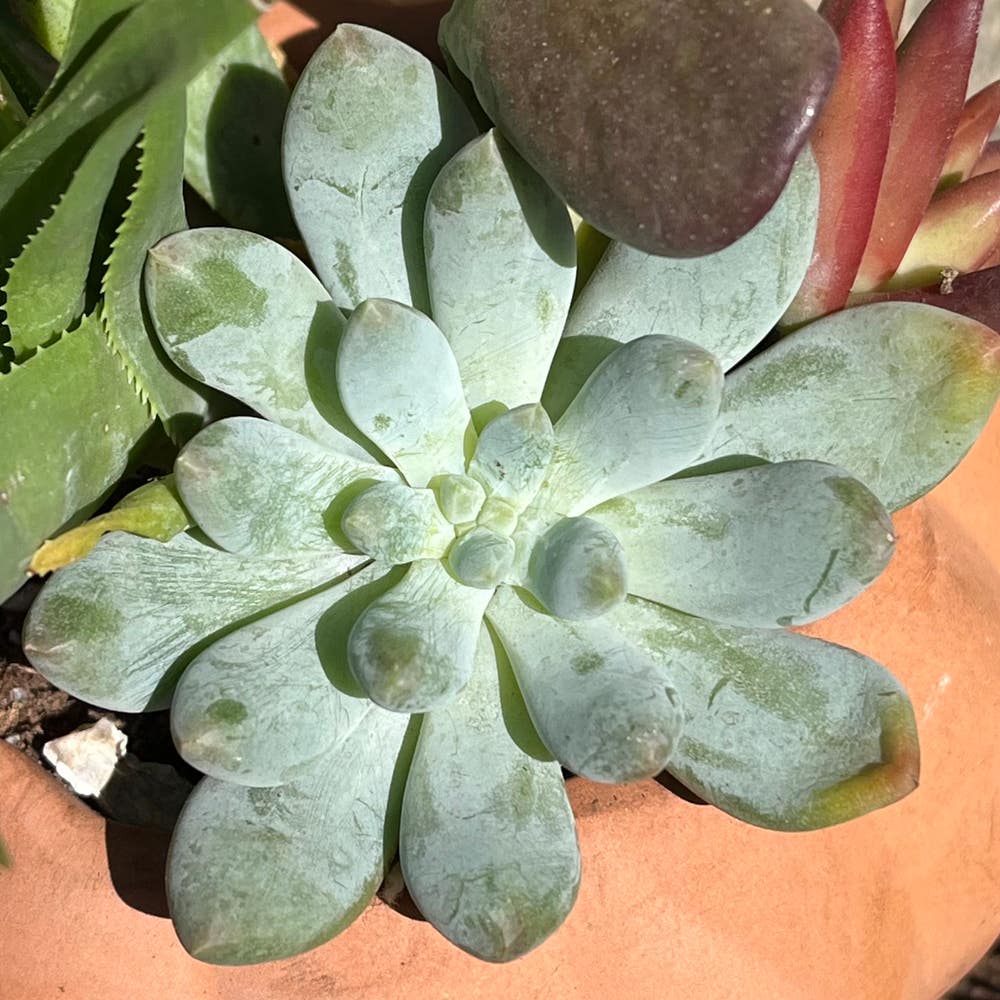
⭐ Ultimate Guide to Pachyphytum 'Starburst' Roots
Pachyphytum 'Starburst'
By the Greg Editorial Team
Sep 30, 2024•6 min read
This article was created with the help of AI so we can cover more plants for you. May contain errors. See one? Report it here.
Discover how proper root care can transform your Pachyphytum 'Starburst' into a vibrant centerpiece! 🌱✨
- 🌱 Pachyphytum 'Starburst' roots excel in water absorption, crucial for arid survival.
- 💧 Shallow, fibrous roots quickly absorb moisture, enhancing drought resilience.
- 🌿 Healthy roots ensure vibrant foliage and successful propagation; inspect regularly for issues.
Root System Type
🌱 Characteristics
Pachyphytum 'Starburst' features a fibrous root system that excels in water absorption. This design is crucial for thriving in arid environments, allowing the plant to make the most of limited moisture.
The roots are shallow and spread horizontally, which helps them quickly absorb water from light rains. This adaptability is key for survival in dry conditions, ensuring the plant remains hydrated even when water is scarce.
🌵 Adaptations
These roots are specifically designed to store water, enhancing the plant's resilience to drought. This unique characteristic not only supports the plant's survival but also contributes to its overall health and vitality.
Understanding these root adaptations can help you provide better care for your Pachyphytum 'Starburst', ensuring it flourishes in your home or garden.
With a solid grasp of the root system's characteristics, let's explore the root depth, spread, and growth patterns next.
Root Depth, Spread, and Growth Patterns
Typical Depth and Spread 🌱
Pachyphytum 'Starburst' boasts a root depth averaging between 6 to 12 inches (15-30 cm). In optimal conditions, these roots can spread out to an impressive 2 feet (60 cm), allowing the plant to efficiently absorb moisture.
Several factors influence this depth and spread. Soil type and drainage play crucial roles, as does the size of the container for potted plants.
Growth Patterns 🌿
Under favorable conditions, the roots of 'Starburst' grow rapidly, establishing a strong foundation for the plant. Conversely, during periods of drought or stress, root growth slows significantly.
A healthy root system is vital for robust foliage and vibrant flowering. When roots thrive, the entire plant flourishes, showcasing the importance of nurturing this underground network.
Understanding these growth patterns can help you provide the best care for your Pachyphytum 'Starburst', ensuring it remains a stunning addition to your collection.
Next, we’ll explore the watering, fertilizing, and transplanting needs of this resilient plant.
Watering, Fertilizing, and Transplanting
💧 Watering Needs
Pachyphytum 'Starburst' thrives with careful watering practices. Allow the soil to dry out completely between waterings to prevent overwatering, which can be detrimental due to its shallow root system.
To encourage healthy root spread, employ deep watering techniques. This method helps the roots reach deeper moisture levels, promoting a robust foundation for your plant.
🌱 Fertilization Techniques
Fertilizing your Pachyphytum 'Starburst' is essential during the growing season. Use a diluted, balanced fertilizer to provide the nutrients it needs without overwhelming the roots.
Be cautious with the amount you apply; over-fertilization can lead to root burn, harming your plant's health. A little goes a long way in keeping your succulent vibrant and thriving.
🌼 Transplanting Best Practices
Transplanting is best done in spring or early summer when your plant is actively growing. Follow these steps for a smooth transition:
- Water the plant a day before transplanting to ease the process.
- Gently remove the plant from its pot, taking care not to damage the roots.
- Inspect and trim any damaged roots to promote healthy growth.
- Replant in fresh, well-draining soil to ensure optimal conditions.
By following these practices, you can help your Pachyphytum 'Starburst' flourish in its new environment. Understanding these essential care techniques sets the stage for a thriving plant, ready to tackle the next challenges of root health and propagation.
Common Root-Related Issues
🕵️♂️ Identification and Prevention
Root health is crucial for the vitality of your Pachyphytum 'Starburst.' One of the most common issues is root rot, which can sneak up on you.
Symptoms of Root Rot:
- Wilting leaves
- Yellowing foliage
- Mushy roots
If you notice these signs, it’s time to act quickly. Root rot often stems from overwatering, so maintaining proper drainage is key.
Pest Infestations: Another concern is pests, particularly root mealybugs and aphids. These little invaders can wreak havoc on your plant's health.
Preventing Root Rot:
- Ensure your pot has adequate drainage holes.
- Allow the soil to dry out between waterings.
Addressing Pest Issues: Regular inspections can help catch pests early. If you find any, consider using organic pest control methods to keep your plant safe without harsh chemicals.
By staying vigilant and proactive, you can prevent these common root-related issues and keep your Pachyphytum thriving.
Next, let’s explore how to differentiate between healthy and unhealthy roots to ensure your plant remains in top shape.
Healthy vs Unhealthy Roots
Visual Cues and Indicators 🌱
Identifying the health of your Pachyphytum 'Starburst' roots is crucial for plant vitality. Healthy roots are typically firm, showcasing a white or light tan color, and they emit no foul odor.
In contrast, unhealthy roots present a dark, mushy texture, often indicating disease or pest damage. If you notice these signs, it’s time to take action.
Stress Indicators 😟
Stress in your plant can manifest through various visual cues. Look out for stunted growth and leaf drop, which are clear indicators that something is amiss.
Additionally, discoloration of leaves can signal underlying root issues. Keeping an eye on these signs will help you maintain a thriving plant.
Understanding these visual cues is essential for nurturing your Pachyphytum 'Starburst.' Healthy roots lead to robust foliage and vibrant blooms, ensuring your plant flourishes in any environment.
Next, we’ll explore the common root-related issues that can affect your plant's health.
Rootbound Plants
Definition and Signs 🌱
Rootbound plants are those whose roots grow in tight circles within their pots. This condition can lead to several visible signs, such as roots emerging from drainage holes and stunted growth, making it difficult for the plant to absorb water effectively.
Addressing Rootbound Issues 🛠️
Intervention is crucial when you notice growth stagnation or crowded roots. Here’s how to resolve rootbound conditions:
- Gently remove the plant from its pot.
- Trim any circling roots to encourage new growth.
- Repot the plant in a larger container filled with fresh soil.
By taking these steps, you can help your Pachyphytum 'Starburst' thrive and flourish. Understanding root health is essential for maintaining a vibrant plant, setting the stage for successful propagation and overall plant care.
Propagation and Division
🌱 Importance of Root Health
Healthy roots are the backbone of successful propagation. When roots are robust, they support the plant's growth and resilience, ensuring that new offsets thrive.
Stress-free propagation significantly boosts survival rates. By minimizing stress during the process, you set the stage for your new plants to flourish.
📋 Steps for Successful Propagation
To propagate Pachyphytum 'Starburst' effectively, follow these steps:
Choose Healthy Offsets or Leaves: Select offsets or leaves that are firm and free from damage. This choice is crucial for a successful start.
Allow Cuttings to Callous: Let your cuttings sit for 1-2 days before planting. This step helps prevent rot and encourages healthy root development.
Plant in Well-Draining Soil: Use a soil mix designed for succulents. Water sparingly until the new plants are established, as overwatering can lead to root issues.
By focusing on root health and following these steps, you can enjoy a thriving collection of Pachyphytum 'Starburst' plants.
Understanding these propagation techniques not only enhances your gardening skills but also deepens your connection with these unique succulents. Next, we'll explore how to identify and address common root-related issues to keep your plants healthy and vibrant.
⚠️ Safety First
This content is for general information and may contain errors, omissions, or outdated details. It is not medical, veterinary advice, or an endorsement of therapeutic claims.
Always consult a qualified healthcare professional before using any plant as food, medicine, or supplement.
Never eat any plant (or feed one to pets) without confirming its identity with at least two trusted sources.
If you suspect poisoning, call Poison Control (800) 222-1222, the Pet Poison Helpline (800) 213-6680, or your local emergency service immediately.
Spotted an error? Please report it here.
Unlock the secret to thriving roots 🌱 for your Pachyphytum 'Starburst' with Greg's tailored watering alerts and expert care tips that keep your plant flourishing!