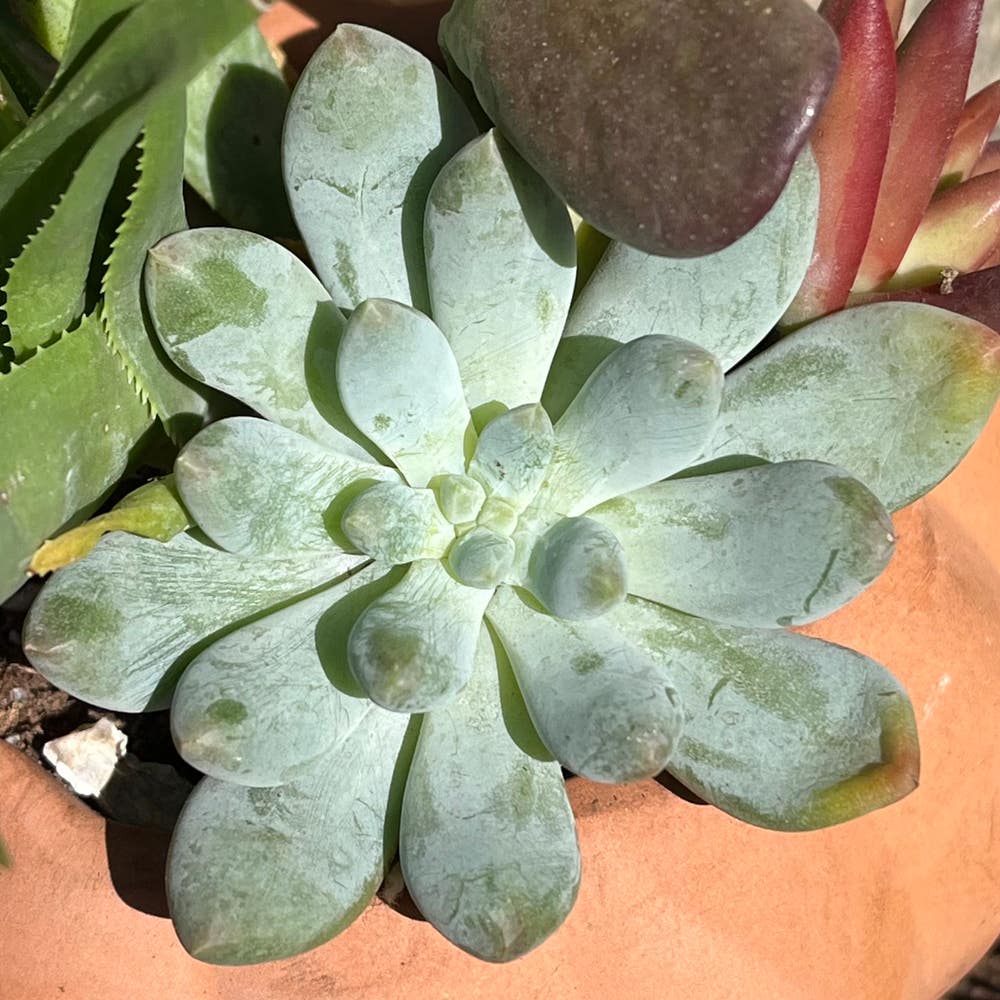
💧 How Much Humidity Does My Pachyphytum 'Starburst' Need?
Pachyphytum 'Starburst'
By the Greg Editorial Team
Jun 18, 2024•3 min read
This article was created with the help of AI so we can cover more plants for you. May contain errors. See one? Report it here.
Discover the secret to a lush Pachyphytum 'Starburst' with our guide to nailing the ideal humidity range. 🌟💦
- Ideal humidity: 30-40% for Pachyphytum 'Starburst' health.
- 🍂 Shriveled leaves? Your 'Starburst' might crave more humidity.
- 💨 Too damp? Increase airflow and water soil, not leaves.
Dialing in the Perfect Humidity for Your Pachyphytum 'Starburst'
🌵 What's the Sweet Spot?
The ideal humidity range for a Pachyphytum 'Starburst' is on the drier side. These succulents thrive in environments that mimic their natural arid habitats. Aim for a relative humidity (RH) between 30% and 40%. This level supports their health without encouraging the fungal parties that higher humidity can invite.
🚱 Signs Your 'Starburst' is Thirsty for Humidity
Shriveled leaves on your 'Starburst' might scream for more moisture. However, before you douse it in a humidity bath, check the soil. If it's bone-dry, water the plant; if not, consider a slight humidity boost. Persistent dryness, despite adequate watering, could mean your air is too arid.
🌧️ When Too Much is Too Much
Fungus alert: too much humidity is a recipe for disaster. If your 'Starburst' starts sporting spots or a moldy coat, it's time to dial down the dampness. Watch out for leaves that feel soft or mushy—this is a tell-tale sign that your plant is swimming in excess moisture.

Your Home's Humidity and Your 'Starburst'
🌡️ Getting to Know Your Local Humidity
To gauge your home's humidity, grab a hygrometer. Keep it away from direct sunlight and drafts for an accurate read. Check the levels at various times to catch the daily swings. It's like having a humidity pulse on your living space, ensuring your 'Starburst' isn't gasping for air or drowning in moisture.
🌿 Adjusting Your Plant's Environment
If your 'Starburst' is living in a desert or a swamp, it's time for some tweaks. Dry air? Group plants together or use a humidifier. Too moist? Boost air circulation or relocate your succulent to a less humid area. Remember, your Pachyphytum 'Starburst' craves stability, so avoid drastic changes.

Humidity Helpers: Boosting Moisture for Your 'Starburst'
💦 The Magic of Misting
Misting your Pachyphytum 'Starburst' can be like hitting the refresh button. Quick and easy, it gives your plant a humidity hug. But beware, it's a temporary fix. Overzealous misting invites fungi to the party, turning your succulent's leaves into a moldy mess. Moderation is key—think of misting as a spritz, not a shower.
🌴 Creating a Mini Oasis with Humidity Trays
Pebble trays are the unsung heroes in the world of plant humidity. Here's how to set up your own:
- Choose a tray that's larger than the base of your plant pot.
- Fill it with pebbles or small stones.
- Pour water into the tray until it's just below the top of the pebbles.
- Place your 'Starburst' on top, ensuring the pot doesn't touch the water.
This setup lets evaporation gently increase the humidity around your plant. It's a set-and-forget strategy, but keep an eye on the water level—top it off when it runs low. Remember, your 'Starburst' isn't looking for a swim, just a humid breeze.

When It's a Bit Too Damp: Reducing Humidity
💨 The Art of Airflow
In the tug-of-war between your Pachyphytum 'Starburst' and humidity, airflow is your secret weapon. Crack a window or let a fan whirl into action to keep the air from going stale. It's like your plant's personal breeze, whisking away excess moisture before it invites trouble.
Water Wisely
Your watering can is not a rain god; use it judiciously. Focus on the soil, where the roots thirst for moisture, not the air around the leaves. Overwatering is a double fault—it drowns the plant and cranks up the humidity. So, water when the soil feels like a dry handshake—not too wet, not too parched.
⚠️ Safety First
This content is for general information and may contain errors, omissions, or outdated details. It is not medical, veterinary advice, or an endorsement of therapeutic claims.
Always consult a qualified healthcare professional before using any plant as food, medicine, or supplement.
Never eat any plant (or feed one to pets) without confirming its identity with at least two trusted sources.
If you suspect poisoning, call Poison Control (800) 222-1222, the Pet Poison Helpline (800) 213-6680, or your local emergency service immediately.
Spotted an error? Please report it here.
Ensure your Pachyphytum 'Starburst' stays perfectly plump 💧 by leveraging Greg's custom reminders to adjust humidity levels for that just-right environment.