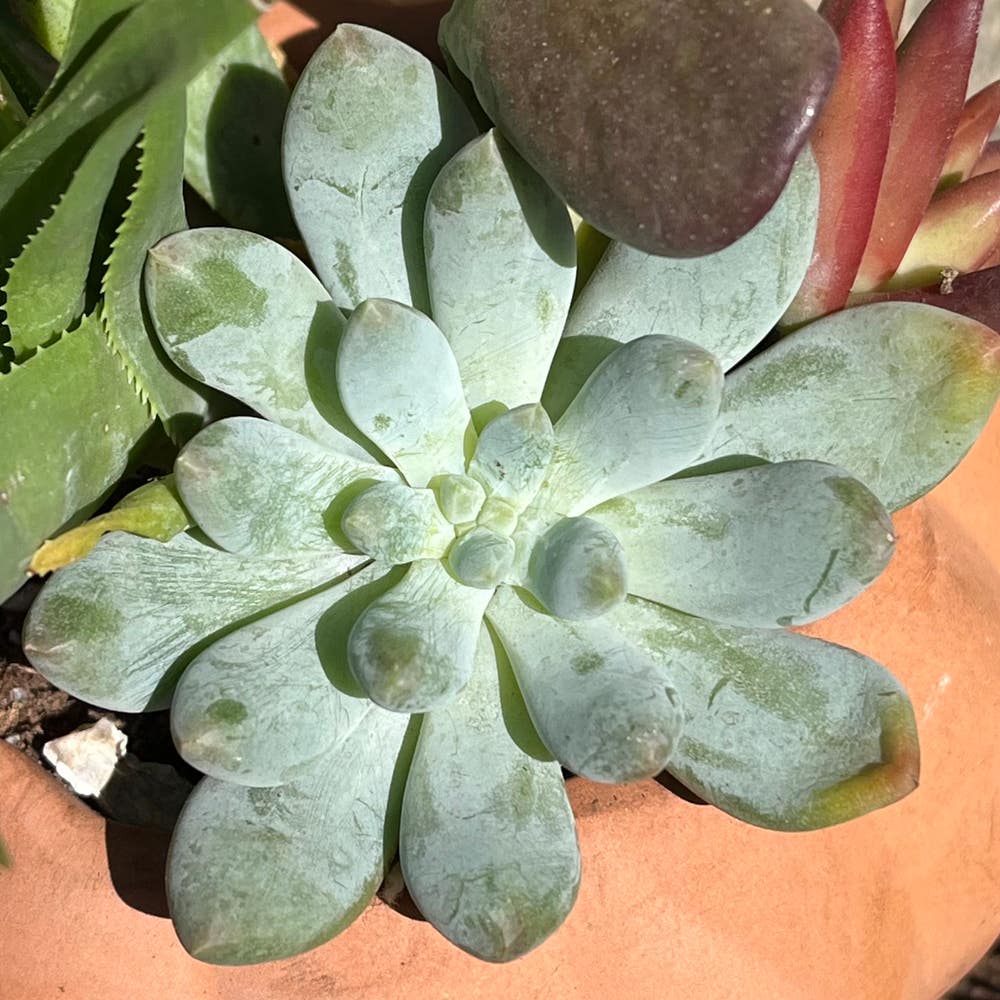
Why Are My Pachyphytum 'Starburst' Leaves Droopy?
Pachyphytum 'Starburst'
By the Greg Editorial Team
Jun 18, 2024•3 min read
This article was created with the help of AI so we can cover more plants for you. May contain errors. See one? Report it here.
Perk up your 'Starburst' 🌟 and banish droopiness by uncovering its care secrets!
- Overwatering and underwatering cause droopiness; adjust watering accordingly.
- Root health is key; check for rot and ensure proper drainage.
- Bright, indirect sunlight is ideal; consider artificial lighting if needed.
Spotting the Signs: Is Your 'Starburst' Unhappy?
🚰 Telltale Symptoms of Distress
Overwatering can turn your 'Starburst' into a soggy mess. Look for leaves that are squishy and discolored. If they're more water balloon than succulent, you've gone overboard with the H2O.
Underwatering isn't any kinder. Your plant's leaves will broadcast an SOS with wilting and dryness. They'll feel as neglected as a gym membership in February.
🌱 Rooting Out the Problem
Root health is like the credit score of plant care—ignore it at your peril. Gently unpot your 'Starburst' and check the roots. Healthy ones are firm and white, not brown and mushy.
Signs of rot are the plant world's red flags. If the roots look like they've been through a blender, it's time for an intervention. Trim the damage, and let's talk about better watering habits.

SOS: Saving Your 'Starburst' from Droopiness
💧 Fine-Tuning Your Watering Technique
Watering your Pachyphytum 'Starburst' is like hitting the right notes in a melody—it's essential for harmony. Adjust the frequency of your watering sessions to the plant's needs, which can vary with the seasons. In the warmer months, your 'Starburst' might be thirstier, so keep the soil lightly moist. During the cooler seasons, let the soil dry out a bit more between waterings.
Drainage is your best friend here; a pot with proper drainage holes is non-negotiable. Pots made of porous materials like terracotta can also help prevent water from overstaying its welcome.
☀️ Let There Be Light (But Not Too Much!)
Finding the light sweet spot for your 'Starburst' is a game-changer. These succulents love bright, indirect sunlight. Too much direct sun can lead to a sunburnt plant, while too little can cause your 'Starburst' to reach for the light, becoming leggy and droopy.
If your home is more cave than greenhouse, consider artificial lighting. LED grow lights are a great way to supplement natural light without running up your energy bill. Just remember to keep them on for about 12-14 hours a day, mimicking the natural day cycle.

Pro Tips for a Perky 'Starburst'
Creating the right environment for your Pachyphytum 'Starburst' is like setting the stage for a rockstar—everything needs to be just right.
💧 Crafting the Perfect Environment
Humidity and temperature are the unsung heroes of plant health. Keep them balanced, and your 'Starburst' will be less drama queen, more prom queen. Use a hygrometer to monitor the air's moisture. If it's too dry, consider a pebble tray. Too damp? A dehumidifier might be your new best friend.
Well-draining soil is non-negotiable. Think of it as the plant's foundation—strong yet breathable. Mix in some perlite or sand to keep those roots happy and prevent them from drowning in excess water.
🕵️♂️ Routine Checks and Balances
Establish a monitoring routine—it's like a regular check-up for your plant. Catching droopiness early can save you a world of trouble down the line. Inspect your 'Starburst' regularly for signs of distress, and you'll be ahead of the game.
Repotting is the plant equivalent of moving to a bigger apartment—it's necessary for growth. If your 'Starburst' is looking a bit cramped, give it some new digs with fresh soil. It's like a spa day for your plant's roots. Remember, spring is usually the best time for this kind of plant pampering.

⚠️ Safety First
This content is for general information and may contain errors, omissions, or outdated details. It is not medical, veterinary advice, or an endorsement of therapeutic claims.
Always consult a qualified healthcare professional before using any plant as food, medicine, or supplement.
Never eat any plant (or feed one to pets) without confirming its identity with at least two trusted sources.
If you suspect poisoning, call Poison Control (800) 222-1222, the Pet Poison Helpline (800) 213-6680, or your local emergency service immediately.
Spotted an error? Please report it here.
With Greg, you can prevent 🛑 droopy leaves by tailoring your Pachyphytum 'Starburst' care to its unique needs, from watering schedules to light conditions, ensuring your succulent stays perky and healthy.