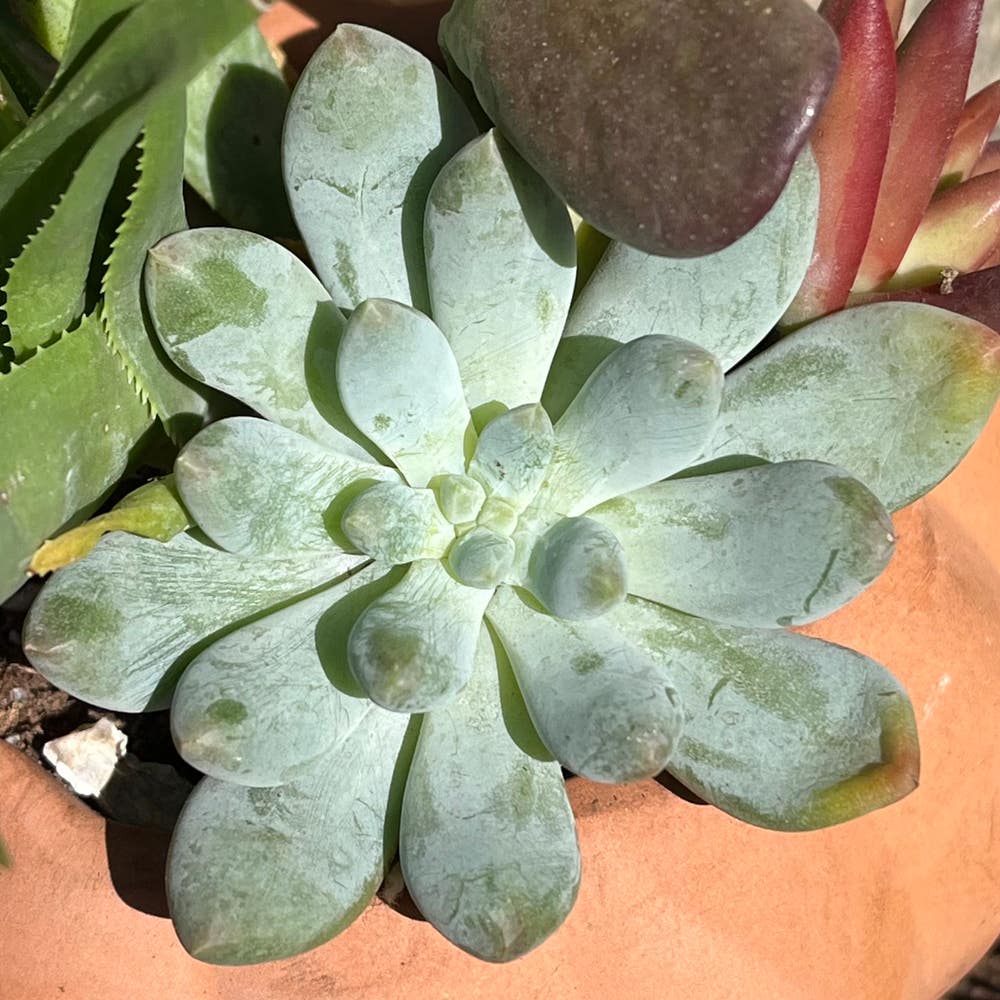
⭐ Top 5 Tips to Prevent Your Pachyphytum 'Starburst' Wilting
Pachyphytum 'Starburst'
By the Greg Editorial Team
Sep 30, 2024•6 min read
This article was created with the help of AI so we can cover more plants for you. May contain errors. See one? Report it here.
Transform your wilting Pachyphytum 'Starburst' 🌱 into a thriving beauty with these essential care tips!
- 💧 Wilting in Pachyphytum 'Starburst' signals water stress—check for overwatering or underwatering.
- 🌞 Excessive heat and sunlight can worsen wilting; provide indirect light during peak hours.
- 🌱 Regularly assess soil moisture and maintain proper drainage to prevent wilting issues.
Common Causes of Wilting Leaves
💧 Water Stress
Wilting leaves can often signal water stress in your Pachyphytum 'Starburst'. Symptoms include leaves that appear shriveled or limp, indicating either too little or too much water.
- Underwatering: When the plant doesn’t get enough moisture, it leads to dehydration.
- Overwatering: Conversely, excess moisture can cause root rot, resulting in wilting.
🔥 Heat Stress
Heat stress is another common culprit behind wilting. Leaves may become soft and discolored, a clear sign that your plant is struggling.
- Excessive Sunlight: Too much direct sunlight can dehydrate the plant quickly.
- High Temperatures: Elevated temperatures can lead to rapid water loss, exacerbating wilting.
🦠 Uncommon Causes: Pathogenic Wilt
While it’s rare, pathogenic wilt can occur, though it’s unlikely with Pachyphytum 'Starburst' due to its hardiness.
- Signs of Disease: Look for sudden leaf drop or darkened stems as indicators of disease-related wilting.
- Rarity of Pathogens: Most wilting issues stem from environmental stress rather than pathogens, making it crucial to focus on care practices.
Understanding these common causes can help you identify the problem early and take action to revive your plant. Next, we’ll explore how to diagnose wilting effectively.
Diagnosing Wilting
Step-by-Step Guide to Diagnose Wilting 🌱
Assess Soil Moisture: Start by checking the top 2 inches of soil for dryness. A moisture meter can provide a more accurate reading.
Examine Environmental Conditions: Look at the light exposure and temperature around your plant. Be sure to check for drafts or sudden temperature changes that could stress it.
Inspect the Plant: Take a close look at the plant itself. Look for signs of pests or disease, and observe the leaf color and texture for any abnormalities.
Signs to Look For in Wilting Leaves 👀
Leaf Texture: Pay attention to any softness or shriveling in the leaves. This can indicate water stress.
Color Changes: Watch for yellowing or browning edges, which can signal underlying issues.
Overall Plant Posture: Notice if the plant is drooping or leaning, as this can be a clear sign of wilting.
By following these steps, you can effectively diagnose the cause of wilting in your Pachyphytum 'Starburst'. Understanding these signs will help you take the necessary actions to revive your plant and keep it thriving.
Next, let’s explore actionable solutions to address the wilting issues you’ve identified.
Solutions for Wilting
💧 Actionable Advice for Water Stress
Underwatering is a common issue for Pachyphytum 'Starburst'. To remedy this, water the plant thoroughly until excess moisture drains out of the pot.
Establishing a consistent watering schedule based on soil moisture can help prevent future dehydration. Conversely, if overwatering is the problem, allow the soil to dry completely before rewatering.
Ensure your pot has proper drainage to avoid waterlogged roots, which can lead to wilting.
☀️ Actionable Advice for Heat Stress
Heat stress can also cause your plant to wilt. If you notice signs of heat stress, consider relocating your Pachyphytum to a spot with indirect sunlight during peak heat hours.
Using sheer curtains can help diffuse harsh sunlight, protecting your plant from excessive exposure. Additionally, increase your watering frequency during hot spells while keeping a close eye on soil moisture levels.
🦠 Actionable Advice for Disease-Related Wilting
While disease-related wilting is rare in Pachyphytum 'Starburst', it’s important to be vigilant. If you spot signs of disease, such as sudden leaf drop or darkened stems, remove the affected leaves promptly to prevent the spread.
In some cases, treating with appropriate fungicides may be necessary, although this is uncommon. Always prioritize a healthy environment to minimize the risk of disease.
By addressing these common causes of wilting, you can help your Pachyphytum thrive and avoid future issues.
Next, let’s explore preventive measures to keep your plant healthy and vibrant.
Preventive Measures
Tips to Minimize Future Wilting Episodes 🌱
Regularly checking soil moisture is essential for your Pachyphytum 'Starburst.' This simple practice helps you avoid extremes that can lead to wilting.
Establishing a consistent watering schedule tailored to seasonal changes can make a significant difference. Adjust your routine based on the plant's needs as the weather shifts.
Environmental Adjustments for Optimal Growth 🌡️
Maintaining an ideal temperature range of 20°C to 30°C (68°F to 86°F) is crucial for healthy growth. This temperature range supports optimal photosynthesis and overall vitality.
Ensure your plant is in well-draining soil and in pots with drainage holes. This setup prevents waterlogging, which can lead to root rot.
Avoid sudden changes in light and temperature. Gradual adjustments help your plant acclimate, reducing stress and the risk of wilting.
By implementing these preventive measures, you can create a thriving environment for your Pachyphytum 'Starburst.' This proactive approach will help you enjoy a healthy, vibrant plant for years to come.
Next, let’s explore effective techniques for reviving a wilted plant.
Reviving a Wilted Plant
🌊 Techniques for Bottom Watering
Bottom watering is a gentle way to revive your Pachyphytum 'Starburst'.
- Place the pot in a shallow dish of water.
- Allow the soil to absorb moisture from the bottom for 30 minutes.
- Remove from water and let excess drain.
This method encourages deep root hydration without over-saturating the topsoil.
🏡 Relocation Strategies for Better Conditions
Sometimes, a change of scenery is all your plant needs.
Move your 'Starburst' to a more stable environment with consistent light and temperature.
Avoid areas with drafts or direct air conditioning, as these can stress the plant further.
✂️ Pruning Damaged Leaves Safely
If you notice wilted or damaged leaves, it’s time to prune.
Use clean, sharp scissors to remove these leaves, cutting at the base to encourage new growth.
This not only improves the plant's appearance but also redirects energy to healthier parts.
Reviving your plant can be a rewarding experience, and with these techniques, you’ll be well on your way to restoring its vitality. Next, let’s explore when to seek help for persistent issues.
When to Seek Help
🚨 Signs That Require Expert Assistance
If your Pachyphytum 'Starburst' is wilting persistently despite your best care efforts, it’s time to consider seeking help. This could indicate underlying issues that require professional insight.
Look out for severe pest infestations or signs of disease, such as unusual spots or mold. These problems can escalate quickly, so don’t hesitate to act.
📚 Resources for Assistance
Local nurseries are a fantastic resource for expert advice tailored to your specific plant needs. They often have knowledgeable staff who can provide hands-on guidance.
Additionally, engaging with the plant care community online can be incredibly beneficial. Sharing experiences and solutions with fellow enthusiasts can lead to valuable insights and support.
By staying proactive and connected, you can ensure your 'Starburst' thrives in your care.
⚠️ Safety First
This content is for general information and may contain errors, omissions, or outdated details. It is not medical, veterinary advice, or an endorsement of therapeutic claims.
Always consult a qualified healthcare professional before using any plant as food, medicine, or supplement.
Never eat any plant (or feed one to pets) without confirming its identity with at least two trusted sources.
If you suspect poisoning, call Poison Control (800) 222-1222, the Pet Poison Helpline (800) 213-6680, or your local emergency service immediately.
Spotted an error? Please report it here.
Keep your Pachyphytum 'Starburst' thriving 🌟 by using Greg's tailored watering alerts and environmental insights to prevent wilting and ensure it flourishes in your home!