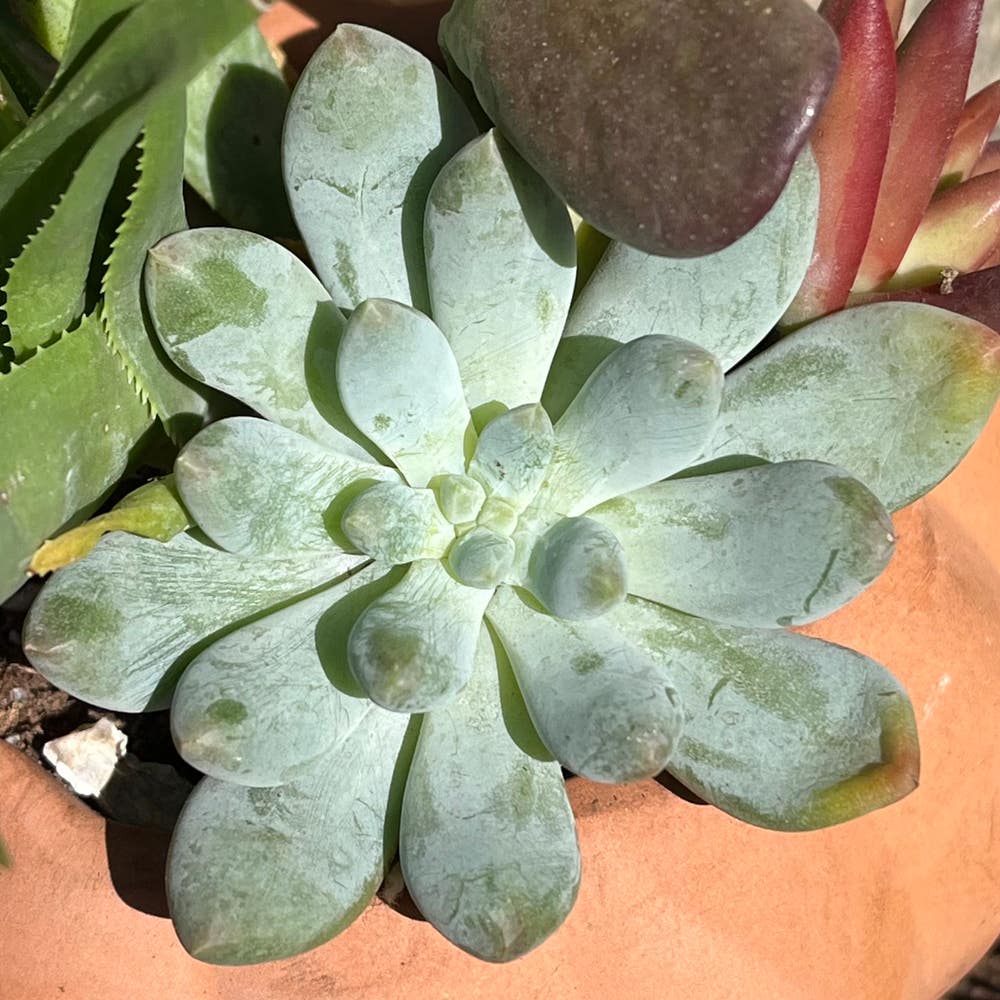
How Do I Cure Pachyphytum 'Starburst' Root Rot?
Pachyphytum 'Starburst'
By the Greg Editorial Team
Jun 18, 2024•4 min read
This article was created with the help of AI so we can cover more plants for you. May contain errors. See one? Report it here.
Revive your 'Starburst' 🌟 from root rot's grip with life-saving succulent care tips!
- Wilting and discoloration signal root rot; inspect roots for mushiness.
- Remove rotted roots, dry, then repot in well-draining soil.
- Consistent watering and light prevent rot; inspect roots regularly.
Spotting the Trouble: Signs of Root Rot
🚩 Visual Red Flags
Wilting leaves on your Pachyphytum 'Starburst' are like red flags at a bullfight—impossible to ignore. Discoloration, too, is a glaring signal; healthy plants don't sport black spots as a fashion statement. If your succulent's leaves are turning yellow, it's not trying out a new look—it's likely crying out for help. And if growth has slowed to a snail's pace, it's time to get your hands dirty.
🙌 Getting Hands-On
To confirm your suspicions, you'll need to get up close and personal with the roots. Gently unearth the plant from its pot and check the roots. Healthy roots should be firm and white, not soft and discolored. If they feel mushy or slimy and fall apart in your hands, you've hit the root rot jackpot. A foul, swampy smell is the final nail in the coffin, confirming that rot has set in.

First Aid for Your 'Starburst': Treating Root Rot
🏥 Surgical Precision
Root rot in your Pachyphytum 'Starburst' is like a bad relationship—it needs to be cut off. Sterilize your scissors or pruning shears before you start; cleanliness is non-negotiable. Gently remove the plant from its pot and shake off the excess soil to get a clear view of the roots. Now, it's time to play surgeon. Snip off any roots that are brown, mushy, or smell like decay. Be thorough, as any remaining rot can spread and undo all your hard work.
🛌 The Recovery Room
After the amputation, give the roots some air—think of it as a recovery room where they can breathe and dry. This isn't a long-term vacation, though; just enough to ward off additional moisture-related issues. Once dry, repot your 'Starburst' in fresh, sterile soil that's like a fluffy cloud—light and well-draining. The new pot should have drainage holes that could put Swiss cheese to shame. Water sparingly, only when the soil is dry to the touch, and place the plant in a bright spot where it can soak up some indirect sunlight. Keep an eye on your patient; recovery takes time and patience.

Keeping the Roots Happy and Healthy
💧 Watering Wisdom
Consistency is key when it comes to watering your Pachyphytum 'Starburst'. Think of it as a ritual akin to your morning coffee—regular and reliable. Aim for deep watering sessions that encourage roots to grow downwards, fostering a robust system. Remember, it's a balancing act: the soil should be moist, not a swamp. Use your finger or a moisture meter to check the top inch of soil; if it's dry, it's time to quench your plant's thirst.
🌱 Soil and Drainage Mastery
Choosing the right soil mix is like setting up a comfortable bed that doesn't stay wet for too long. A mix with perlite or sand will ensure your 'Starburst' has the perfect snug yet breathable space to thrive in. Drainage is your plant's lifeline; always use pots with holes and a soil that lets water pass through freely. If you're in a drier climate, tweak the mix to retain a tad more moisture—like a bartender crafting the perfect cocktail for your plant's roots.

Future-Proofing Against Fungal Foes
🌬️ Environmental Check-Up
Ensuring proper airflow and light exposure is crucial for the health of your Pachyphytum 'Starburst'. A stagnant environment is a playground for fungi, so keep the air moving. A gentle breeze, akin to a soft exhale, is sufficient. Light is equally important; it's like a vitamin for your plant, bolstering its defenses. Ensure your 'Starburst' gets its daily dose of bright, indirect sunlight.
🕵️ Regular Root Reviews
Make it a habit to perform regular inspections of your plant's root system. Think of it as a routine health check-up for your succulent. Early detection of any issues can be the difference between a thriving plant and a fungal disaster. During these check-ins, assess the soil moisture and root condition. If the soil feels too damp or the roots look suspiciously dark or mushy, take action immediately. Remember, vigilance is key to keeping root rot at bay.
⚠️ Safety First
This content is for general information and may contain errors, omissions, or outdated details. It is not medical, veterinary advice, or an endorsement of therapeutic claims.
Always consult a qualified healthcare professional before using any plant as food, medicine, or supplement.
Never eat any plant (or feed one to pets) without confirming its identity with at least two trusted sources.
If you suspect poisoning, call Poison Control (800) 222-1222, the Pet Poison Helpline (800) 213-6680, or your local emergency service immediately.
Spotted an error? Please report it here.
Ensure your pachyphytum 'starburst' overcomes root rot and flourishes 🌟 with Greg's personalized care reminders, tailored to your home's unique conditions.